Tiny seal from Persepolis holds a clear image of Achaemenid naval power
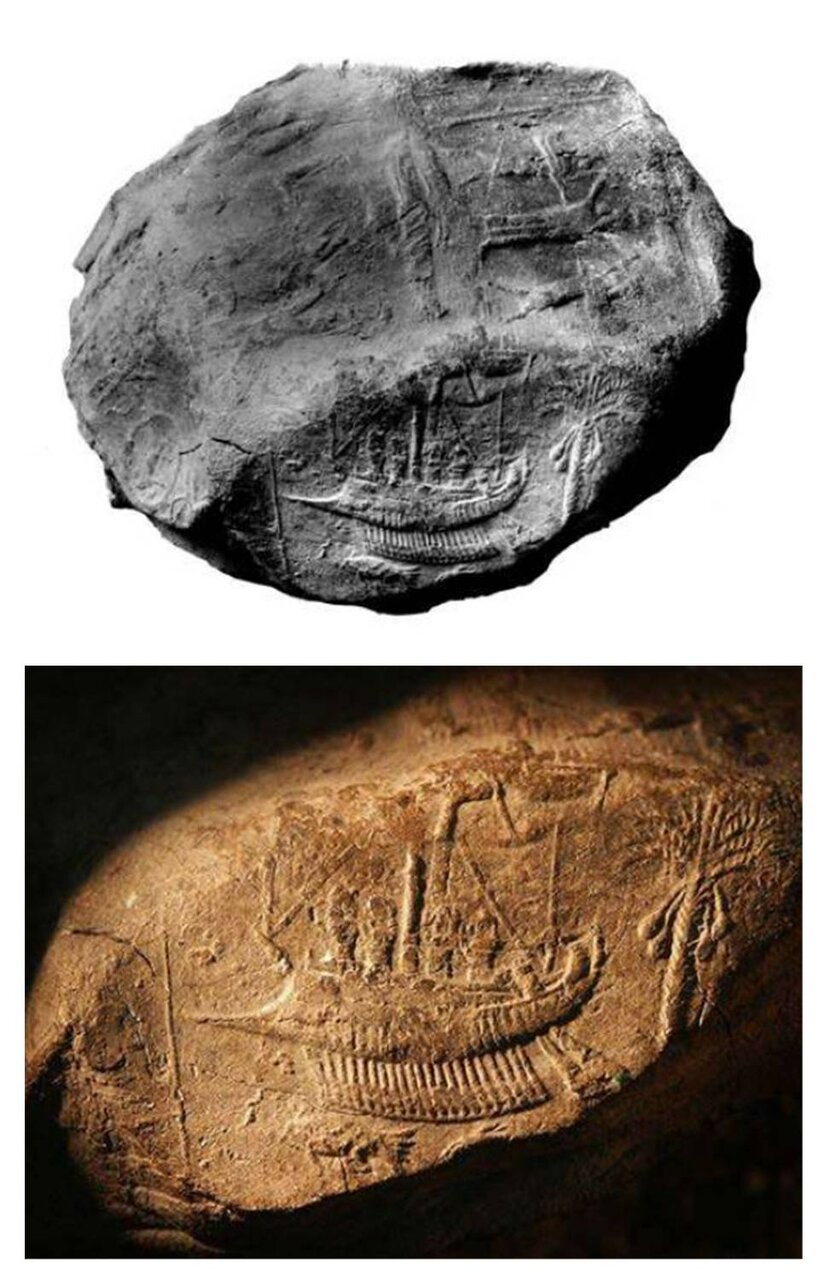
During the 1936 excavations at Persepolis led by Erich Schmidt of the University of Chicago’s Oriental Institute, a small clay seal impression was recovered from the Treasury. Barely 2.5 centimeters across, it bears the crisp image of a warship, a rare and direct glimpse of how the Achaemenid court viewed its own naval strength.
The seal is being kept at the National Museum of Iran in downtown Tehran and it dates to circa 492–460 BCE. Catalogued today under museum number 1921/58 (excavation PT4 704), the impression shows a large vessel in left-side view, travelling from right to left.
The hull curves elegantly, and at the bow an embolon, or ram, is clearly visible. In ancient naval warfare, rams were typically sheathed in bronze and used to pierce the hulls of enemy ships at speed, the sea-going equivalent of the battering rams that broke gates and walls on land. Its presence leaves no doubt: this is a military ship, built for combat.
Twenty-two oars are shown along the hull. A single mast rises amidships, the sail furled and tied at the top, indicating a vessel that used both oars and sail depending on conditions or tactical need. This combination was typical for warships likely intended for coastal campaigns or rapid manoeuvres.
On the right side of the scene, a palm tree is depicted. The hanging fruit clusters are clearly rendered, pointing to the palm species common along the Persian Gulf littoral and its agricultural hinterlands. In Achaemenid visual culture, the palm was a royal symbol, it appears on reliefs at Persepolis and on other seals as a mark of prosperity and legitimate rule. Placed beside a warship, the palm links the naval vessel directly to the geography of southern Iran and to the authority of the king. The image reads as a compact statement of maritime sovereignty.
Historical sources support what the seal suggests. Silver coins struck at Sidon, a major commercial port on the eastern Mediterranean under Achaemenid control, carry the image of a warship alongside the names of Artaxerxes II and Artaxerxes III. These coins confirm a lasting Persian military presence on the Mediterranean coast and show how closely naval power was tied to royal identity.
A major engineering project further demonstrated the empire’s strategic thinking. The canal completed under Darius I connected the Nile to the Red Sea — the precursor to the modern Suez. In his inscription from Egypt, Darius states plainly that ships passed through this waterway under his command and reached the Persian Gulf. The canal was not simply a trade route; it linked the Mediterranean and the Indian Ocean under one authority, allowing the movement of fleets and goods over unprecedented distances.
Small as it is, this clay seal impression from the Treasury at Persepolis remains an extraordinary document. Within a space the size of a thumbnail, it records the organisation, technology, and reach of an Iranian fleet that operated some 2,500 years ago, a reminder that the sea was far from peripheral to Achaemenid statecraft.
AM
Leave a Comment