UNICEF supporting essential health services for children in Iran
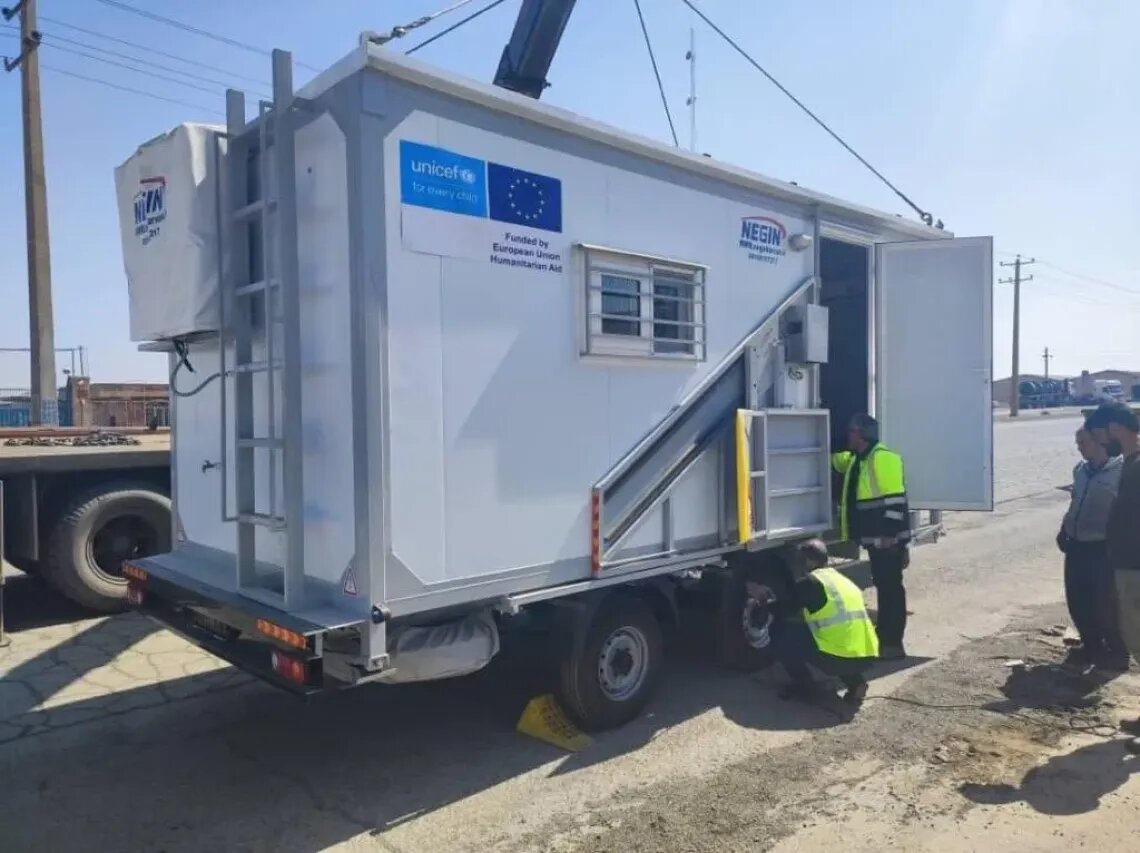
TEHRAN – The United Nations Children's Fund (UNICEF) is supporting efforts to restore access to essential health services for children and families in Iran.
In coordination with the Ministry of Health, 2 mobile health units, 8 primary healthcare (PHC) tents, and 81 emergency primary healthcare kits have been deployed.
Additional supplies—including 2 more PHC tents and 131 emergency kits—are being delivered, helping reach at least 226,000 people. UNICEF is also scaling up its psychosocial support to children impacted by the escalation, the UNICEF website reported in March.
Children must be protected and have access to the care they urgently need.
In January, UNICEF, in cooperation with the Ministry of Health and Medical Education, organized an event to ensure that medical settings serve as a strong shield for children at risk and to strengthen integrated child protection services as the first step toward activating Child Protection Committees within hospitals.
Supported by the European Union, the event brought together directors, nurses, and social workers from 22 pediatric hospitals, alongside experts from the State Welfare Organization.
Since 2023, UNICEF and MoHME have been working hand-in-hand to empower social workers through specialized training and protocols. By moving beyond just physical treatment to holistic protection, we are creating a world where hospitals are not just places of healing, but sanctuaries of safety.
Looking ahead, UNICEF will continue to launch innovative activities to maintain this momentum, ensuring that the protection of every child remains at the heart of the healthcare system.
In this line, the Iranian Red Crescent Society (IRCS) and UNICEF have enhanced cooperation to provide psychosocial support for children during emergencies.
They aim to provide immediate, safe, and protective environments for children affected by crises, the UNICEF website reported in December 2025.
The collaboration focuses on rapidly deploying high-quality tents and essential equipment to establish Child-Friendly Spaces (CFSs) as a crucial Rapid Response mechanism.
In February, the head of the Welfare Organization, Javad Hosseini, and the United Nations Children’s Fund (UNICEF) ad interim Representative in Iran, Monika Oledzka Nielsen, explored the potential to expand cooperation, particularly regarding children aged below 18.
During a meeting in Tehran, Nielsen said the two organizations have so far held two meetings to prioritize issues based on assessments made by the Welfare Organization, Mehr news agency reported.
The core area of collaboration focuses on improving children’s rights, such as child labor and street children, she noted.
Leave a Comment