Rebuilding Hope from War: South Korea's Heritage Strategy Offers Iran Key Lessons
How South Korea documented, restored, and revitalized war-damaged heritage
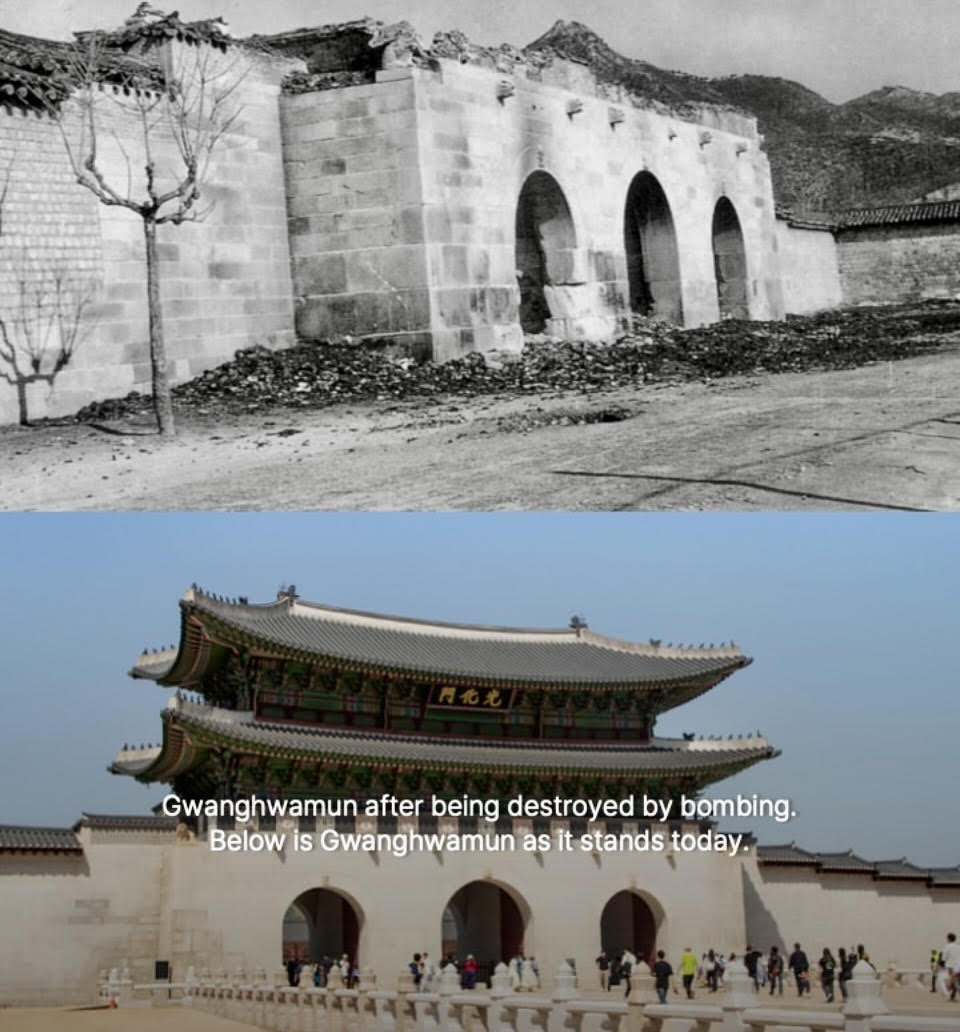
TEHRAN- Historical monuments are not merely symbols of a nation's identity; they are also testaments to that nation's resilience against the vicissitudes of history and narrators of its past experiences. Although in recent years, especially after the two World Wars, historical monuments have come under the umbrella of international protection, obligating global sensitivities for warring parties to preserve these sites in each other's territories, the inherently destructive nature of war, combined with its objectives which tend toward the annihilation of the enemy and consequently the erasure or at least weakening of their identity, has meant that this sector has not been spared from the negative effects of war damage.
Examining South Korea's approach to managing cultural heritage and reconstructing historical identity may offer a lesson for all those who have faced this predicament. This document is published as a strategic report by the Iran-South Korea Joint Chamber of Commerce, aiming to optimize and learn from this country's successful experience in overcoming the effects of war.
Rebuilding cultural heritage means clinging to history to restore the collective self-confidence of a society and holding onto a single unifying thread for social cohesion, despite all the ethnic, cultural, linguistic, and even religious diversity within a society.
In the Korean War (1950–1953), at least 351 Buddhist temples were damaged, 240 of which were completely destroyed; along with dozens of palaces, historical gates, and royal tombs. Nevertheless, seventy years later, South Korea has not only restored the vast majority of this heritage but has also turned cultural heritage preservation into an independent economic sector valued at 9.05 trillion won in 2025, with a cumulative target of 100 trillion won by 2030.
This report analyzes South Korea's strategy across five policy pillars—preventive documentation, pre-restoration engineering diagnosis, intergenerational transfer through technology, economic regeneration of ruins, and selective preservation of war scars—examining it within the context of its institutional structure, public-private financing models, and the broader vision of South Korea's Ministry of Culture, "Culture-K 2030". Subsequently, this experience is juxtaposed with the new reality confronting Iran's cultural heritage this year: damages from the recent war between the US and Israel against Iran affecting over 140 historical sites and monuments, including at least five sites inscribed on the UNESCO World Heritage List. The report concludes with six specific and adaptable lessons for cultural heritage policy, financing, and economic regeneration in Iran.
It should be noted that this document is the fifth strategic report published by the Iran-South Korea Joint Chamber of Commerce, made available to the public for the benefit of experts, researchers, policymakers, and other interested parties.
1. Introduction: Dimensions of War Damage to Korea's Cultural Heritage
The Korean War did not only devastate cities and villages; it also targeted the historical memory of a nation. Royal palaces were damaged, Buddhist temples burned, and hundreds of valuable structures were reduced to rubble. At the war's end, South Korea was one of the poorest countries in the world; a nation that had simultaneously lost its economic infrastructure and a significant part of its historical identity.
A precise and unified monetary estimate of the total cost of post-war cultural heritage reconstruction in Korea is not available in public sources; however, the indicator presented later in this report—the growth of the 'Heritage-K' industry to a value of 9.05 trillion won in 2025—shows that the country transformed reconstruction from a 'restoration cost' into a 'productive economic asset'.
Korea's seventy-year experience on this path is summarized in five policy pillars, each examined below with evidence, supporting institutional structures, and considerations applicable to Iran.
2. Institutional and Financial Architecture: The Role of Government and the Private Sector
2.1. The Central Institution: Korea Heritage Service (KHS)
The Korea Heritage Service—operating until 1999 as the 'Cultural Properties Administration' and renamed in 2024—is under the Ministry of Culture, Sports and Tourism. It plays a pivotal role in designating national treasures, financing restoration, and issuing permits for any changes to registered structures. This organization provides direct subsidies for the maintenance and restoration of 'nationally designated' properties and offers parallel financial support for seven strategic heritage regions (including the Baekje Historic Areas).
2.2. Public-Private Partnership Model
Research in cultural heritage governance identifies three contractual models in the experiences of countries like Korea, whose application varies depending on the type of asset:
· Service Contract: The private sector participates in conservation research, specialized restoration, or equipment maintenance; ownership and ultimate responsibility remain with the government.
· Construction and Restoration Contract: The private sector performs the physical restoration work, accepting execution risks; financing and long-term maintenance are the government's responsibility.
· Lease or Operation Contract: The asset is temporarily transferred to the private sector or a local entity for economic use (café, gallery, accommodation); the economic risk of operation is transferred to the private sector, but ownership and conservation standards remain with the government.
In other words, South Korea firmly retains 'ownership and determination of conservation standards' in government hands but delegates 'execution, economic operation, and technological innovation' largely to the private sector, local institutions, and community participation. A prime example of this model is the regeneration of the Bukchon neighborhood, implemented through financial cooperation between the government and private owners of traditional houses.
To strategize decision-making regarding cultural heritage, understanding the institutional structure that implements these policies is crucial, because without this architecture, none of Korea's technical solutions can be understood or replicated.
3. Five Strategic Pillars of South Korea's Experience
3.1. Pillar One: Save the Memory Before Reconstruction
Since the 1990s, South Korea has initiated a national project for the digital documentation of historical monuments. Using laser scanners, drones, and photogrammetry technology, thousands of historical structures have been recorded in 3D to create a digital backup of the country's history. This approach effectively acts as a 'national historical memory insurance'.
This approach's utility has been tested in recent crises: in the unprecedented spring 2025 wildfires in North Gyeongsang Province, Gounsa Temple (built in 681 AD) was severely damaged, leaving only 9 of its 30 buildings intact; however, the existence of prior 3D documentation enabled the formulation of a precise restoration plan—before the memory of the building's true form faded. South Korea also emergently evacuated and relocated 15 national treasures from endangered temples during these same fires.
3.2. Pillar Two: Examine the Building Before Restoration (HBIM)
Many mistakes in hasty reconstructions during the first post-war decades stemmed from a lack of precise information about structural conditions, materials, and hidden damages. To solve this, South Korea adopted HBIM (Historic Building Information Modeling) technology.
If 3D scanning can be considered 'photographing' a building, HBIM is essentially its 'complete medical file': material types, age of components, deterioration rate, repair history, column and beam conditions, moisture, and cracks are recorded in an integrated digital model. This allows experts to simulate and compare various restoration scenarios—in terms of cost, structural soundness, and preservation of historical authenticity—before any physical intervention.
This is a solution that could also be effective for Iran. In many of the country's historical monuments, damage from deterioration, earthquakes, moisture, or various incidents is not detectable by the naked eye. Deploying technologies like HBIM before any national reconstruction program—especially for structures damaged by the Imposed War in the western and southwestern regions—could prevent additional costs and non-transparent decision-making.
3.3. Pillar Three: Show History's Wounds to the New Generation
Newer generations of Koreans have not experienced the war and may take historical heritage for granted. Korea's solution was Augmented Reality (AR) technology. At many historical sites, visitors can scan a QR code and point their phone's camera at a structure, viewing various layers of its history—from its initial glory, through war destruction, to restoration phases—displayed on the screen. In this way, history transforms from an abstract narrative into a vivid and tangible experience.
3.4. Pillar Four: Turn Ruins into Economic Opportunities
One of South Korea's most creative actions has been repurposing war-torn and abandoned military spaces into art galleries, concert halls, cafés, museums, and cultural centers.
· Camp Greaves: This former US Army base near the Demilitarized Zone (DMZ), occupied by US forces from 1953 to 2004, was transformed from 2013 onwards by the Gyeonggi Province initiative under the 'DMZ Peace Platform Project' into a cultural-artistic complex with public accommodations; its ammunition depot, bowling alley, and barracks now host exhibitions, traditional music concerts, and educational programs focused on commemorating peace.
· Bukchon Neighborhood, Seoul: The government implemented an extensive program to revitalize the historical fabric of this neighborhood by providing financial aid to private owners of traditional hanok houses. The result was unprecedented tourism growth; according to recent reports, in 2023 and 2024, the neighborhood hosted approximately 6.4 million visitors annually, compared to only about 6,100 local residents. This growth has been so remarkable that the main challenge for Seoul's city management in this area is now managing 'overtourism' and implementing time-based visitor restrictions, not a lack of tourists.
The message from the experience of revitalizing war-torn and neglected sites is that every ruin or abandoned military structure is not necessarily just a cost; it's a strategy for many war-affected areas. By converting barracks, bunkers, or damaged urban fabrics in war zones into cultural-tourist spaces—while simultaneously designing a financial and managerial structure—they can become sources of local income and employment instead of draining public funds. This is provided that planning involves the local community and private sector from the outset, rather than being solely a top-down government project or revenue model.
3.5. Pillar Five: Don't Erase All the Wounds
In Cheorwon, the former office building of the Workers' Party of Korea, severely damaged during the war and still showing bullet and destruction marks on its walls, was not fully restored but transformed into a venue for music festivals, art exhibitions, and peace programs.
This approach perhaps contains the deepest lesson from Korea's experience, resting on a clear policy principle: one hundred percent restoration is not always the desirable goal; some structures should remain in their damaged state to serve as living documents of collective memory.
The decision-making process regarding which building should be 'fully restored', which should be 'preserved in a semi-restored state', and which should be 'maintained as a ruin' must itself be a formal part of the cultural heritage policy framework—not an ad-hoc or subjective decision.
4. From Restoration to Industry: Economic Dimensions of Korea's Cultural Heritage
The turning point in South Korea's experience is transforming cultural heritage preservation from a 'budgetary expense' into a 'sustainable revenue stream' and a 'measurable economic sector'. In December 2025, the Korea Heritage Service for the first time officially announced the market size of the national heritage sector and presented a plan for its development.
The figures above indicate that South Korean policymakers place cultural heritage within the budgetary category of 'national strategic industries'—on par with AI and technology—rather than under peripheral cultural expenditures. This budgetary framing is a political prerequisite for securing parliamentary and private sector support for long-term restoration programs.
5. Roadmap 2025–2030 and the Culture-K 2030 Vision
5.1. The Future: Protecting History with Artificial Intelligence
In 2026, the South Korean government unveiled a five-year plan covering 2025–2030, utilizing cutting-edge technologies—Artificial Intelligence, digital twins, smart robots, drones, blockchain, and virtual reality—for cultural heritage preservation.
5.2. Beyond Heritage: The Larger Culture-K 2030 Blueprint
The five-year cultural heritage plan is part of a much larger initiative. In the summer of 2026, South Korea's Ministry of Culture, Sports and Tourism presented President Lee Jae-myung with a strategic document titled 'Revitalizing Regions and Expanding Globally with Korean Culture, Sports, and Tourism'. The main goal of this document is to attract 40 million foreign tourists annually, a significant jump from the estimated 23 million for the current year. This document has three main axes:
· Developing the Culture-K Industry as an Economic Engine: South Korea is strengthening its content industries—publishing, music, video games, and cinema—as a pivotal future economic sector, moving from solely government-led, competition-based financing towards more diverse support mechanisms (including social insurance for artists).
· Cultural Decentralization: The plan emphasizes making regions outside the Seoul metropolitan area more attractive through developing cultural and sports facilities and deploying local specialists.
· Direct Link with the Cultural Heritage Strategy: The Culture-K 2030 vision aligns with the five-year cultural heritage plan; both define culture as a 'strategic export' and not merely a 'conservation responsibility'.
Iranian media have highlighted this parallel: according to a Tehran Times report, the Korean model of social security for artists could be a model for supporting Iranian cultural activists, and Korea's cultural decentralization policy aligns with Iran's reality—cities like Tabriz, Mashhad, and Shiraz, with their distinct cultural identities, could be developed as 'regional cultural capitals' to stimulate local economic growth and distribute tourism income more equitably.
6.ApplicaIran's Cultural Heritage in the Mirror of the 2026 War: Why This Experience is Now Urgent
South Korea's experience is no longer just a theoretical or historical lesson for Iran. During the US-Israel war against Iran, which began on February 28, 2026, a significant number of the country's historical sites and monuments were damaged. According to a report by the head of the Iranian National Commission for UNESCO, at least 140 cultural and historical sites across the country were affected by this conflict, at least five of which are inscribed on the UNESCO World Heritage List. According to UNESCO and international media reports, at least four to five of Iran's 29 UNESCO World Heritage sites have been affected by this war. On March 31, 2026, Iran formally submitted documentation of damage to over 131 sites to UNESCO, citing violations of the 1954 Hague Convention for the Protection of Cultural Property in the Event of Armed Conflict.
The financial situation for reconstruction finds itself at a point similar to South Korea's starting point in the 1950s: as of May 2026, the Iranian government had not introduced any specific, publicly announced budget line for reconstructing damaged cultural heritage, and officials have spoken of the difficulty of long-term planning 'as long as the shadow of war remains over Iran's skies.' Precisely this vacuum—the absence of a central institution with an explicit budget line and a clear framework for private sector participation—is where South Korea's seventy years of experience can offer a practical roadmap.
Applicable Lessons for Iran
Iran's cultural heritage has suffered significant damage both during the eight-year Imposed War with Iraq and in the recent war with the US and Israel, and remains exposed to natural (earthquake, flood) and human risks. South Korea's experience offers six distinct lessons for Iran, not as a one-to-one corresponding import model, but as an adaptable policy framework:
6.1. Policy Sequence: Document First, Then Restore
The first step in any national reconstruction program is not commencing construction operations, but creating a 'National Digital Archive' of the current state of at-risk sites. Without this archive, even in the event of an incident, accurate and authentic reconstruction will be impossible. The prioritization of this archive should be based on risk mapping (earthquake, decay, border and conflict zones). Given the recent damage inflicted on Golestan Palace, Naqsh-e Jahan Square, and Isfahan's Jameh Mosque, the top priority is the immediate 3D documentation of these sites and other monuments at risk of repeat attacks.
6.2. Separating Government and Private Sector Roles Instead of the 'Public or Private' Dichotomy
Korea's experience shows the right question isn't 'public or private?' but 'which role for which actor?': Ownership of national heritage and the formulation of conservation criteria must remain with a powerful central body (similar to the Korea Heritage Service), but the technical execution of restoration, tourism operation, and economic development of sites can be delegated to the private sector and local institutions through service, construction, and lease contracts. This separation prevents corruption and damage caused by short-term profit motives, while simultaneously bringing private sector efficiency and capital into the reconstruction cycle.
6.3. Independent Budget Line for Heritage Restoration
The lack of a formal budget line for reconstructing heritage damaged in Iran's recent war (Section 6) is precisely the weakness South Korea faced in the 1950s, but seventy years later transformed into an 'industry' with clear quantitative targets (Section 4). The Korean model—defining specific economic indicators (employment, tourism, foreign exchange earnings) for the heritage sector—could provide a framework for Iranian chambers of commerce and economic policy institutions to advocate for a transparent budget line, rather than deferring the issue to 'when conditions stabilize.'
6.4. Economic Regeneration of War-Damaged Urban Fabrics
War-damaged areas in Khuzestan, Ilam, and Kermanshah provinces, and even parts of Tehran, similar to Camp Greaves and Bukchon, possess the potential to become destinations for memory and cultural tourism; provided that a financial model is based on the participation of local owners and the private sector, not merely the allocation of government funds for physical reconstruction without a long-term economic utilization plan.
6.5. Formal Policy for Selective Preservation of War Sites as National Memory
Institutions responsible for cultural heritage and the Sacred Defense in Iran could, akin to the Workers' Party building in Cheorwon, compile an official and criteria-based list of war structures that, instead of being fully restored, are maintained as memorials and cultural sites—a decision that should be made within the framework of a written policy, not in a scattered, localized manner.
6.6. Pre-Restoration Diagnostic Technology (e.g., HBIM) to Reduce Costs and Execution Errors
Given the high cost of erroneous or hasty restorations, initial investment in modeling historical building information can reduce total reconstruction costs in the medium term and enable transparent, auditable decision-making for oversight and funding bodies (whether governmental or reconstruction charities).
7. Concluding Remarks: Rebuilding Hope is More Important than Rebuilding Walls
The story of South Korea's cultural heritage is not just the story of restoring a few palaces and temples; it is the story of a nation that, in the aftermath of one of the most devastating wars of the 20th century, decided not to forget its past and to turn it into an economic and identity asset for the future. Seventy years ago, many thought the ruins of the Korean War would never be compensated for; today, that same country has become one of the world's most successful examples in cultural heritage preservation and one of the few nations that places cultural heritage in the budgetary category of strategic industries, on par with artificial intelligence.
Today, Iran, with Golestan Palace, Isfahan's Jameh Mosque, and Naqsh-e Jahan Square listed among its war-damaged sites, stands at a point similar to where South Korea stood seventy years ago. The shared lesson for both, and for any country that has tasted war, crisis, or devastation, is that true reconstruction is not merely about rebuilding walls; it is a combination of scientific documentation, a clear separation of government and private sector roles, industrial and transparent budgeting, and a conscious choice between complete restoration and preserving historical wounds.
Leave a Comment