Filmmakers, human rights NGOs back “NAZA” directors amid threats, accusations by Israeli authorities
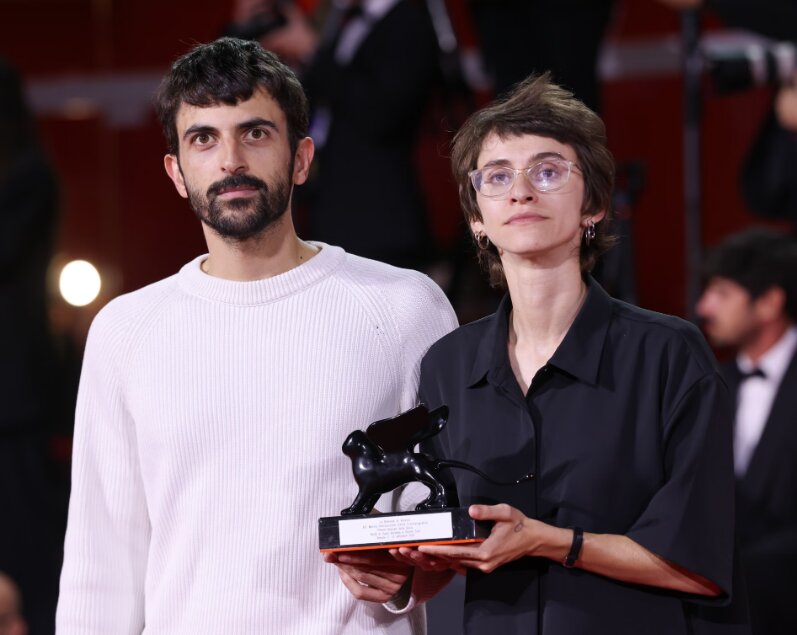
TEHRAN - More than 1,500 film industry figures, including prominent Israeli filmmakers, and over 40 local human rights organizations have expressed solidarity with filmmakers Yuval Abraham and Rachel Szor, the creators of the documentary “NAZA” that features testimony from Israeli military and intelligence personnel about the army’s operations in Gaza.
According to various media reports, backing comes after the directors were threatened by Israeli authorities with having their citizenship revoked and accused of treason.
In a joint statement, the humanitarian organizations urged Israeli authorities to stop the incitement and threats, and to refrain from prosecuting the filmmakers or their sources, the latter being military intelligence officers who provided anonymous testimony.
“The institutional response to the film and the threats against its creators are characteristic of dictatorial regimes,” stated the petition signed by NGOs including Peace Now, Adalah, B’Tselem, Physicians for Human Rights Israel, and Breaking the Silence.
Another petition, signed by prominent directors including Nadav Lapid, Hagai Levi, Liran Atzmor, Orna Ben Dor, Netalie Braun, Rani Blair, Ari Folman, Shlomi Elkabetz, Ran Tal, and Michal Aviad among others, stated: "We, filmmakers, call on all who are still fighting for freedom of expression and creation to join in expressing support and solidarity with Rachel Szor and Yuval Abraham. The central role of art and journalism is to hold a mirror up to the society in which they exist, to create discourse and discussion without assumptions, even when the reality is difficult."
The documentary received a 25-minute standing ovation at its premiere at the 83rd Venice International Film Festival, a festival record, and won the Special Jury Prize at the closing ceremony.
When accepting the Special Jury Prize, Yuval Abraham said in his acceptance speech: "We believe that the denial of a crime is what helps it persist, and this is why it is especially important for us that Israelis watch this film; it is our country that is doing these crimes.”
Some figures on the Israeli left praised the film and its directors. The former lawmaker Yousef Jabareen, chair of the left-wing Hadash party, congratulated the directors on the award, thanking them for bringing “these horrific crimes and the brutal reality in Gaza” before millions of people.
Anat Saragusti, the head of press freedom at the Union of Journalists in Israel, said: “The Israeli public has not received anything close to adequate coverage in Hebrew of what has happened in Gaza. For much of the war, Israeli media barely showed the Palestinian side of the story – the civilian casualties, the children killed, the destruction. People could find that information elsewhere if they actively looked for it, but they were not seeing it in the mainstream Hebrew-language media.”
In an editorial, the Haaretz newspaper urged Israelis to confront what it described as the reality of Israel’s actions in Gaza. “By screening their film at the Venice film festival, Abraham and Szor are trying to force Israelis to confront what they already know: that there’s a black stain on the way Israel is conducting war in Gaza, to put it mildly,” Haaretz wrote.
The Gaza health ministry has reported more than 74,000 deaths in the three years of Israeli bombardment, since October 2023, the vast majority of which have been civilian casualties.
Organizations including Amnesty International, Human Rights Watch and the United Nations have described Israel's actions as "genocide" - as well as a report published in June by a UN independent commission which found that "Israeli authorities and security forces have deliberately targeted Palestinian children, resulting in genocide and atrocity crimes in the Gaza Strip and war crimes in the West Bank."
The 80-minute hot-button documentary, produced by British newspaper The Guardian and JW Films, was shot in secrecy at night on the rooftops of Tel Aviv during the ongoing Gaza war, featuring interviews with 24 anonymous Israeli military and intelligence insiders about surveillance, target selection, and strikes in Gaza, which have killed tens of thousands of civilians. The participants' faces and voices were digitally altered to protect their identities. In one interview, a source claims that approval had been given to kill 500 NAZA in order to kill one Hamas member.
The film takes its name from the Hebrew military abbreviation for “collateral damage,” referring to the estimated number of civilians expected to be killed in an attack.
Interviewees describe the use of artificial intelligence and mass surveillance to identify targets as well as attacks approved despite anticipated civilian casualties.
Abraham and Szor said the documentary focuses on institutional policies, orders, and operational practices rather than isolated misconduct by individual soldiers.
The Israeli army rejected the film’s allegations and questioned the reliability of testimony from anonymous sources whose identities, ranks, and areas of responsibility could not be verified.
It also denied that artificial intelligence determines which targets are attacked, saying strike selection and authorization decisions are made by human personnel in accordance with military directives.
After the film premiere in Venice, there has been criticism and threats directed at the film’s creators. Israeli Culture and Sports Minister Miki Zohar branded the filmmakers’ work an act of “treason” and said he would seek to revoke their Israeli citizenship. Zohar accused the directors of being willing to “harm their homeland in order to receive applause from antisemites around the world”.
However, the culture minister does not have the power to revoke citizenship unilaterally. Such a measure would require a formal legal process involving the interior minister and the courts under Israeli law.
Other Israeli ministers as well as the prime minister have also taken aim at the directors and condemned the film.
Far-right Minister of National Security Itamar Ben-Gvir also used the platform X for a post in which he called the two filmmakers "a disgrace and an embarrassment" to Israel.
Prime Minister Benjamin Netanyahu called the documentary a “shocking” film and accused it of being part of a wave of global anti-Semitic incitement.
The chief of staff at the Israel Defense Forces (IDF) has ordered a legal review of the documentary “NAZA” to assess the possibility of legal action against its filmmakers and those involved with it.
Calling the film “an attack on the State of Israel,” IDF chief Eyal Zamir claimed “NAZA” defamed the military, though he acknowledged he has not seen the movie in full. He separately ordered an investigation into the leaking of classified material used in its production.
Comparing the claims made in the film to “blood libels,” Zamir said the Israeli military would use “every tool at our disposal” against it.
In a monologue delivered at the opening of his show on Channel 14, an Israeli right-wing and conservative commercial television channel, on September 14, broadcaster Yehuda Schlesinger called on Israel's Jewish public to hunt down the creators of the film "Naza". Schlesinger addressed the camera directly and urged viewers to "hunt them, chase after them, don't give them a moment's peace, if they dare set their filthy foot in Israel. Don't give them a single minute. Outside their homes, at work, in cafés, out and about."
Schlesinger previously called for the systematic, institutionalized abuse and rape of Palestinian terror operatives as a means of revenge and deterrence, and even volunteered to abuse detainees himself.
Channel 14 is known as a channel that routinely broadcasts incitement to violence, racism and war crimes, government propaganda serving the Netanyahu government, and fake news.
A Guardian News & Media spokesperson said: “The Guardian is disturbed to see the authoritarian response to NAZA in Israel. Yuval Abraham and Rachel Szor are brave journalists and filmmakers. The attacks against them come from people who have not yet seen the film. “NAZA” is based on more than three years of investigative journalism. The testimonies it contains are true, and we believe they deserve to be heard. The interviews were given by confidential journalistic sources. We will robustly defend “NAZA” – and the team behind it – from any attacks or attempts at censorship.”
The Union of Journalists in Israel, in a statement, said freedom of expression is critical to the functioning of democracy, and condemned the threats of violence against Yuval Abraham and Rachel Szor.
“The Union of Journalists joins creative organizations in expressing shock at the violent reactions and the threats faced by the creators of the ‘NAZA’ film,” the statement says. “Freedom of expression is meant particularly to allow a discussion of opinions, positions and statements that challenge the discourse and various institutions.”
“Without freedom of expression there is no democracy, and without democracy the State of Israel will not survive,” it continued.
Abraham and Szor previously worked on the Academy Award-winning documentary “No Other Land” alongside Palestinian filmmakers Basel Adra and Hamdan Ballal.
Abraham’s family home was targeted by a right-wing mob after the world premiere of 2024’s “No Other Land,” which focused on the destruction of Palestinian villages in the occupied West Bank.
“We’re taking risks in a system that privileges us, that has Jewish-Israeli supremacy as its founding characteristic,” he said. “For so many Palestinians, it’s not a right-wing mob that’s coming to their home: it’s US-funded bulldozers and weapons. Imagine if a Palestinian journalist in Gaza tried to do what we did and called up senior Israeli officials. There is no comparison. They would most likely be murdered.”
Photo: Directors Yuval Abraham (left) and Rachel Szor win the special jury prize for the film “Naza” at the 83rd Venice Film Festival in Italy on September 12, 2026.
Leave a Comment