Integrated border management paves way for trade development with neighbors: Arvand Free Zone CEO
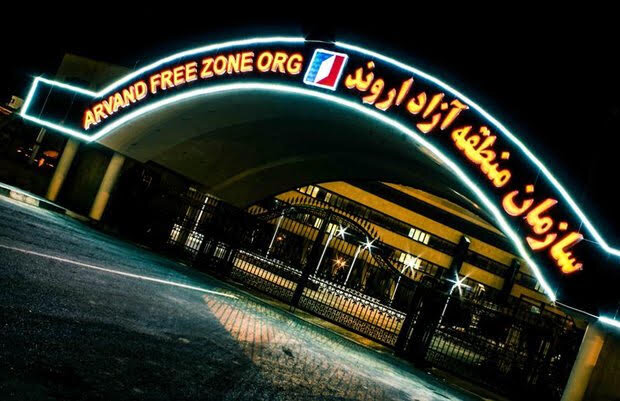
TEHRAN- The CEO of the Arvand Free Zone Organization, emphasizing the capacity of free zones in developing economic exchanges with neighboring countries, said: Strengthening the authority of free zones, establishing integrated management at borders, and forming coherent economic diplomacy can lead to facilitating trade, increasing regional interactions, and making better use of the economic capacities of border areas.
According to the Public Relations and International Affairs of the Secretariat of the Supreme Council of Free and Special Economic Zones, Mostafa Khanzadi, at a meeting of the deputies of the secretariat and CEOs of free and special economic zone organizations, attended by the Executive Vice President, stated: I thank you for holding this meeting and for the invitation made today, because it can be a turning point in making the free zones more active.
Khanzadi added: Regarding Article 65, over the past seven to eight months, contacts were made with Mr. Aref and the Honorable Minister of Interior, and subsequently, the executive regulations of Article 65 were prepared with emphasis on the Arvand Free Zone as a pilot.
He continued: These regulations went through various stages and were approved by us and the governor-general, but unfortunately, in the referral process, they were mistakenly referred from the government’s Islamic Resources Committee to another place and encountered a problem. This issue is now being reviewed again, and with the discussion previously held with the minister in the government’s Economic Commission, we hope these regulations will be approved by the government.
The CEO of the Arvand Free Zone Organization, explaining the necessity of implementing this article in the Arvand Free Zone, said: In Arvand, we have two special governors who are deputies of the governor-general, and the region has a population of about 600,000 and its own particular characteristics.
Khanzadi added: Apart from the duties that the Ministry of Interior has determined for the counties, we have also divided the duties in such a way, and we hope that the parts not directly related to the free zone will be delegated to the governorates, because in the current situation, a major part of our managerial capacity has become involved in matters not directly related to the main missions of the free zone.
He said: Issues such as municipalities and the Security Council have always been among the matters under discussion. Fortunately, good conditions have now been created in the free zone, and some matters have been implemented verbally, but we hope this issue will also be approved by the government.
The CEO of the Arvand Free Zone Organization, continuing with reference to the issue of taxes on goods, stated: If what has happened in this regard continues, in my view it is against the law, because tax should not be levied on goods that are consumed reasonably.
Khanzadi added: Even if goods enter the mainland, the revenues from them must be returned to the free zones so that they can be spent on developing infrastructure. If this happens in the free zone, our income could double and even be more than what we currently earn.
He continued: A region with two cities and a population of about 600,000, while its infrastructure is not yet sufficiently provided, will suffer great harm under such conditions.
The CEO of the Arvand Free Zone Organization described another important issue of border areas as “unified economic diplomacy” and said: We have raised this issue in the presence of the Honorable Minister and also Mr. Forouzan. It is not acceptable that in countries neighboring us, different views are expressed by various bodies.
Khanzadi added: For example, Iraq is very important in this regard. As someone who has established good contacts with the Iraqi side, I feel that we have suffered serious blows in this area. We are present in Mehran, and contacts are made at different points and different issues are raised, and ultimately the other side also exploits these differences of view.
He stressed: Different approaches toward neighboring countries, including Iraq and Turkey, show the necessity of forming a unified economic diplomacy. We believe that a committee composed of individuals and experts on Iraqi affairs should be formed and have a specific secretariat so that we can pursue this diplomacy in a unified manner.
The CEO of the Arvand Free Zone Organization continued: Anyone who wants to contact foreign parties must do so within the framework of specified rules and regulations so that we can benefit from a unified economic approach.
Khanzadi also, referring to the banking problems of free zones, said: One of the problems that all free zones currently face is the issue of banks and agent banks. There was previously a resolution that the resources of all bodies and companies must be deposited into the treasury, and this has caused resources to be placed at the disposal of banks.
He added: This issue is more important for regions like Arvand, which possess large government capacities. Abadan Refinery and Abadan Petrochemical are located in the region, but the free zone itself has no direct income from these complexes, and due to the lack of sufficient income, the ability to provide necessary facilities to industries has also been limited.
The CEO of the Arvand Free Zone Organization noted: One of our requests is the establishment of a bank specifically for free zones, an issue that has been raised for years. Apart from the discussion of an offshore bank, either resources must be returned to the region’s banks or a mechanism must be considered for establishing a specialized bank for free zones.
Khanzadi, referring to the necessity of organizing border management, said: Another important discussion that must be taken into consideration is unified management at the borders. This issue can be solved very simply, but its impact will be very great.
He added: At the Shalamcheh border, which His Excellency the Minister visited during his trip, about 100 people accompanied him, and at this border there are 12 decision-making bodies and organizations. This multiplicity of decision-making centers causes problems in the border management process.
The CEO of the Arvand Free Zone Organization continued: In this regard, we have prepared a plan according to which free zones at border locations would have more authority, and this plan is also going through various stages.
Khanzadi said: We request from the Honorable Minister of Economy, who has become the custodian of this issue, as well as the Ministry of Interior, which has resolutions in this regard, that the responsibility for managing this issue be clarified and it be known which body should ultimately administer this matter.
The CEO of the Arvand Free Zone Organization, referring to the recent experience at the Shalamcheh border, stated: Yesterday, when the border between Iran and Iraq was closed, the authority to act in this area was with the free zone, and we were able to exercise appropriate management through initiative.
Khanzadi added: This issue was even reflected in the media and websites, and one of the reasons the Iraqi side acted quickly to reopen the border was the initiative taken in the free zone.
He said in conclusion: Our request is that security issues continue to be pursued within the framework of the responsibility of governorates and relevant bodies, but in the area of economic management, trade, and activities related to free zones, specific authority and responsibility should be assigned to the free zone so that we can manage border issues with greater speed and efficiency.
The Arvand Free Zone is located in southwestern Iran's Khuzestan Province, at the confluence of the Arvand and Karun rivers near the Persian Gulf.
It spans 37,400 hectares and hosts the cities of Abadan and Khorramshahr, making it Iran's most populous free zone with approximately 500,000 residents.
The zone borders Iraq and Kuwait, providing direct access to the Shalamcheh land border and the Persian Gulf.
It features multimodal transport infrastructure—including Abadan International Airport, Khorramshahr Port (Iran's second-largest container port), and rail links.
The zone is a major industrial hub, home to the Abadan Refinery (450,000 barrels per day), petrochemical plants, steel and shipbuilding industries. It serves as Iran's primary gateway for trade with Iraq, offering tax exemptions and 100% foreign ownership.
The establishment of free trade zones (FTZs) in Iran dates back to the Iranian calendar year 1368 (March 1989 - March 1990) following the fall in the country’s oil income in the preceding year which prompted the government to promote non-oil exports.
The first two free trade zones of Iran were established in the south of the country. The first one was Kish Free Trade Zone established in 1368 on Kish Island in the Persian Gulf and the second one was Qeshm Free Trade Zone established the year after on Qeshm Island in the Strait of Hormuz.
Some five other free trade zones have been also established in the country since then, including Chabahar in southeastern Sistan-Baluchestan Province, Arvand in southwestern Khuzestan Province, Anzali in northern Gilan Province, Aras in East-Azarbaijan Province and Maku in West-Azarbaijan Province, both in the northwest of the country.
The development of existing free trade zones and the establishment of new FTZs has become one of the major economic approaches of the Iranian government.
The Secretary of the Supreme Council of Free and Special Economic Zones, emphasizing the capacity of free and special economic zones to strengthen the country’s economy, has recently said: Increasing the authority of free zones and making broader use of the capacity and experience of the private sector can provide the basis for attracting investment, developing economic activities, and making more effective use of these zones’ capacities.
Hossein Forouzan said the enemies expected Iran, like some other countries, to surrender to pressures, but the bravery, planning, and measures taken prevented this goal.
Forouzan added: Today, economic war is the issue, and in these conditions we must place greater trust in free zones. We ask the government to give free zones enough time and authority, and in return for these authorities, it should be confident that the managers of free zones will strive to achieve the set goals and will not disappoint the government.
He continued: We will work with all our strength and lovingly for the development of free zones and the country’s economy, and we believe that if more authority is given to free zones, existing capacities can be used to pass through difficult economic conditions.
The Secretary of the Supreme Council of Free and Special Economic Zones proposed that, if possible, the private sector’s share in the decision-making structure related to free zones be increased.
Forouzan said: I propose that, if such a possibility exists, in the five-member decision-making composition, at least two members be from the private sector, because private-sector actors can greatly help attract investment and solve economic problems.
He added: Instead of government managers seeking to attract investors, the capacity of private-sector actors should be used. The private sector has the experience, connections, and motivation needed to attract investment and can play a more effective role in this regard.
EF/MA
Leave a Comment