Vietnamese trade delegation seeks deeper direct trade with Iran
TEHRAN — A Vietnamese trade delegation arrived in Tehran on Tuesday, October 6, and is scheduled to remain until October 18. Led by Mr. Nguyen Dang Dinh, who is visiting Iran for the third time, the delegation has a packed agenda: visits to various regions, assessments of cooperation opportunities, and trade meetings. In an exclusive interview with the Tehran Times, Dinh said the mission aims to expand Vietnam’s commercial reach in the Middle East and engage directly with Iran’s sizable market. Vietnamese businesses seek to boost direct exports of agricultural products—coffee, cashews, pepper, rice—and consumer goods, while exploring imports of high-quality Iranian industrial inputs and raw materials.
The delegation’s working report provides the following detailed account of its program and findings:
REPORT ON THE WORKING VISIT AND TRADE PROMOTION MISSION TO IRAN
1. 9 October – Bandar Abbas, Hormozgan Province
The delegation visited and conducted an on-site assessment of Shahid Rajaee Port in Bandar Abbas, Hormozgan Province. As Iran’s largest seaport, Shahid Rajaee plays a key role in the country’s foreign trade and serves as a transit gateway for neighbouring landlocked countries.
The delegation toured five terminals and met with Mr. Yousefi Karami, the manager responsible for import and export container operations at Terminal 2. Discussions covered port operations, particularly the accumulation of empty containers as a result of the war. According to information provided during the meeting, shipping companies are eligible for storage charge relief for up to 60 days and may request an additional extension of 15–30 days, subject to approval by the port management, taking into account their operating history and cargo volumes.
The delegation also inspected bonded storage facilities and explored the possibility of leasing land for the storage of unprocessed agricultural commodities and other goods imported into Iran for subsequent re-export to neighboring markets.
2. 10 October – Bandar Abbas
The delegation visited Petro Pasargad’s privately owned refinery, which has more than 15 years of experience in bitumen production. During the visit, the delegation met with Mr. Yousefi, Technical Director, and obtained samples of 60/70 penetration-grade bitumen currently exported by the company to Viet Nam.
The visit provided an opportunity to exchange information on product specifications, production capacity and prospects for commercial cooperation with Vietnamese partners.
3. 12 October – Shiraz
The delegation attended the Expo Shiraz International Exhibition, organized by the Trade Promotion Organization under Iran’s Ministry of Industry, Mining and Trade. The delegation visited six selected exhibition stands representing agriculture, petrochemicals, construction, tourism, healthcare, and handicrafts.
The exhibition was large in scale and professionally organized, providing a valuable platform for business networking and exploring international partnerships. The organizers invited the delegation to take part in an interview and facilitated introductions to relevant companies to support business-to-business (B2B) engagement.
4. 15 October – Tehran
4.1. Meeting with Petro Pasargad
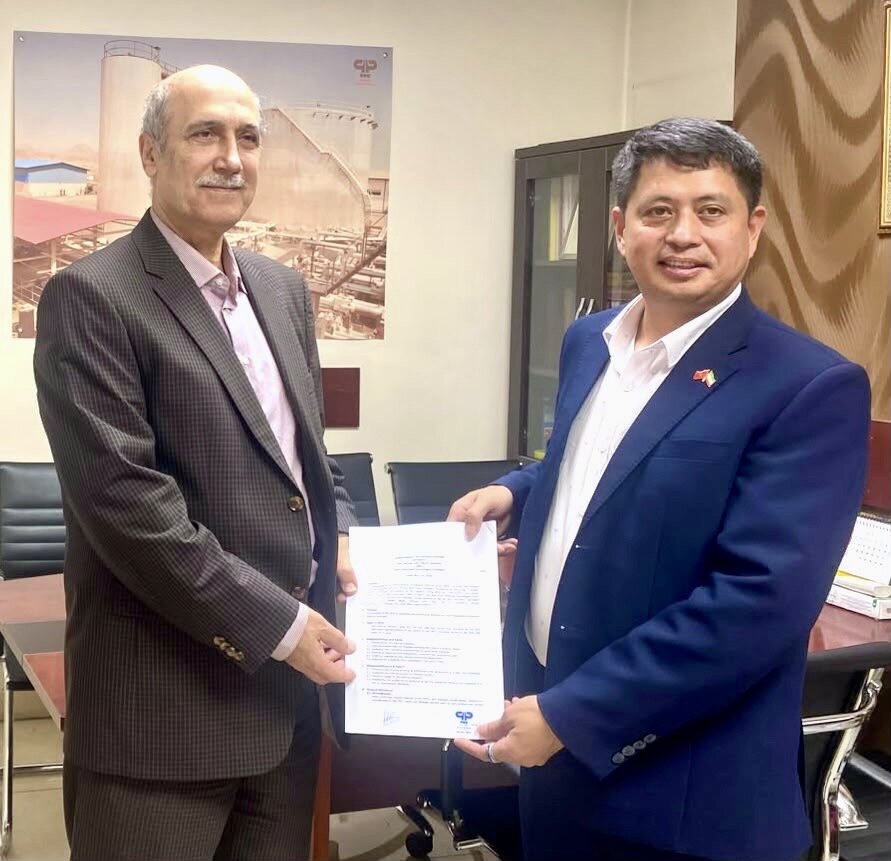
At Petro Pasargad’s headquarters, the delegation met with the Chief Executive Officer to discuss potential forms of commercial cooperation and signed a Memorandum of Understanding (MOU).
According to the company, its plant produces approximately 300–400 tonnes of bitumen per day, supplied in jumbo bags and steel drums. Before the war, its products were exported to China, Malaysia, Singapore, African markets, Bangladesh, and Viet Nam.
The company reported that, owing to the blockade affecting seaports and difficulties in export operations, it currently offers its products primarily on a Free on Board (FOB) basis. Bitumen prices fluctuate daily, driven mainly by global oil prices and the US dollar exchange rate in Iran.
4.2. Visit to the MED 26 International Medical Equipment Exhibition
In the afternoon, the delegation visited the MED 26 International Medical Equipment Exhibition at the Shahr Aftab Exhibition Centre, organized by Iran’s Ministry of Health.
At the exhibition, the delegation met with Dr. Reza’i, a former Deputy Minister of Health who currently oversees Iranian medical equipment manufacturing and export enterprises. Through his introductions, the delegation established contact with Ohad Group, a manufacturer of oxygen generators and ventilators.
According to information presented by the company, its products are used in approximately 80% of hospitals across Iran and are exported to Iraq, Russia, Belarus, and the Philippines. The company is also implementing a technology transfer agreement for production in Indonesia.
Ohad Group expressed interest in establishing a joint-venture manufacturing facility in Viet Nam, with phased technology transfer to help strengthen domestic medical equipment production capacity.
5. Conclusions and Recommendations
The mission enabled the delegation to assess logistics infrastructure, examine industrial production capabilities, engage with Iranian exporters, and establish business contacts in the medical equipment sector.
Key outcomes included an initial assessment of bonded storage and land-leasing opportunities at Shahid Rajaee Port; the signing of an MoU with Petro Pasargad to advance cooperation in the bitumen sector; and the establishment of contact with Ohad Group to explore joint-venture manufacturing and medical equipment technology transfer in Viet Nam.
It is recommended that follow-up engagement with the Iranian partners focus on clarifying commercial terms, logistics arrangements and specific cooperation mechanisms, while assessing the legal, financial and technological feasibility of the proposed projects in Vietnam.
On Friday, October 16, in Tehran, a memorandum of understanding was signed between DHT Mining Joint Stock Company, represented by Mr. Nguyen Dang Dinh, and Petro Pasargad Hormozgan Company, represented by Mr. Mostafa Hajihosseini. The MOU covers the provision and distribution of bitumen of POH origin in Vietnam.
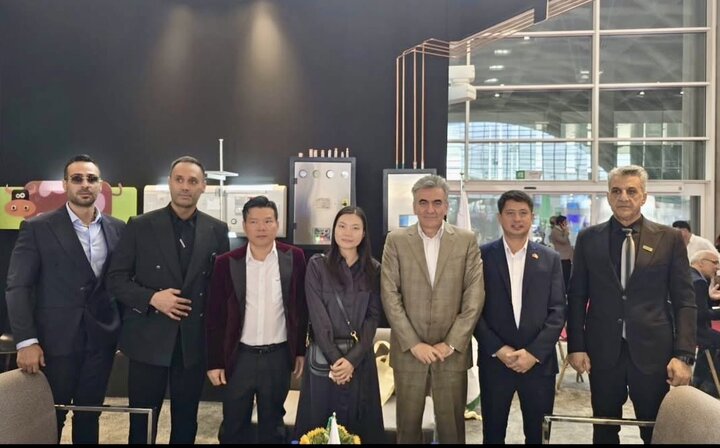
The same day, the Vietnamese delegation visited the specialized exhibition for medical, dental, laboratory, and pharmaceutical equipment, “Iran Med 2026,” at the Shahr-e Aftab International Exhibition Center. The delegation held intensive B2B negotiations with Iranian counterparts. During its stay, the delegation has also visited various cities, including Bandar Abbas, and Shiraz Expo.
Dinh identified banking restrictions as the main operational concern. He called for flexible settlement frameworks, such as bilateral barter trade or compliant local-currency clearing, to reduce exchange costs and transaction friction. Official Vietnam–Iran trade is around $170 million, but much of the real trade may pass through third countries. He said actual potential is significantly higher because the two economies are complementary. To make flows more direct and transparent, businesses need market intelligence, trade expos, and official business-matching platforms.
The most realistic sectors for immediate cooperation, he said, include agriculture and food processing; industrial raw materials such as specialty chemicals, construction supplies, and polymers; and healthcare and pharmaceuticals, including medical equipment, active ingredients, and biotechnology. Key supply-chain bottlenecks include long transit times, high freight costs, and differing quality-compliance frameworks such as Halal certification. He recommended direct links with regional logistics providers and mutual recognition between regulators to standardize inspections and expedite customs clearance.
Vietnam’s 17 free trade agreements and access to 60 economies offer a platform for joint ventures or Vietnam-based production. Iranian firms can add value inside Vietnam and jointly access ASEAN and wider international markets under compliant arrangements. For the business community, a successful mission means vetted leads, initial contracts, and MOUs for non-sanctioned goods. Chambers of commerce and trade promotion agencies should maintain direct communication and organize regular exchange delegations to turn these discussions into long-term trade and investment partnerships.
Leave a Comment