Emergency restoration begins at damaged historic sites in Isfahan
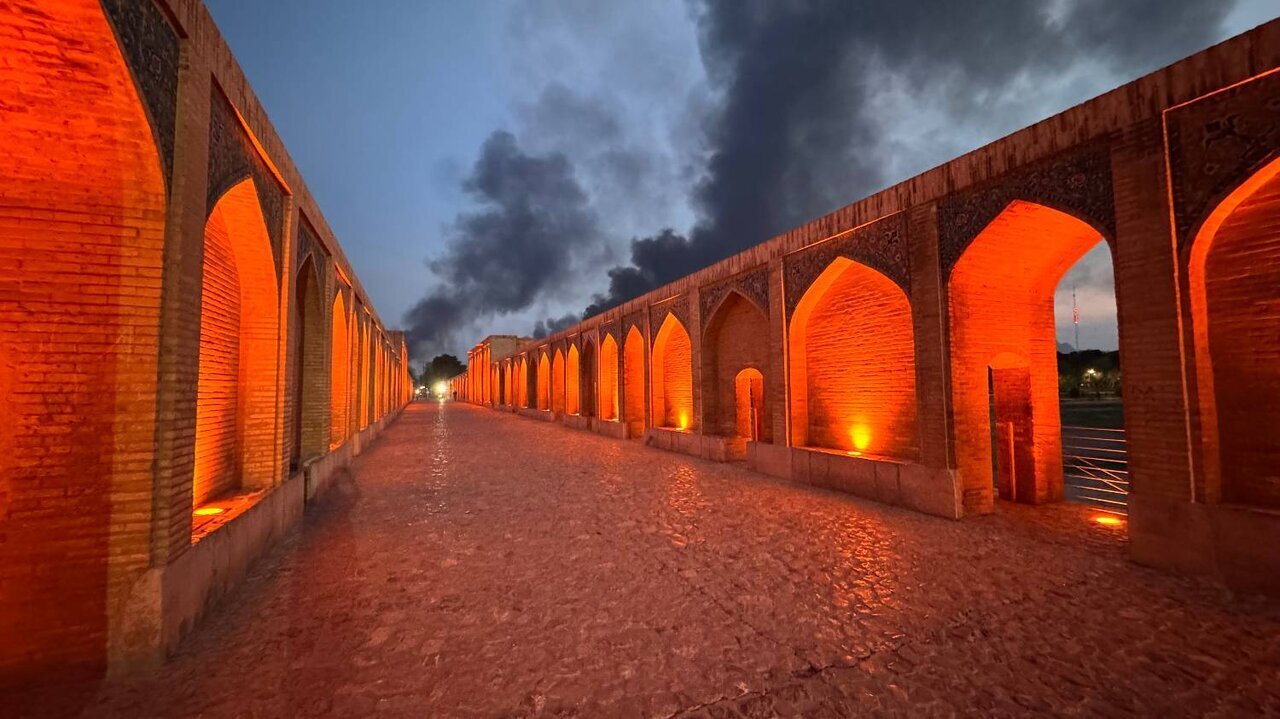
TEHRAN – Emergency restoration work has begun on damaged historical monuments in Isfahan province, a provincial official said on Monday, following the US-Israeli attacks that affected dozens of heritage sites.
“Preliminary estimates indicate that the extent of damage is rising, and urgent measures are needed in three areas: structure, decorations and technical assessments,” Amir Karamzadeh, head of the provincial department of the Ministry of Cultural Heritage, Tourism and Handicrafts, said on Monday.
He said a provincial technical council has been formed with the participation of experts from the ministry and the Research Institute of Cultural Heritage and Tourism to assess the damage. Early findings suggest that many historic buildings have sustained structural damage, while deterioration of decorative elements is continuing.
Karamzadeh said detailed technical and decorative studies would be the first step in the restoration process.
He added that funding has been allocated by the governor-general office of Isfahan to support emergency interventions aimed at stabilizing vulnerable structures and preventing further deterioration.
“With the governor-general’s support, funds have been allocated to carry out emergency restoration so that stabilization and protection can begin quickly in some locations. These measures are limited to urgent interventions to prevent further damage,” he said.
According to Karamzadeh, the initial phase of emergency restoration will focus on several key sites, including Ashraf Hall, Rikabkhaneh, Jebeh Khaneh, Chehel Sotoun Palace and the Naqsh-e Jahan Square complex.
He said additional national funding is expected to be allocated next week following instructions from the minister, which would allow for more comprehensive restoration work beyond emergency measures.
Karamzadeh also said that Isfahan University of Art is cooperating on specialized restoration studies, with separate funding provided by the Ministry of Science for academic involvement in technical and decorative assessments.
He added that six official experts from Iran’s judiciary have been tasked with determining the precise extent of the damage, although a final report has not yet been completed.
One of the considerable damages was reported near the Naqsh-e Jahan Square, where tiles from the northern and western iwans of the Imam Mosque were dislodged in some areas due to blast waves. The mosque is part of the UNESCO-listed square, which officials say was affected by nearby explosions.
Authorities said further damage occurred following a separate strike on the Isfahan governorate building, located within the Safavid-era state complex area, which lies within protected zones of both Naqsh-e Jahan Square and Chehel Sotoun Palace.
Several prominent landmarks within the Safavid complex, including Ali Qapu Palace, Chehel Sotoun Palace, Ashraf Hall, Rikabkhaneh and Jebeh Khaneh, sustained damage from blast waves, according to officials.
Provincial authorities said a total of 28 historical sites in Isfahan province were affected by the US-Israeli strikes.
Additional damage was reported in other counties of the province, including historic buildings in Shahreza, Kuhpayeh and Khansar, such as caravanserais, mosques, schools and residential houses.
AM
Leave a Comment