Over 8m tons of goods loaded, unloaded in Hormozgan ports during war
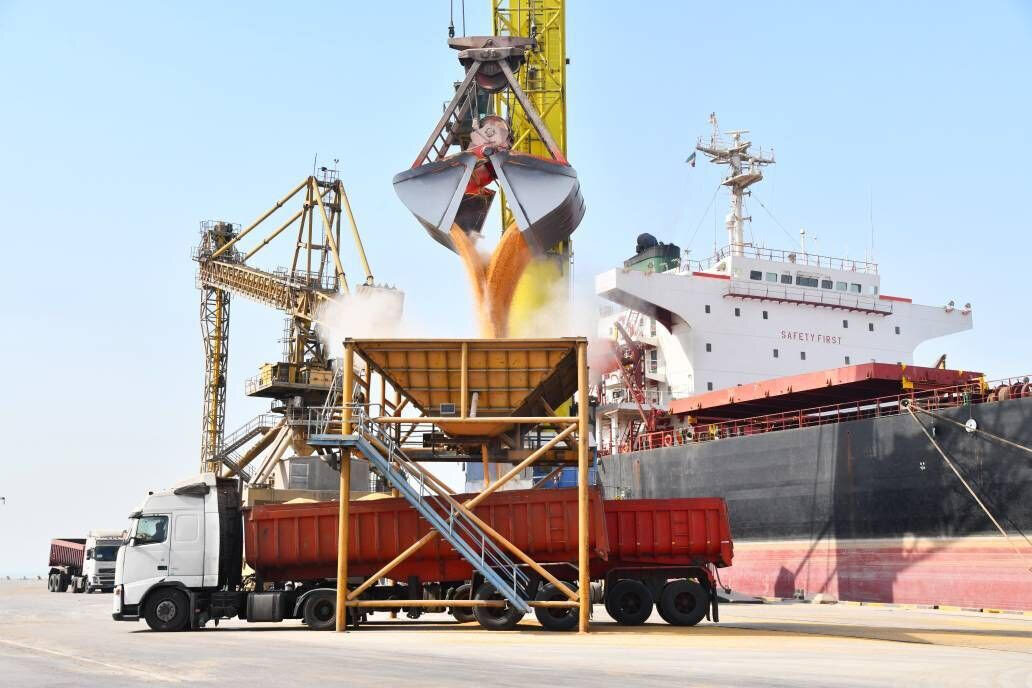
TEHRAN- The Governor of Hormozgan has reported over eight million tons of cargo loading and unloading operations in 12 ports of the province during the third war of aggression.
According to IRNA, Mohammad Ashouri stated during a visit to Shahid Bahonar Port in Bandar Abbas: "During this period, more than 4.2 million tons of goods were exported from Hormozgan's ports, and nearly 3.8 million tons of goods were imported into the country."
Referring to the operation of all 12 commercial ports of the province during this time, he described the uninterrupted continuation of exports and imports of essential goods as the result of three key factors: the effective performance of the province's economic headquarters, the optimization and shortening of port and customs processes, and the close cooperation of executive bodies, organizations, and cargo owners in achieving this record.
The Governor of Hormozgan emphasized the important role of transportation in loading and unloading this volume of goods, stating: "The General Department of Road Maintenance and Railways of Hormozgan Province played a significant role in creating this record, which deserves appreciation."
Ashouri continued: "The strategic reserves of Hormozgan Province are stable, and necessary forecasts have been made for at least the next six months, so people should not worry about securing their essential goods."
He added: "This achievement demonstrates the success of an integrated management approach and inter-sectoral coordination under sensitive economic and sanctions conditions."
According to IRNA, Shahid Bahonar Port — a port with a long-standing heritage in the heart of the Persian Gulf — remains one of the vital pillars of the country's maritime trade network. This port, which before the construction of Shahid Rajaee Port was the main commercial terminal of Hormozgan and even the entire country, still plays a key role in the trade exchanges of the eastern province with an annual cargo handling capacity of 2.5 million tons.
Situated along the northern shores of the Persian Gulf and the Gulf of Oman, Hormozgan Province is the undisputed maritime heart of Iran’s economy.
Home to the Strait of Hormuz—one of the world’s most vital energy chokepoints—the province serves as the primary gateway for both Iran’s crude oil exports and its non-oil trade. Its strategic location, coupled with advanced port infrastructure, makes Hormozgan indispensable to the nation’s commercial and industrial life.
At the core of Hormozgan’s economic role are its two major ports: Shahid Rajaee and Shahid Bahonar.
Shahid Rajaee is Iran’s largest and most modern container terminal, handling over 80 percent of the country’s containerized cargo. Shahid Bahonar, with an annual capacity of 2.5 million tons, remains a key asset for regional trade, especially for the eastern provinces. Together with ten other commercial ports, these facilities form a dense maritime network that connects Iran to global markets.
The province’s economic significance extends far beyond oil. It is a major hub for the import and export of essential goods, including food, pharmaceuticals, construction materials, and industrial equipment. During periods of external pressure—such as sanctions or military conflict—Hormozgan’s ports have proven resilient.
Hormozgan is also an emerging industrial zone. The province hosts numerous petrochemical plants, steel mills, and mineral processing facilities, benefiting from proximity to both raw materials and export routes.
Free trade zones such as Kish and Qeshm, administratively linked to the broader regional economy, further enhance Hormozgan’s appeal for foreign and domestic investment.
In summary, Hormozgan is far more than a provincial economy—it is the linchpin of Iran’s international trade. Its ports, industrial capacity, and strategic location enable the country to withstand economic sanctions, military threats, and global supply chain disruptions.
As Iran continues to develop alternative trade corridors and strengthen ties with neighboring states, Hormozgan remains at the forefront, ensuring that the flow of goods—and with it, the nation’s economic survival—never stops.
Meanwhile, considering the country’s current wartime conditions, it should be noted that Iran's northern ports in the Caspian Sea have served as alternative routes, compensating for some maritime restrictions in the south. This dual-port strategy allowed the country to reroute critical shipments through Central Asian neighbors, preventing a complete halt in trade flows during the peak of hostilities.
EF/MA
Leave a Comment