Persian translation of “The Secret of the Galician Bagpipe” unveiled
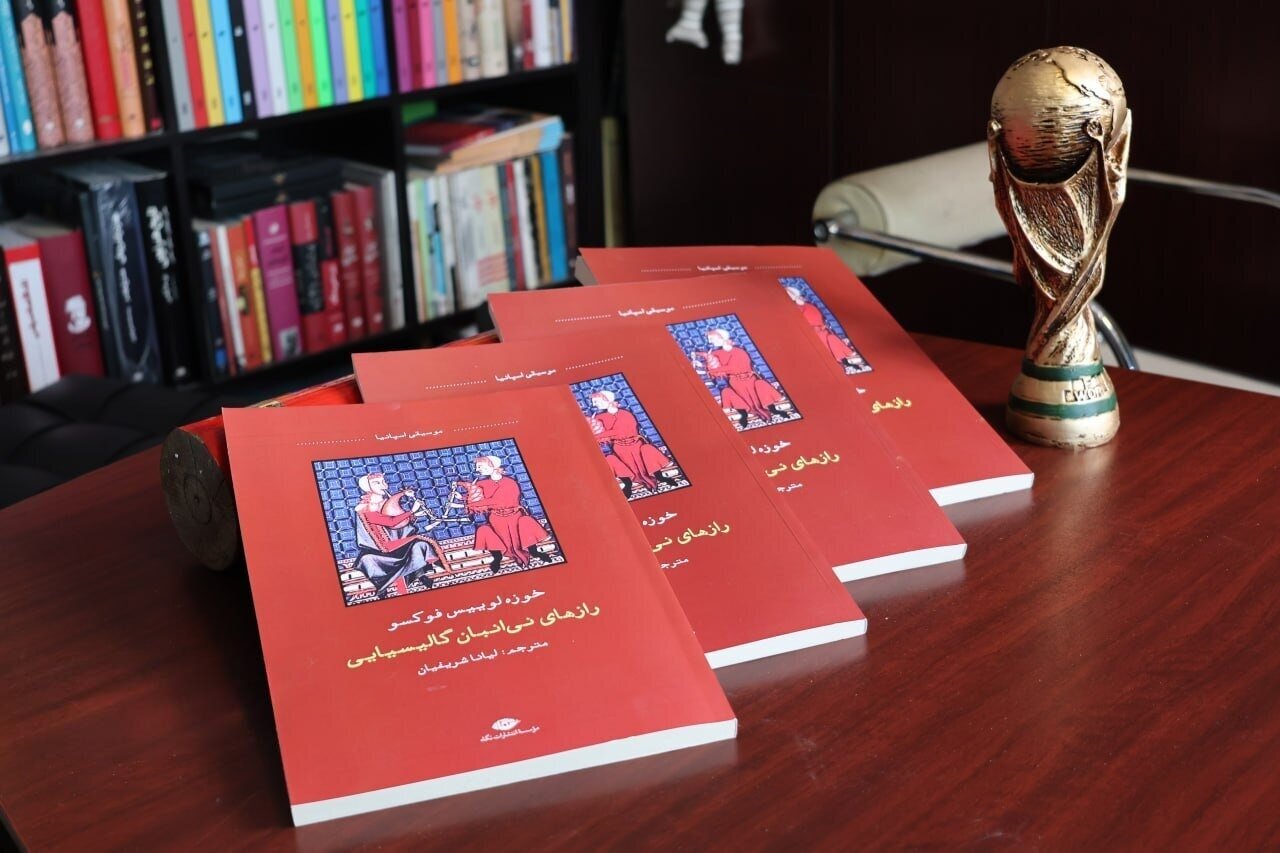
TEHRAN – The Persian translation of the book “The Secret of the Galician Bagpipe” written by Xose Lois Foxo was unveiled on Saturday, July 25, in Tehran, in a ceremony attended by the book translator, well-known bagpipe player Liana Sharifian and her father, prominent bagpipe player Mohsen Sharifian.
Liana Sharifian, 28, is a music researcher, performer, and translator specializing in regional music, particularly Ney Anban, the traditional Iranian bagpipe. She spent a period in the Galicia region of Spain, studying and training on the Galician bagpipe. She has now shared her experience with Persian-speaking audiences through the translation of the book “The Secret of the Galician Bagpipe,” ISNA reported.
During the ceremony, Liana spoke about her motivation for publishing the book under current conditions in Iran, as the country has been at war with the US in the past months: “I have always believed that art and culture find their way, even in the darkest of days. Every book published, every piece of knowledge shared, and every bridge built between cultures is a response to violence and despair. That is why I decided not to wait for better days and to release this book in the current circumstances.”
Explaining her fascination with other cultures and languages, she added: “I studied for six months in Galicia, in northwestern Spain, and became familiar with the culture and music of the region. The author of this book taught me a love for culture and its promotion, and I translated this work into Persian to pay my dues to the community of Iranian musicians.”
Regarding the content, Sharifian noted: “This book is not merely a translation; it is a bridge between the cultures of Iran and Spain. The book covers the history, structure, playing techniques, and various types of Galician bagpipes. In the footnotes, I have added explanations and comparisons with Iranian culture and music wherever possible.”
Highlighting the historical background of the bagpipe in Iran, she said: “Based on historical evidence, there are carvings of instruments similar to the bagpipe at Taq-e Bostan in Kermanshah, dating back to the 6th century BC, as well as artifacts from Susa and Haft Tapeh dating to the 8th century BC. This was very interesting to the school where I studied, and they even hung a picture of Taq-e Bostan in their educational space.”
“This work can serve as a source and educational reference for musicians who want to learn the Galician bagpipe in the Spanish style. About three-quarters of the book is dedicated to lessons, exercises, and training; readers can follow it as a self-study guide, from music theory topics to basic exercises and the performance of local pieces,” Sharifian added.
Reflecting on her life in Spain, she added: “In terms of temperament, there are many similarities between the people of Iran and Spain. In the realm of music, in addition to historical commonalities, some of the rhythms and structures of the Galician bagpipe share similarities with the music of Southern Iran. Throughout my time in Spain, whenever I had the opportunity, I talked about Iran, the music of the south, and my country’s culture, and I consider this my greatest achievement.”
Liana Sharifian is a professional player and teacher of the Iranian bagpipe, the Ney Anban. From the age of 16, she studied with her father, the acclaimed piper Mohsen Sharifian.
She has distinguished herself by becoming the first documented woman player of the Ney Anban. Passionate about all the bagpipes of the world, she obtained a diploma in Galician Gaita from the school in Ourense. She has appeared on numerous recordings, both as a vocalist and a piper.
The Ney Anban is a captivating Persian music instrument that resonates with the soul of southern Iran’s cultural heritage. With its emotive melodies and distinctive construction, this folk music instrument has been a cornerstone of community life in provinces like Bushehr, Hormozgan, and Khuzestan for centuries.
From accompanying fishermen at sea to enlivening weddings and rituals, the Ney Anban embodies the spirit of Iranian cultural heritage, blending Persian, Arab, and African influences into its vibrant sound.
SS/SAB
Leave a Comment