Iraqi resistance: Our response to America is on the way—perhaps in Saudi Arabia
In the joint US-Saudi aggression on multiple locations in Iraq, 20 PMF members , including 5 Iranian military advisors, are martyred
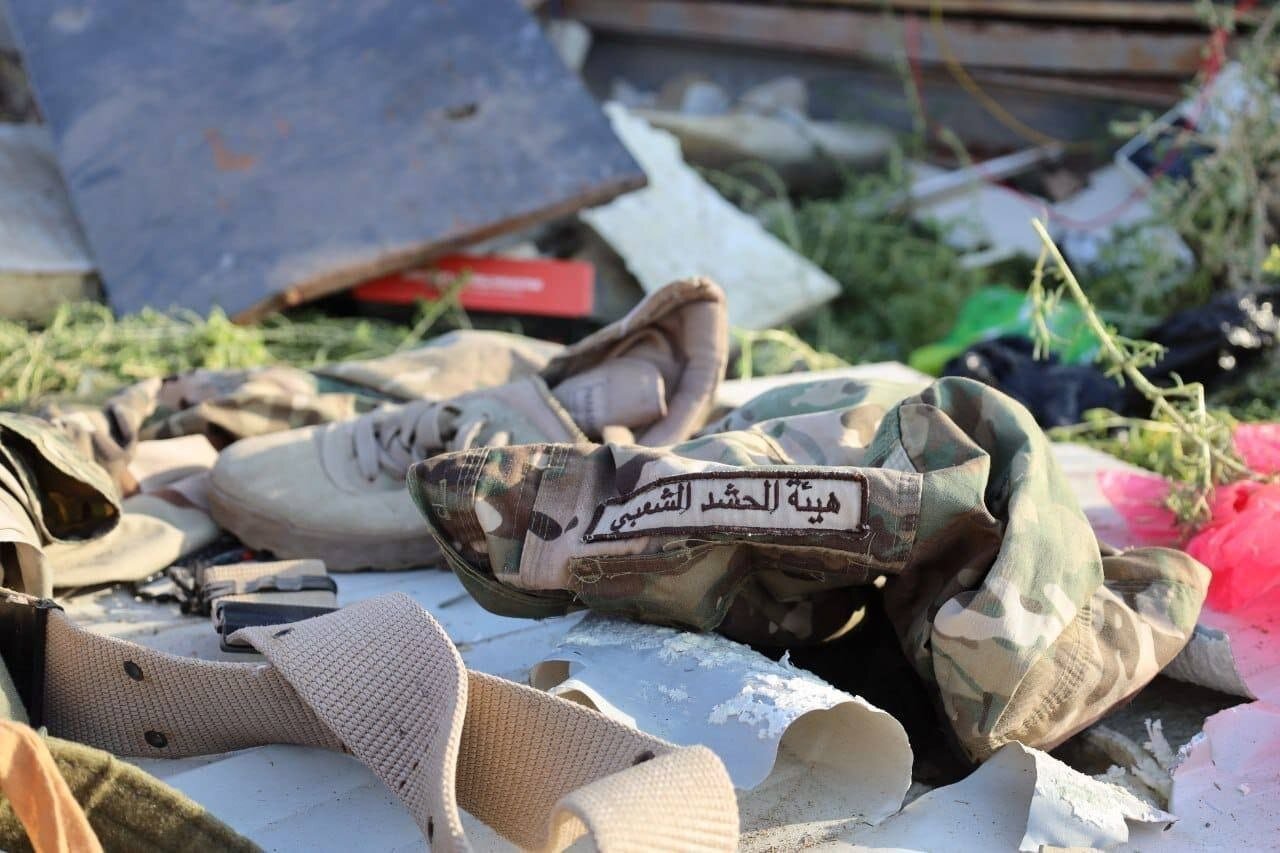
TEHRAN – The Iraqi National Security Council condemned the joint U.S.-Saudi attack on the country following an emergency meeting chaired by Commander-in-Chief of the Armed Forces, Prime Minister Ali Al-Zaidi.
The official spokesperson for the Iraqi Commander-in-Chief, Sabah Al-Numan, said the aggression “came while the government was conducting an investigation to address the concerns raised by both the Saudi and U.S. sides regarding the targeting of Saudi Arabia.”
According to Al-Numan, the council “decided to implement a security plan to maintain control on the ground and confront any violation of Iraq’s sovereignty.”
Earlier on Wednesday, various headquarters and locations across Iraqi territory were subjected to aerial strikes, coinciding with a joint U.S.-Saudi announcement that attacks had been carried out against sites inside the country.
In a statement, the Popular Mobilization Forces (PMF) announced that “at least 20 soldiers were martyred and another 32 wounded in a preliminary toll from the terrorist attacks carried out by the joint U.S.-Saudi aggression, which targeted several official PMF headquarters across several Iraqi provinces.” Five members of Iran’s IRGC have also been martyred in Iraq’s Diyala province.
Yet beneath this official narrative lies a web of inconvenient truths, deliberate evasions, and a contempt for Iraqi sovereignty that reveals the true calculus driving Washington and Riyadh.
Saudi Arabia blamed the PMF for recent drone attacks that targeted critical oil facilities in its eastern province, despite Yemen’s Ansarullah claiming full responsibility for the operation. The irony is that Saudi Arabia announced it had intercepted the drone attacks.
By choosing to strike Iraq, the Saudis may have opened a Pandora’s box that could backfire in ways that Riyadh and Washington had not fully anticipated.
First, the strikes have unified Iraq’s fractious political landscape against Riyadh. Prime Minister Ali al-Zaidi’s cancellation of his diplomatic visit to Saudi Arabia on Thursday signals a significant strain in relations between the two sides. Iraqi parties have come out in a show of solidarity with the PMF.
Second, targeting the PMF, which is integrated into the Iraqi state, has given the government in Iraq little choice but to reconsider its security cooperation with Washington. Calls for a “comprehensive review” of security agreements with the U.S. have already emerged from politicians in Baghdad.
Third, the Islamic Resistance in Iraq has pledged a “harsh response” to Saudi actions. Iraq’s territory will now potentially serve as a launchpad for attacks against Saudi Arabia. Riyadh has provoked a determined adversary along its border. The Kingdom’s oil infrastructure, which constitutes the lifeblood of its economy, has already been shown to be vulnerable.
The Islamic Resistance in Iraq also said, “Our response to America is on the way—perhaps in Saudi Arabia.”
Ansarullah in Yemen has already demonstrated its ability to strike deep into Saudi territory, and now Iraqi resistance movements have every incentive to join the fight.
Fourth, the strikes have further united the Axis of Resistance, from Iran to Iraq, and Yemen, against a common enemy. Rather than weakening this alliance, Riyadh has strengthened it.
The most glaring contradiction in the U.S.-Saudi justification is the fear of confronting the party that actually claimed responsibility for the attack. Just hours before the Saudi claim of drones from Iraq targeting its eastern province, Yemen’s Ansarullah claimed responsibility.
Yahya Saree, the movement’s military spokesman, explicitly stated that the launching of drones was a retaliation for Saudi violations of Yemeni airspace and the continued brutal siege on the Yemeni people.
The Ukraine bombshell
While Saudi Arabia and the U.S. rushed to pin blame on Iraq, the country’s top security official was revealing a far more complex picture. On the same Monday that Riyadh claimed to have intercepted drones from Iraq, National Security Advisor Qasim al-Aboudi announced that Iraqi authorities had arrested groups working on behalf of Ukraine inside Iraq.
These groups confessed to carrying out attacks on Iraqi territory. While acknowledging the investigation was at a preliminary stage, he emphasized that “the incidents inside Iraqi territory are a complex case” requiring extensive investigation.
This revelation raises a troubling possibility: were these Ukraine-affiliated cells also operating false flag operations, potentially staging drone attacks as well, designed to provoke a U.S.-Saudi military response against Iraq? The timing is certainly suggestive.
Yet Washington and Riyadh have shown zero interest in investigating this possibility. The arrests by Iraqi authorities have been met with silence from the Pentagon and the Saudi Ministry of Defense.
Strategic convenience: Why Iraq over Yemen?
Saudi Arabia spent nearly a decade bogged down in the Yemeni quagmire, suffering humiliating defeats against Ansarullah’s resilient fighters and failing to achieve any of its stated objectives. Escalating against Yemen today would risk a costly ground war, expose the Kingdom’s military vulnerability, and potentially destabilize the very oil infrastructure it seeks to protect. It would also force Riyadh to acknowledge the effectiveness of Yemen’s resistance, something the kingdom is ideologically unwilling to do.
The IRGC casualties: A calculated message
Five Iranian IRGC members were also martyred. This was not collateral damage; it was a message. By killing Iranian military personnel on Iraqi soil, the U.S. and Saudi Arabia are deliberately escalating tensions with Tehran while maintaining plausible deniability.
This calculated provocation risks triggering another wider regional war, precisely the outcome that genuine parties committed to de-escalation would have avoided.
Iraqi reactions
The strikes drew swift and sharp condemnation, with Iraqi political leaders and resistance movements delivering some of the most pointed responses.
Hadi al-Amiri, head of the Badr Organization, issued a strongly worded statement condemning the Saudi role: “Today, Saudi Arabia is once again pursuing this hostile approach toward Iraq and its people in an even more overt manner.
“The Saudi regime has returned to these actions without any justification or clear evidence. The objective is evident: to diminish Iraq’s role as a country that advocates for stability and an end to wars in the region.”
Various veteran Iraqi politicians, including Ammar al-Hakeem, echoed those words.
Harakat al-Nujaba condemned the “sinful U.S.-Saudi aggression,” calling for the “expulsion of the occupier and the elimination of agents.”
The resistance movement warned that the continued presence of U.S. military bases and facilities on Iraqi soil “poses an imminent threat to the security and stability of the country.” It also called for cutting all forms of cooperation with Saudi Arabia, accusing it of being “the head of the snake and the financier of terrorism against Iraq and its people.”
The movement urged the Iraqi government not to limit itself to statements of condemnation, demanding the immediate acquisition of advanced air defense systems and accountability for those responsible for leaving Iraqi airspace “exposed to violations.” It further stated that it “will not allow the tyrants of Washington and the Arabs of Saudi Arabia to desecrate Iraqi soil without paying a heavy price.”
Secretary-General of Asa’ib Ahl al-Haq, Qais al-Khazali, warned of serious consequences and emphasized the need to complete the withdrawal of foreign forces from Iraqi territory while developing Iraq’s defensive capabilities.
The Islamic Dawa Party rejected what it described as “claims” that attacks against Saudi Arabia had originated from Iraqi territory, saying such allegations require conclusive evidence and documentation.
After the Islamic Resistance in Iraq issued a blistering statement on July 27, directly challenging the Saudi narrative and categorically denying any involvement in targeting Saudi Arabia or its facilities, the network of resistance movements published the following on Wednesday night:
“The American enemy committed a new crime by targeting members of the PMF and a service convoy assisting visitors of Imam Hussein in holy Karbala, resulting in dozens of martyrs and wounded. Without doubt, the Saudi regime has never been and will never be anything but a treacherous dagger controlled by the White House and its suspicious intelligence agencies. Just as it previously used its capabilities to facilitate the movement of suicide attackers to spill the blood of Iraqis, today it is once again compelled to renew its role of servitude by carrying out the criminal orders and demands of its masters in an attempt to undermine the will of our proud people.”
Iraq had previously accused Saudi Arabia of brainwashing terrorists who were sent to the streets of Iraq, in particular Baghdad, and detonating explosives that killed thousands of civilians.
The statement goes on to cast doubt on the Saudi allegations: “Even if we were to accept, for the sake of argument, their claim that the source of the attack on their oil facilities came from Iraq, is it reasonable to respond to an alleged unsuccessful attempt to target an oil field by killing and injuring dozens of innocent people?”
The Islamic Resistance in Iraq goes on to declare:
“First: We grant the government authorities who called on the resistance to disarm, a deadline until August 7, to see what actions they will take.
Second: To prevent any disruption to the blessed Arbaeen pilgrimage before its ceremonies are completed, we affirm that our response to the American enemy is inevitable, and may target its tools in Saudi Arabia whenever circumstances require.”
The reckoning ahead for Saudi Arabia is a reality that appears to have entirely eluded the rulers in Riyadh. This aggression was neither justice nor self-defense. In the long run, these strikes may prove to be a huge strategic blunder.
Leave a Comment