Hybrid war arrives against Spain
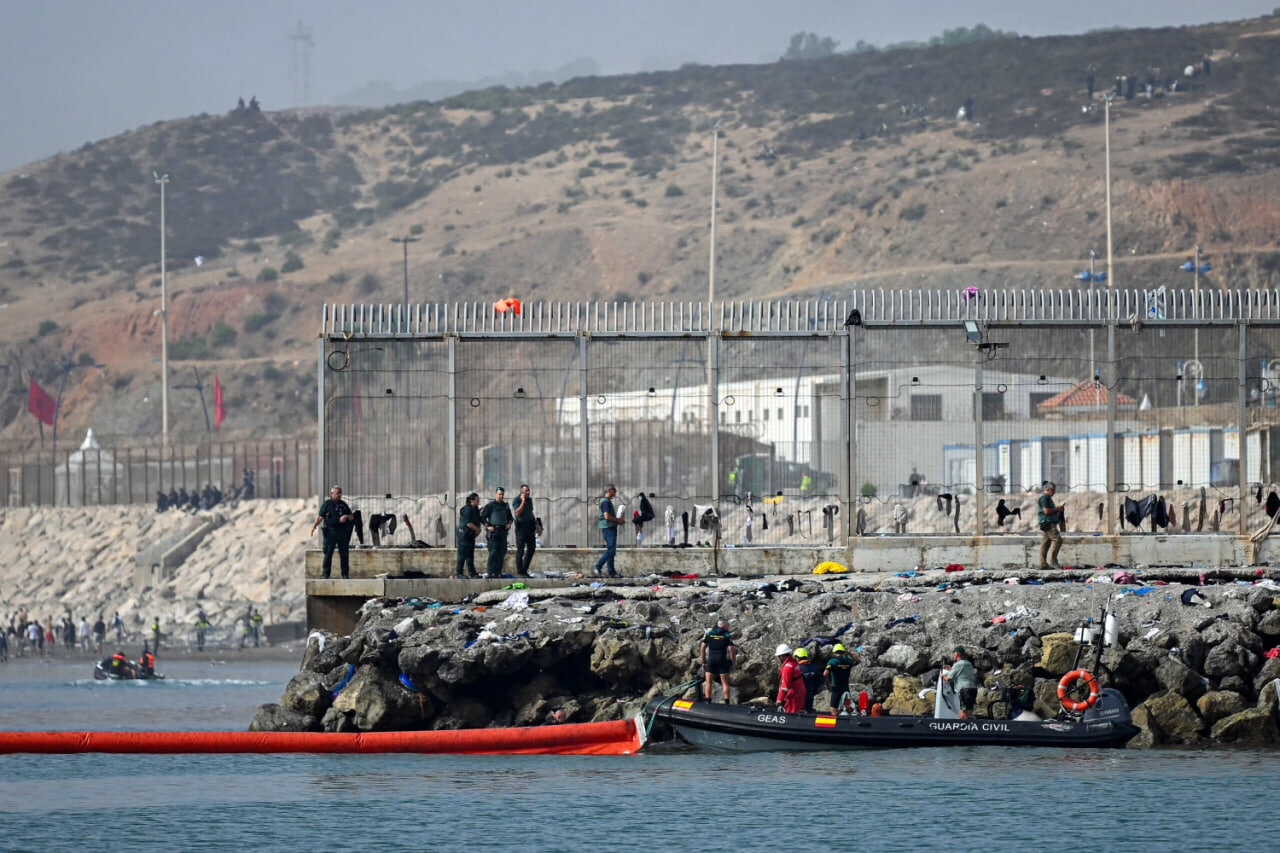
MADRID - The events in Ceuta, one of Spain’s territories in continental Africa, have sparked a dual debate. Domestically, the right and far-right have accused Pedro Sánchez’s government of “negligence in the face of an invasion.” The President, in turn, called it a "violation of Spain's territorial integrity," stating: "Ceuta is a Spanish city, and yesterday's events deserve our total condemnation." However, the most compelling debate from a geopolitical perspective—and the focus of this article—is Israel’s alleged role in efforts to punish Madrid for its support of Palestine.
The crisis erupted on Thursday, July 30, when nearly 50,000 people from Morocco breached the Ceuta border. Authorities confirmed at least 90 deaths by drowning. Yet, by Friday, Interior Ministry sources indicated over 48,000 migrants had already returned to Moroccan territory.
Speculation about alleged Israeli backing for what some media now call a “hybrid war” against Spain gained traction after articles by pro-Israeli analysts went viral. They argued Washington and Tel Aviv should support Morocco’s claims over Ceuta and Melilla to pressure Madrid. In March, Michael Rubin of the American Enterprise Institute urged Rabat to launch a new "Green March" toward the Spanish enclaves. Writing for the Middle East Forum, Rubin proposed that Moroccan citizens march on Ceuta and Melilla with bulldozers, cross unarmed, and raise the Moroccan flag, framing it as a response to Spain's "anti-colonial hypocrisy."
Morocco has weaponized its population before, notably in April 2021, when 12,000 migrants, including minors, were used as a battering ram at Ceuta. What has changed? Primarily, Spain’s international posture: from rejecting participation in a potential war with Iran to its fierce criticism of the genocide in Gaza. Portuguese political scientist Bruno Maçaes recently highlighted an April article where pro-Israeli analysts urged Tel Aviv to help Morocco take Ceuta to punish Spain. This follows Madrid’s recognition of Palestine in May 2024, its arms embargo, and bans on Israeli-linked fuel ships and military aircraft in Spanish ports and airspace. Tel Aviv condemned these moves as anti-Semitic, prompting Spain to recall its ambassador.
In a similar vein, an April article published by the Israeli outlet Ynet by Amine Ayoub, also of the Middle East Forum, suggested Israel could use its Washington influence to help Morocco "recover" the enclaves. Ayoub argued this would punish a NATO ally for defying US and Israeli policies.
This adds complexity to the Morocco-Israel-US triangle. In 2020, Rabat signed the Abraham Accords in exchange for Washington recognizing its sovereignty over Western Sahara. Israel completed this strategic triangle in July 2023 when Benjamin Netanyahu formally recognized the "Moroccanity" of the Sahara. Highlighting this, Morocco recently named a 1,055-kilometer highway to Dajla the "President Donald J. Trump Highway," physically asserting its control over the UN-listed non-self-governing territory, despite the Polisario Front’s claims for the Sahrawi people.
Clearly, the Ceuta crisis transcends immigration, serving as a tool to condition Spanish and European domestic politics. It has exposed EU fractures and a political offensive against Spain backed by several partners. It began with Italian Prime Minister Giorgia Meloni’s disproportionate demand to “harden Spain’s migration policy.” Rome announced the suspension of Schengen agreements with Madrid, activating border controls for non-EU nationals traveling by air or sea. Poland, Finland, Austria, the Czech Republic, and Denmark quickly followed suit.
Who benefits from this crisis? First, Morocco, which champions the “Moroccanity of Ceuta and Melilla.” Second, Israel, which watches Sánchez’s vulnerable government with satisfaction, aiming to influence the 2027 general elections. For instance, Israeli UN Ambassador Danny Danon tweeted: “Spain, which never misses a chance to lecture Israel, has declared a state of emergency in Ceuta.” It mattered little that Spain hadn’t; the goal was to internationalize the chaos.
The Trump administration, another major beneficiary, echoed this. The State Department expressed “solidarity with the Spanish people” against this “flagrant violation of sovereignty,” adding that the incident was the “direct consequence of the Spanish Government’s deliberate efforts to facilitate mass illegal immigration.” Vice President JD Vance called it a “lamentable reminder of the consequences of mass migration and radical left globalist policies.”
Finally, domestically, the main beneficiary is Vox. The far-right party, aligned with Trump and Israel, centers its discourse on immigration—especially Muslim immigration—seeking to criminalize the "other" and promote the great replacement theory and the loss of cultural "whiteness."
Ultimately, this episode of hybrid warfare against Spain serves as a stark reminder that political actions are not free, and distancing oneself from the United States and Israel comes at a price.
Leave a Comment