Iranian Artists Forum to screen Capra’s “Arsenic and Old Lace”
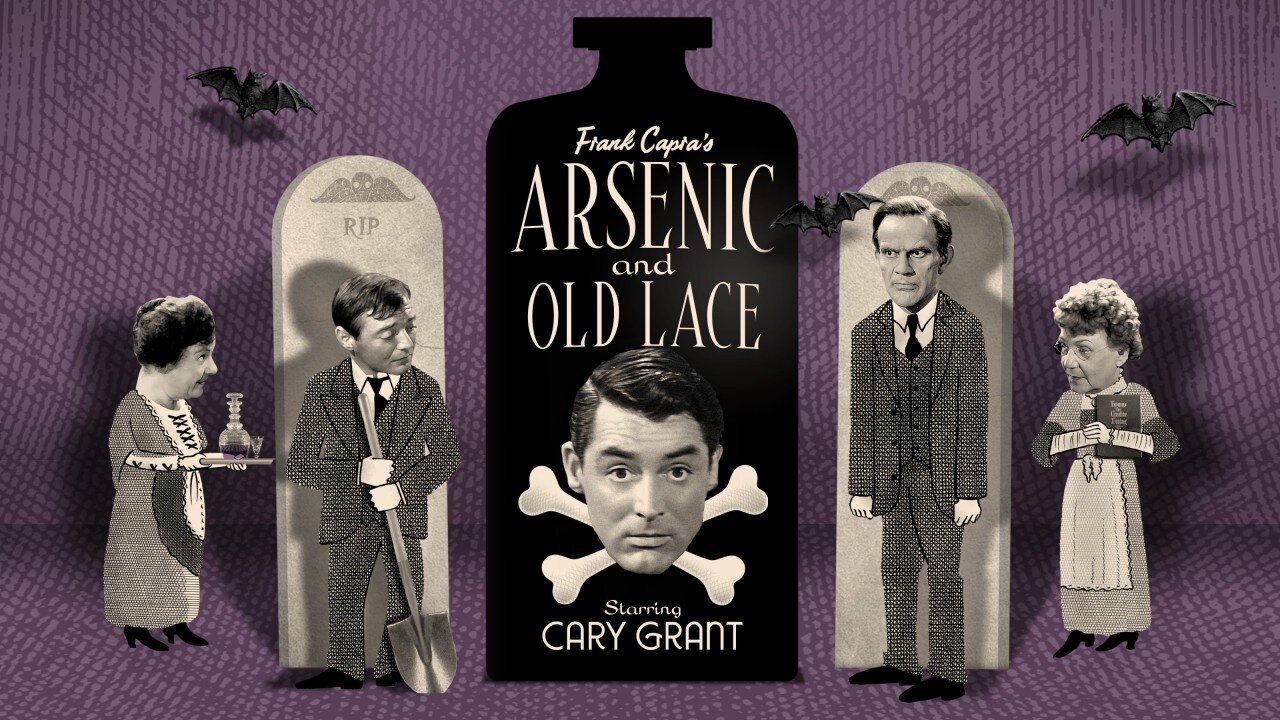
TEHRAN – The Iranian Artists Forum (IAF) will screen the 1944 American screwball black comedy crime film “Arsenic and Old Lace” directed by Frank Capra and starring Cary Grant on Monday.
The movie will be shown at the Nasseri Hall of the IAF at 6 pm, with Persian subtitles, in the presence of the film critic and translator Shahzad Rahmati.
The screenplay by Julius J. Epstein and Philip G. Epstein is based on Joseph Kesselring's 1941 play of the same name.
In the story, Mortimer Brewster, a Brooklyn writer of books on the futility of marriage, risks his reputation after he decides to tie the knot. Things grow complicated when he learns that his beloved maiden aunts Abby and Martha are serial murderers.
The play “Arsenic and Old Lace” was written by Joseph Kesselring, son of German immigrants and a former professor at Bethel College, a pacifist Mennonite college. It was written in the anti-war atmosphere of the late 1930s.
Capra scholar Matthew C. Gunter argues that the deep theme of both the play and film is the United States' difficulty in coming to grips with both the positive and negative consequences of the liberty it professes to uphold, and which the Brewsters demand. Although their house is the nicest in the street, there are 12 bodies in the basement. That inconsistency is a metaphor for the country's struggle to reconcile the violence of much of its past with the pervasive myths about its role as a beacon of freedom.
Frank Capra (1897–1991) was an Italian-born American film director, producer, and screenwriter who was the creative force behind several major award-winning films of the 1930s and 1940s.
Capra became one of America's most influential directors during the 1930s, winning three Academy Awards for Best Director from six nominations. Among his leading films were “It Happened One Night” (1934), “Mr. Deeds Goes to Town” (1936), “You Can't Take It with You” (1938), and “Mr. Smith Goes to Washington” (1939).
After World War II, Capra's career declined as his later films, such as “It's a Wonderful Life” (1946), performed poorly when they were first released. He retired from filmmaking in the mid-1960s. In the ensuing decades, however, “It's a Wonderful Life” and other Capra films were reevaluated favorably by critics.
Outside of directing, Capra was active in the film industry, engaging in various political and social activities. He served as President of the Academy of Motion Picture Arts and Sciences, worked alongside the Writers Guild of America, and was head of the Directors Guild of America.
SS/
Leave a Comment