‘Global energy markets future: Capital flight from Persian Gulf energy industries’
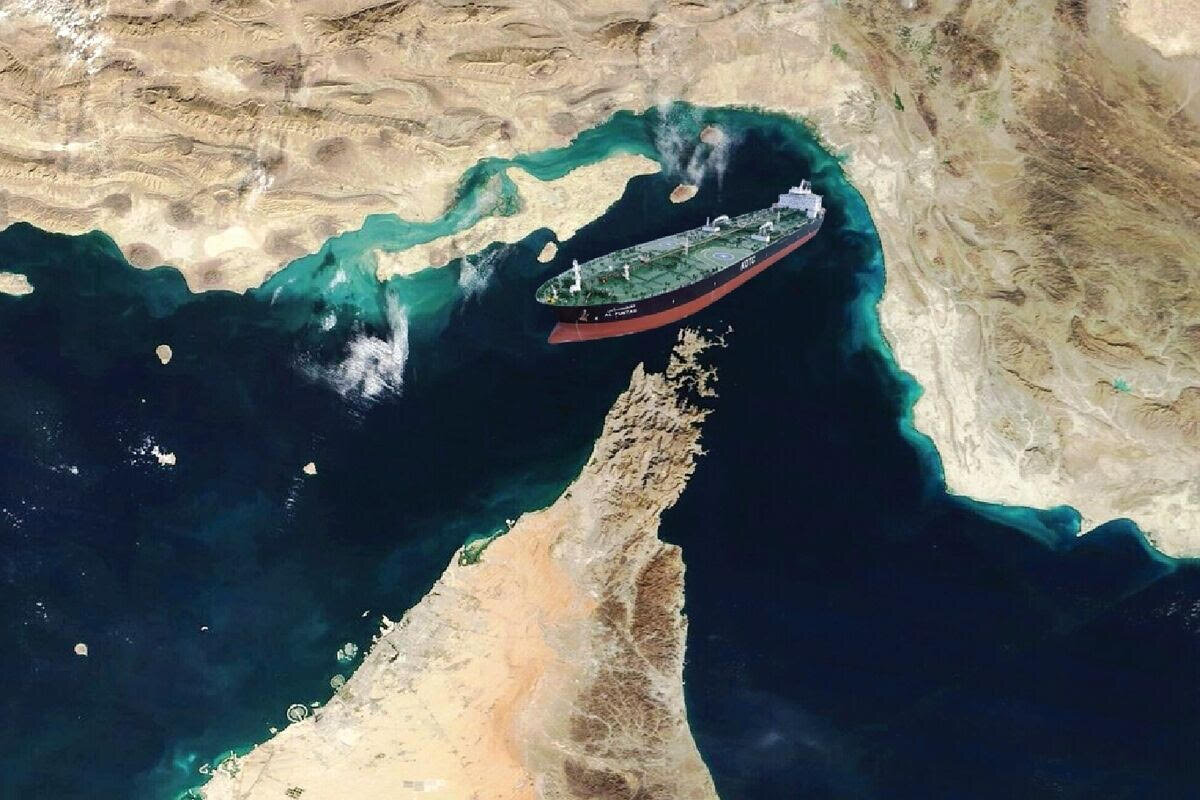
TEHRAN- An international expert on oil and energy, emphasizing that due to domestic conditions in the U.S., Trump wants nothing more than to end the Strait of Hormuz issue as quickly as possible with a triumphant display, said: "Beyond current prices, capital flight from the oil and gas industries of Persian Gulf countries is now a larger problem, fueling uncertainty about the future of the energy market."
Fereydoun Barkeshli, speaking to IRNA, commented on the past week's developments in global energy markets and the future of prices, stating: "After the announcement that talks between Iranian and American delegations in Islamabad had failed, Trump declared that he would block the entrance to the Strait of Hormuz in the Persian Gulf. Initially, markets interpreted this as a total closure of the strait for all traffic, but it gradually became clear that the target is to stop all ships and tankers carrying goods and crude oil from Iranian ports or bound for Iranian ports."
He added: "A look inside the cycle of these talks shows that they were not truly diplomacy, but rather a path designed for confrontation under the guise of diplomacy. The U.S. Vice President had come to deliver a statement, which Trump impatiently announced just hours later. In fact, the Iranian delegation entered Islamabad with full authority, but the American side had to consult Trump at every step. The composition of the U.S. team also indicated this: a real estate deal advisor, a presidential son-in-law who has now become a politician, and of course the Vice President, whose background is well known to most Americans."
Barkeshli, noting the shocks the global oil market has experienced in recent decades, said: "The global oil market has experienced five major shocks before: in 1973 with the Arab oil embargo, in 1979 with the Iranian Revolution, in 1990 with the U.S. invasion of Iraq, in 2008 with the recession in the U.S. and globally, and in 2022 with the start of the Ukraine war."
This energy analyst added: "Among these crises, the U.S. invasion of Iraq caused the largest supply disruption—5.5 million barrels per day of Iraqi and Kuwaiti production were halted. The global market became turbulent, and Brent crude surpassed $46 per barrel, nearly doubling, to the point where Zaki Yamani (late), the former Saudi energy minister, declared that oil would cross $100."
Barkeshli recalled that during the 1973 crisis, oil prices also multiplied several times, and added: "In the recent crisis, which followed the U.S. and Israeli attack on the Islamic Republic of Iran and led to the blocking of the Strait of Hormuz, about 10 million barrels per day of regional oil supply were cut off, but prices at their peak only reached $119 per barrel for a short period."
Explaining why oil prices did not set record highs for futures during the recent crisis, he said: "The first reason was the high level of stockpiling by countries, such that China's strategic and commercial reserves reached 1.2 billion barrels, and the U.S., the European Union, and other industrialized countries also had high reserves. Only India lagged somewhat because, due to its proximity to the Persian Gulf, it had not built sufficient storage capacity."
Barkeshli cited the second factor as supply overhang from previous OPEC+ decisions. "According to the International Energy Agency, in the fourth quarter of 2025, there was about 3.6 million barrels per day of excess oil in the market—the OPEC secretariat had estimated this figure at less than 1.2 million barrels, but in any case, there was some excess supply."
This energy market expert added: "Thus, the shock of the attack on Iran and the conditional closure of the Strait of Hormuz occurred in a context where the market was prepared to face a major shock."
The international oil and energy analyst believes that beyond prices, capital flight is a larger problem lying in wait for the energy market, as oil companies have become hesitant to invest in Persian Gulf countries—which implies uncertainty about the future of investment.
Barkeshli added: "Currently, Oman is the only country continuing to some extent with normal investment in the downstream sector, while the UAE is the most vulnerable because it is heavily dependent on the Strait of Hormuz."
This oil expert noted: "On the other hand, high oil prices are politically problematic for the U.S. and could threaten Trump's electoral success. But they are also dangerous for OPEC+ members, because prolonged high prices accelerate investment in renewable energy."
He also referred to the U.S. President's announcement that the naval blockade of Iran would continue despite the strait being open to commercial vessels, and said: "Implementing the U.S. threat to attack tankers carrying Iranian oil is possible, but very difficult. Even if only one ship is attacked or stopped, the resulting insecurity would deter other vessels from approaching the region, and insurance companies would not accept the risk. Under these circumstances, we would see a chaotic situation."
Barkeshli commented on China's stance regarding the U.S. decision: "Many world leaders have realized that an unusual person is in the White House, and that one cannot reason with Trump using normal logic. Therefore, negotiation and messaging tactics may need to change constantly."
The international oil and energy analyst also pointed to U.S. domestic problems that affect the future of its conflict with Iran, saying: "The U.S. midterm elections will be held in November 2026. Trump currently has a weak majority in both chambers and is likely to lose it. Given the lag in election activities, he wants to end the Strait of Hormuz issue as soon as possible with a triumphant display."
He added: "Trump is set to travel to Beijing in late May, and this meeting is very important to him. This meeting has already been postponed once, and it is also important for China. But if the U.S. is entangled in war, Trump's position will be weakened. On the other hand, his plan to create a new layer of control and blockage of the Strait of Hormuz also threatens China's oil supply routes."
Barkeshli emphasized: "It seems the U.S. intends to impose a ceasefire similar to past ones on Iran and the region—a ceasefire that benefits the U.S. and Israel but does not secure Iran's long-term interests. Trump, by manipulating data, has created a new statistical regime and hidden oil exchanges behind statistical walls. This can also be seen in the market for floating oil sales, which are trading more than $30 above Brent."
EF/MA
Leave a Comment