South Korean envoy calls for practical steps to expand tourism ties with Iran
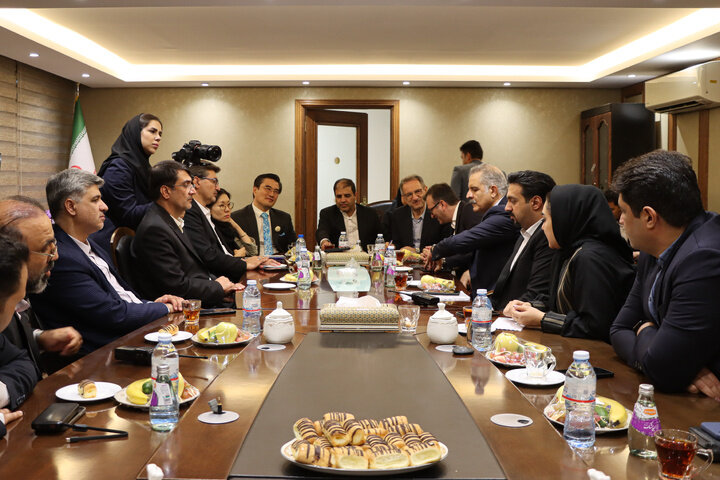
TEHRAN- South Korean Ambassador to Iran Kim Junpyo has called for turning bilateral talks on tourism, cultural heritage and handicrafts into concrete initiatives, saying the two countries should seize opportunities to expand cooperation.
Speaking on the sidelines of the first international tourism exhibition in Yazd on Wednesday, Kim said discussions between Tehran and Seoul should go beyond negotiations and produce tangible results.
The ambassador made the remarks during a meeting with Anoushirvan Mohseni-Bandpei, Iran’s deputy tourism minister, provincial cultural heritage officials, tourism professionals and local authorities.
Kim said the exhibition was a positive experience, giving him an opportunity to become acquainted with Yazd’s tourism potential and capabilities. He described the central Iranian province as a destination with a distinctive historical and cultural identity and considerable tourism attractions.
He expressed hope that his visit would help strengthen relations between Iran and South Korea, particularly in tourism.
Referring to the recent visit by Iran’s minister of cultural heritage, tourism and handicrafts to South Korea, Kim said the two sides held constructive discussions on cultural affairs, heritage preservation, tourism and handicrafts.
He voiced hope that the visit would mark the beginning of a new phase in bilateral relations, stressing that the discussions should lead to specific measures and practical outcomes.
Kim also welcomed a proposal to invite South Korea’s tourism minister to Iran, saying he would convey the invitation proposal to Seoul and inform the minister after receiving an official invitation.
He emphasized the importance of support from the Iranian side in advancing joint initiatives and pledged to work toward promoting Yazd’s tourism capacities and expanding tourism exchanges between the two countries.
For his part, Mohseni-Bandpei highlighted Yazd’s diverse tourism resources, including its historical, cultural, natural and economic attractions.
He said sustainable tourism development requires greater public awareness of the sector’s potential and closer links between tourism and other fields, including environmental protection.
Rural tourism, he added, could become a major driver of tourism development in Yazd, given the province’s villages and their distinctive attractions.
The deputy minister also pointed to mining tourism as an area with considerable potential, citing the province’s extensive mineral resources and the Chadormalu mining complex as opportunities to diversify tourism offerings.
Addressing prospects for Iran-South Korea cooperation, Mohseni-Bandpei said Iran was ready to work with the private sector to showcase its tourism capacities at international exhibitions and facilitate the participation of South Korean representatives in tourism fairs in Iran.
He said a proposal had also been made to invite South Korea’s tourism minister to Iran and establish a joint technical committee to draw up a clear schedule and roadmap for cooperation.
Such a mechanism, he added, could help the two countries pursue tourism initiatives in a more coordinated and effective manner.
The Historic City of Yazd was inscribed on the UNESCO World Heritage List in 2017. Located in Iran's central deserts near the historic Spice and Silk Roads, the city is regarded by UNESCO as a living testimony to the intelligent use of limited resources in a desert environment.
Its traditional urban fabric developed around the qanat water-supply system, with individual districts built around qanats and communal centers. Earthen construction, underground courtyards, wind catchers and thick walls helped residents adapt to the harsh desert climate.
The historic city has retained traditional districts and a range of architectural and urban elements, including qanats, houses, bazaars, hammams, water cisterns, mosques, synagogues, Zoroastrian temples and the historic Dolat-Abad Garden. UNESCO also highlights the longstanding coexistence of Islam, Judaism and Zoroastrianism in the city.
SAB/
Leave a Comment