Reading performance of Bertolt Brecht's "The Caucasian Chalk Circle" in Tehran
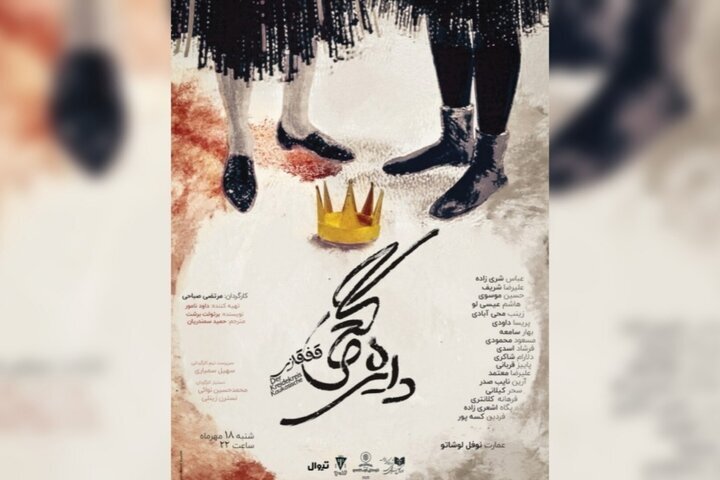
TEHRAN - The Nofel Loshato Theater in Tehran will host the reading performance of the play "The Caucasian Chalk Circle" by the German modernist playwright Bertolt Brecht on Saturday night, October 10.
Directed by Morteza Sabahi, the play will be read by Abbas Sherizadeh, Alireza Sharif, Hossein Mousavi, Hashem Issalou, Zeinab Mohiabadi, Parisa Davoudi, Bahar Same'eh, Masoud Mahmoudi, Farshad Asadi, Delaram Shakeri, Paeiz Ghorbani, Alireza Motamed, Arian Nayeb-ol-Sadr, Sahar Kilani, Farhaneh Kalantari, Pegah Asharizadeh, and Fardin Kasehpour, Mehr reported.
An example of Brecht's epic theater, the play is a parable about a peasant girl who rescues a baby and becomes a better mother than the baby's wealthy biological parents.
The play was written in 1944 while Brecht was living in the United States. It was translated into English by Brecht's friend and admirer Eric Bentley. After Bentley failed to have it programmed at the University of Minnesota, where he taught, it was premiered by his student, Henry Goodman, in a student production at Carleton College, Northfield, Minnesota, in 1948.
"The Caucasian Chalk Circle" is one of Brecht's most celebrated works and one of the most regularly performed German plays.
It reworks Brecht's earlier short story "Der Augsburger Kreidekreis." Both derive from the 14th-century Chinese play "The Chalk Circle" by Li Xingdao.
Brecht, in his typical anti-realist style, uses the device of a "play within a play". The "frame" play is set in the Soviet Union around the end of the Second World War. It shows a dispute between two communes, the Collective Fruit Farm Galinsk fruit-growing commune and the Collective Goat Farmers, over who is to own and manage an area of farmland after the Germans have retreated from a village and left it abandoned.
A parable has been organised by one group, an old folk tale, to be played out to cast light on the dispute.
The Singer, Arkadi Tcheidse, arrives with his band of musicians, then tells the peasants the parable, which forms the main narrative and intertwines throughout much of the play. The Singer often takes on the thoughts of characters, enhances the more dramatic scenes with stronger narration than simple dialogue, and is responsible for most scene and time changes. Often the role is accompanied by several "musicians" that help the Singer keep the play running smoothly.
At the end, he states that the land should go to those who will use it most productively, the fruit growers, and not those who had previous ownership.
SS/
Leave a Comment