DOE unveils global real-time dust source monitoring system
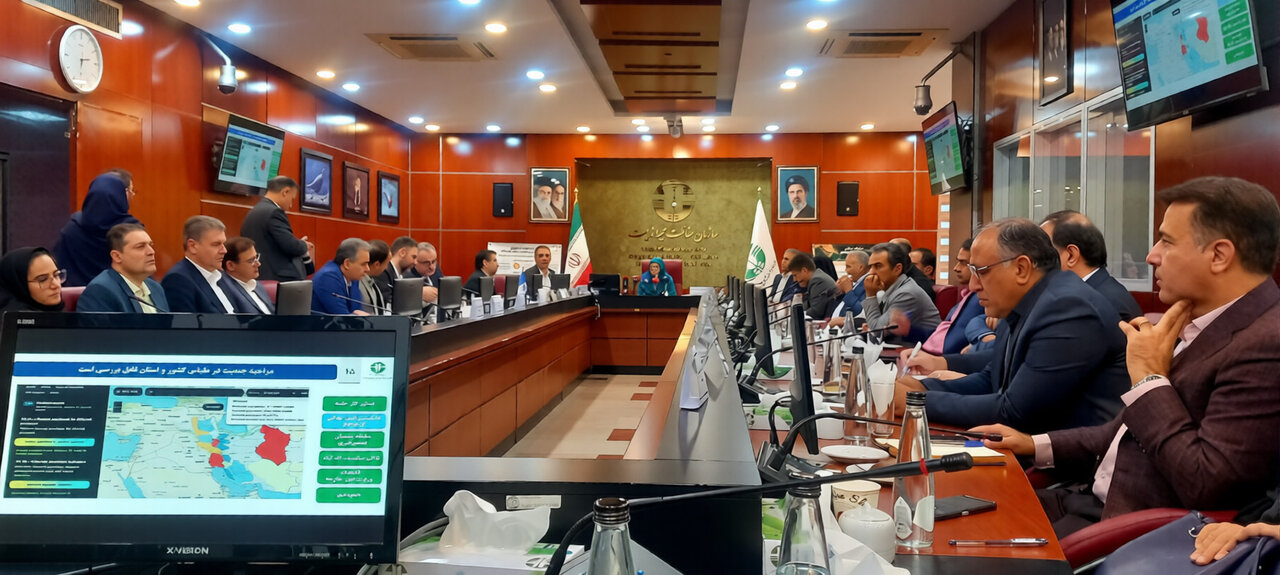
TEHRAN – The Department of Environment (DOE) has unveiled a global real-time monitoring system designed to identify and track dust hotspots around the world.
The system also enables the analysis of dust patterns, the identification of populations at risk, more effective resource allocation, and the implementation of preventive measures to mitigate the impacts of dust storms.
The system comprises 13 stages organized into three main parts, including setting and initial analyses, identification and refinement of hotspots, and management analysis, IRNA quoted the head of Iran’s National Headquarters for Dust Storm Policy and Coordination, Behzad Raygani, as saying.
The official made the remarks on Tuesday while addressing the 24th meeting of the National Headquarters for Dust Storm Policy and Coordination. During the meeting, a decision-support system for managing dust storms was also unveiled in Khuzestan province.
“The system is described as global because it can generate reports on different regions around the world. Users can select their area of interest in the first section and specify a monitoring period, ranging from seasonal intervals to custom time frames. This feature enables more precise tracking of changes over time,” Raygani said.
Given that remote sensing analyses are subject to errors, a specific step has been incorporated for masking and eliminating errors and areas that do not generate dust, he added.
The second section focuses on identifying and refining dust hotspots. It includes extracting barren land areas, refining the identified hotspots, and generating the required outputs.
The third section makes it possible to examine wind conditions and analyze whether a dust event has originated from a specific source or not, he added.
The system also generates reports on populations exposed to dust and determines the timing, intensity, and location of the phenomenon within a specific region. It can provide reports on exposed populations at both provincial and urban scales.
In places where there are wetlands, the system also enables the estimation of the water volume needed to maintain moisture and prevent dust generation.
For her part, the head of the DOE, Shina Ansari, underlined the importance of boosting environmental diplomacy with neighboring countries, developing regional cooperation to curb sand and dust-storm sources, as well as monitoring the effectiveness of measures taken to address dust phenomena.
Referring to the global dust hotspot monitoring system and the decision-support system for managing dust storms launched in Khuzestan province, Ansari said the global system operates based on ground-based monitoring stations providing data on the location and severity of dust hotspots, affected people, and tracking the changes in the dust centers. The system enables real-time monitoring of dust at the national level, while utilizing global systems as well.
The second system, launched in Khuzestan province, helps make sound and timely decisions in response to dust events. Through enhancing collaboration and coordination among different organizations, the system helps accelerate interaction among the relevant agencies, she noted.
The system represents a strategic step towards strengthening governance capacity for dust storm management; an approach that has to be proactive, coordinated, and highly effective, she stressed.
To make the best use of these two systems, the training of the users must be put on the agenda, she further noted.
UNDP-backed assessment prioritizes 30 SDS hotspots in Iran
A national assessment supported by the United Nations Development Programme (UNDP) has identified and prioritized 30 critical domestic source areas for sand and dust storms (SDS) in Iran, providing an evidence base for targeted measures to reduce risks to communities, infrastructure and vulnerable ecosystems.
Sand and dust storms are an increasingly serious environmental and development challenge in Iran, affecting public health and livelihoods, damaging infrastructure and putting additional pressure on fragile ecosystems. More than 25 provinces are affected to varying degrees, highlighting the need to shift from responding to individual storms toward prevention, preparedness and long-term resilience.
Since 2023, UNDP has been working with Iran’s DOE and the National Secretariat for Policy Making and Coordination of Management for the Sand and Dust Storms Phenomenon to support this transition.
The national assessment combines data on SDS hazard intensity, ecological vulnerability and the exposure of populations and critical infrastructure. By bringing together environmental information with data on settlements, roads, railways and agricultural areas, the assessment identifies locations where vulnerable landscapes and exposed communities overlap.
The findings provide an evidence base for directing resources to areas where interventions can have the greatest impact, ranging from vegetation restoration and soil stabilization to wetland protection and measures to safeguard infrastructure and communities.
The assessment found that 20 percent of Iran’s territory falls within high- or very-high-risk SDS categories, underscoring the importance of targeted and preventive action.
“Sand and dust storms do not respect borders. Over the past three years, our partnership with UNDP has demonstrated what collective action can achieve, advancing mitigation and adaptation
Measures across four provinces and strengthening resilience to their impacts,” Raygani said.
At the same time, Iran is strengthening its capacity to anticipate and manage SDS events. With support from UNDP, forecasting and early-warning capabilities have been enhanced through fixed and portable monitoring systems. Technical work has also laid the foundation for a national and regional real-time SDS monitoring application.
The initiative extends from national systems to landscapes and local communities. Technical assessments in Khuzestan, Ilam, Yazd and Semnan have incorporated SDS considerations into biodiversity and landscape planning across approximately 47,000 hectares, linking SDS mitigation with ecosystem conservation and future investment decisions.
In Semnan’s Touran landscape, the integrated approach combines vegetation restoration, more efficient water use and improved grazing management with efforts to protect one of Iran’s most important biodiversity areas. SDS mitigation measures have also been implemented across 270 hectares of the Touran Protected Area, an important habitat for the endangered Asiatic cheetah.
Provincial capacity assessments in Ilam and Khuzestan have resulted in new action plans, clearer institutional responsibilities and stronger SDS working groups, helping translate national priorities into coordinated action at the local level. These efforts form part of a broader national shift toward proactive SDS management.
Leave a Comment