Establishing equations with original allies
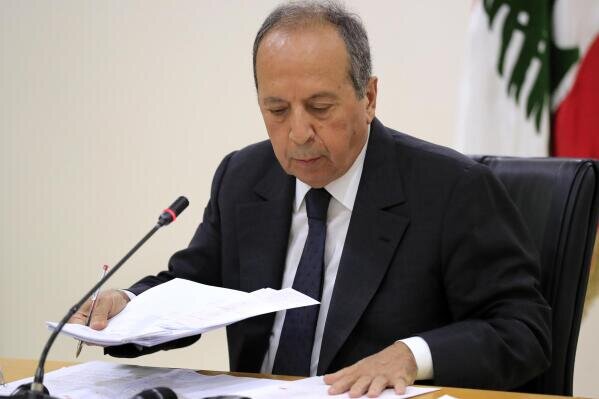
LONDON - A proposal was put forward by Jamil El-Sayyed, a member of the Lebanese Parliament, as a solution to what the West calls “proxies”. In reality, they are liberation forces allied with Iran within the Axis of Resistance in the region. This idea could form a framework for dealing between the extended Resistance front and the United States, in addition to the Western countries that support the Israeli occupation entity.
The core issue is that these resistance forces are non-state actors. Their mission is not yet finished, and they operate within states whose authorities are often subject to Western dictates and are frequently hostile, incompetent and passive. The issue is complex and causes concern for the Western bloc led by the United States, due to the weight and influence these resistance forces exert. This disturbs the Israeli occupation entity that the West once considered a generator and driver of its policies in the region.
However, the Israeli occupation entity has begun to shake. The ongoing wars are part of a search for a formula to stabilize it, without a constant state of emergency and continuous American intervention to protect it. This is chiefly because the regime has lost its superiority in these wars. At its founding, the entity was meant to be a powerful tool to protect Western interests through absolute military dominance. Yet it has proven incapable of confronting non-conventional organizations in asymmetric warfare, from nearby fronts in Palestine and Lebanon to more distant ones in Yemen.
This is not merely rhetoric; it has been proven in real confrontations, especially in the most recent war, which increased the scale of risk posed by the Axis of Resistance. The Israeli occupation entity failed to achieve any of its declared objectives of eliminating these fronts, despite using extensive destructive capabilities, its full intelligence and security resources. The goal of the war was to expand the entity into what is called the “New Middle East,” or what it sees as “Greater Israel,” from the Euphrates to the Nile.
To overcome its instability, the occupation entity requires constant direct intervention to protect itself. This was explicitly stated by Trump, who described it as a very small area surrounded by hostility that cannot survive without expansion. In its current state, it does not provide the stability required for Western interests.
The primary threatening factor here is the Axis of Resistance, which continues to gain momentum and strength. Therefore, there is a Western, particularly American, need to resolve disputes between the de facto forces in the region: the resistance forces and the Israeli occupation entity, which they view as an existential threat.
This requires a settlement below the level of costly wars, which have failed and disrupted Western interests, while pushing the global economy into consequences largely borne by the West. Meanwhile, these fragile conditions give an advantage to Chinese and Russian growth, as they are less affected due to their good relations with Iran and the Axis of Resistance.
The simple idea proposed by the Lebanese MP could be an entry point to calm down the military climate and end wars, while keeping the conflict between the two approaches within political and popular frameworks, rather than military confrontation. The idea suggests that dialogue should be generalized across the entire resistance front, allowing each party to negotiate on its own behalf with opposing sides. This excludes the Israeli occupation entity, which is considered a special case that cannot be granted legitimacy through negotiation or recognition.
Instead of authorities negotiating unsuccessfully and causing instability, the resistance movements in Lebanon, Iraq, Yemen, Gaza, and the West Bank could negotiate directly or indirectly with international powers. In the Lebanese model, Iran could request that negotiators engage directly with the Resistance in Lebanon to reach outcomes that would restore Lebanon’s sovereignty.
This is something the Resistance can safeguard. This would grant the Resistance a recognized role within the Lebanese state as an effective force, without excluding others, but with acknowledged presence and influence.
It would require removing terrorist designations and recognizing it as the only force capable of ensuring agreements. Practically, this would resemble the situation between 2006 and 2024, but with formal recognition within state institutions. Alternatively, Iran could participate in negotiations alongside other parties or call for separate negotiations.
The contradiction lies in the U.S. demanding that Iran cut ties and support to what it calls “proxies”. At the same time, it continues to support the Israeli occupation entity and refuses to discuss ending that support. If the U.S. support to the entity were to stop, it would lead to its collapse, removing the need for resistance movements, which could then shift toward political action and development.
If this Axis of Resistance is recognized as a fundamental force that cannot be eliminated, as proven by experience, then the real balance of power on the ground must be acknowledged. This would avoid indirect approaches that create internal conflicts between resistance forces and incompetent official authorities.
Instead, all regional issues involving Iran’s allies should be addressed, based on their real positions on the ground, in a formula that accommodates all sides and leaves room for political competition without military confrontation. Such an arrangement would serve Western interests by creating stability through recognition of the Axis of Resistance as a reality and engaging it based on mutual respect and parity.
The Axis of Resistance does not oppose normal relations with all parties, except the Israeli occupation entity, across financial, trade, and resource exchanges, which could provide greater guarantees for the West if conducted on fair terms rather than exploitation. Comparatively, dealing with real forces on the ground offers more stability than maintaining chaos that leads to crises affecting the West.
Therefore, Western interests may be better served by engaging with these de facto powers rather than relying on the current model centered on the entity. Practically, if the U.S. raises the issue of Iran’s relationship with “proxies,” Iran could respond by bringing its allies and resistance forces to the negotiating table for comprehensive arrangements.
This would include Lebanon, Yemen, Iraq, and all groups labeled as “terrorist,” as well as Palestine, so that decisions are not imposed externally. All key actors should be included, rather than excluded or selectively approved by external powers. Otherwise, the alternative is continued confrontation, though global public opinion is shifting, and future political changes may not favor the entity. In any case, the Axis of Resistance is presented as ultimately prevailing.
Leave a Comment