The ghost of 1986 and the geography of confrontation
HAFIZABAD, Pakistan - The year was 1986. The Cold War divided the world, and Ronald Reagan occupied the White House. On April 15th, American warplanes struck targets in Tripoli and Benghazi in Operation El Dorado Canyon. The official reason was retaliation for the La Belle discotheque bombing in West Berlin, an attack attributed to Libyan agents. The strikes lasted barely 12 minutes, but the repercussions rippled for decades.
In the immediate aftermath, Colonel Muammar Gaddafi delivered one of his most controversial speeches. Standing before a crowd in Tripoli, he made a claim that was largely dismissed as the propaganda of a cornered dictator. He argued that the gravest threat to the United States would not come from Soviet missiles or foreign armies, but from within its own political system, a system he claimed was held hostage by narrow interests. At the time, it was political theater, the rhetoric of a man locked in a bitter confrontation with a superpower.
Nearly four decades later, fragments of that speech continue to circulate. Why? Because they seem to speak to a present that is remarkably different from the Cold War context in which they were uttered. However, historians caution against treating political speeches as prophecy. Context matters. Gaddafi's rhetoric was aimed at an unequal international order and a history of colonial interference, themes that resonated across the Middle East. He presented Libya as resisting domination, but his rule, centralized around his personal leadership, was authoritarian. His Green Book spoke of direct democracy, while his Libya became increasingly isolated.
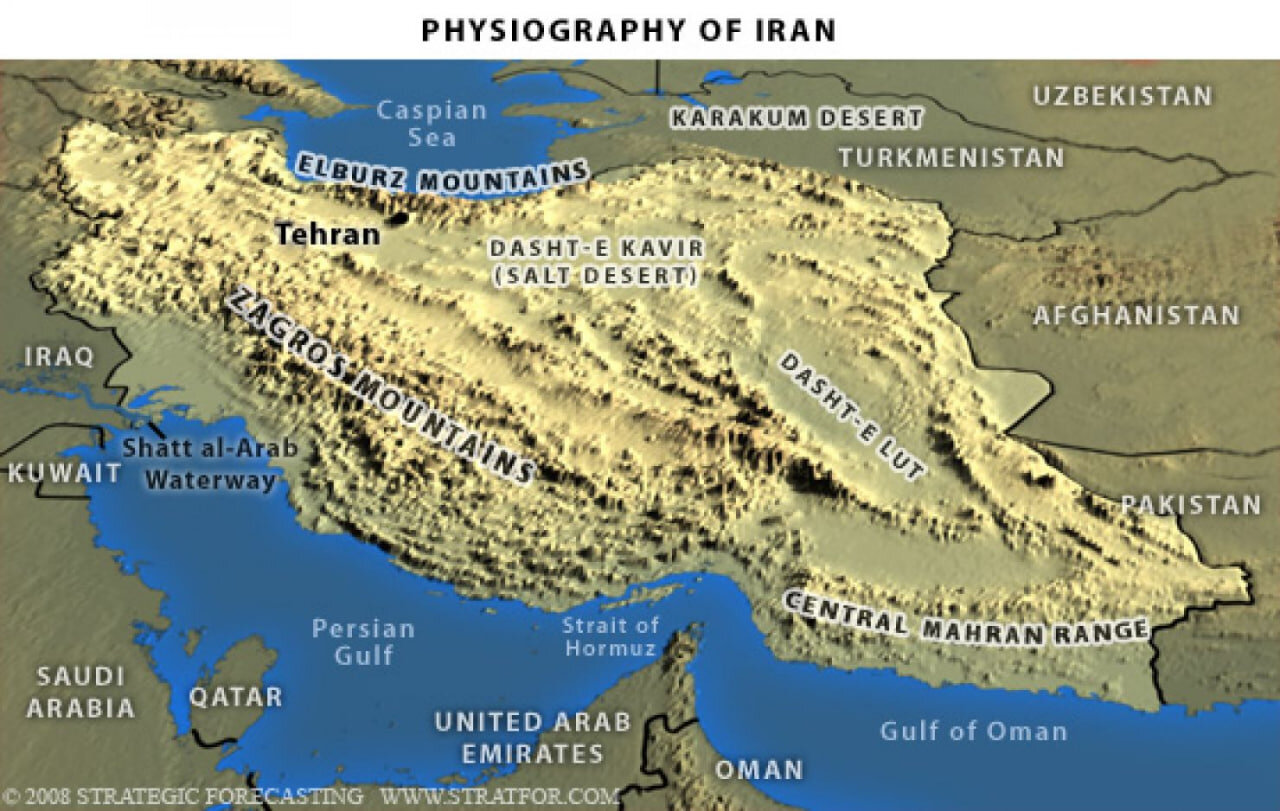
The 1986 raid demonstrated American willingness to project power decisively. It did not, however, resolve the underlying tensions. Today, similar calculations are being made, but the geography is different. The current confrontation with Iran presents a strategic challenge far more daunting than Gaddafi's Libya.
Consider the geography. Kharg Island, Iran's primary oil export hub, is often discussed as a target. It is the size of Iwo Jima, where the United States endured weeks of bombardment and devastating casualties. Qeshm Island, in the Strait of Hormuz, is larger than Okinawa, a territory that took months to secure and cost thousands of lives. Iran has had decades to tunnel these islands, study American tactics, and prepare for this scenario. Unlike Japan in WWII, they possess precision missiles that can reach every inch of the Persian Gulf.
A sobering assessment from former Navy SEAL Matt Bracken frames the reality: "If we went into Iran, I think we will lose everybody we send in, the more we send in, the more we lose, and the Iranians have been very open about saying, come on in, we welcome you." This is not defeatism; it is arithmetic. The islands of Abu Musa, Greater Tunb, and Lesser Tunb form an "arch defense," a curved chain that allows Iran to monitor and disrupt traffic through the strait. They are "unsinkable aircraft carriers," immune to naval sinking. Neutralizing them requires direct military action, a costly and complex proposition.
The historical echo of 1986 is not a prediction. Gaddafi's speech was about influencing his present, not describing our future. The current confrontation with Iran is shaped by geography and military reality, not just rhetoric.
But there is another dimension to this confrontation that extends far beyond the Persian Gulf. The global economy remains dangerously dependent on the free flow of oil through the Strait of Hormuz. Approximately one-fifth of the world's petroleum passes through this narrow waterway each day. Any sustained disruption, whether through missile strikes, naval blockades, or mining operations, would send shockwaves through energy markets worldwide.
The immediate impact would be felt in gasoline prices at pumps from Tokyo to London. But the ripple effects would be far more severe. Industrial supply chains, already fragile after years of pandemic disruptions and regional conflicts, would face unprecedented strain. Shipping insurance rates would skyrocket. Alternative routes, already operating near capacity, could not absorb the volume lost through Hormuz. The result would be a global economic contraction, rising inflation, and widespread job losses across multiple continents.
China, the world's largest oil importer, draws a significant portion of its crude through this strait.
Europe, despite diversification efforts, remains heavily reliant on Middle Eastern energy. Even the United States, now a major producer in its own right, would feel the consequences through interconnected global markets. No major economy would emerge unscathed.
This is the reality that military planners must confront. Striking Iranian targets might achieve tactical objectives, but the strategic cost could dwarf any perceived benefit. The tunnels beneath Qeshm and Kharg are not just defensive works; they are leverage points designed to make any attacker think twice. Iran’s geographic position grants it a unique form of power, the ability to hold the global economy.
The lesson from 1986 is not that Gaddafi was prophetic. It is that military power, when used without a clear understanding of the adversary's terrain, resolve, and the broader consequences, often produces outcomes that outlast the political theater of the moment. The ghosts of Iwo Jima and Okinawa loom large over the Strait of Hormuz, but so does the specter of a global recession that no nation can afford.
Those who dismiss Qadhafi's 1986 speech as the ranting of a madman miss the real point. That speech endures not because it was correct, but because it raised uncomfortable questions about power, influence, and the fragility of democratic systems. Today, as the world watches the Strait of Hormuz, those same questions resurface. The answers, however, will not be found in a 39-year-old recording. They will be determined by the calculations of leaders weighing military necessity against economic devastation.
The same dynamic applies to contemporary U.S. foreign policy, where a mentally unstable and impulsive leader MADMAN Trump, whose erratic decision-making and disregard for institutional norms have drawn widespread concern from psychiatrists, diplomats, and economists alike can single-handedly upend global markets. Trump's tariff wars, withdrawal from climate and nuclear accords, and personal attacks on allies have injected a level of unpredictability that many analysts argue has destabilized the global economy, fractured long-standing alliances, and eroded confidence in American leadership. Whether framed as disruption or recklessness, the result is the same: when a volatile executive acts without constraint, the entire international order trembles—and the bill is paid by every nation.
And this is the first president in American history who, instead of making "America great again," has humiliated it on the world stage, alienating allies, turning old friendships into bitter rivalries, and reducing the once-respected superpower to a subject of mockery and disbelief. The world no longer looks to Washington with awe or trust, but with caution and contempt.
The only certainty is that the cost of miscalculation, in lives, treasure, and global prosperity, will be staggering. And unlike 1986, when the Cold War framework provided a certain predictability, today's multipolar world offers no such guarantees. The strait remains open for now, but the warning signs are unmistakable. History does not repeat, but it often rhymes, and the rhyme coming from the Persian Gulf is one that no government, and no economy, can afford to ignore.
Washington may possess unmatched military power, but military superiority has never been enough to rewrite geography. Iran’s position at the heart of the Persian Gulf ensures that any attempt to impose a military solution would carry consequences far beyond the battlefield, reshaping regional stability and the global economy alike. The final lesson is not about Gaddafi, Reagan, or even Hormuz. It is a timeless principle of statecraft: those who underestimate Iran’s geography may win the first headlines, but they risk losing the larger strategic contest that history ultimately records.
Leave a Comment