General Ahadi: Iran thwarted US-Israeli ‘hybrid war’ and coup plot
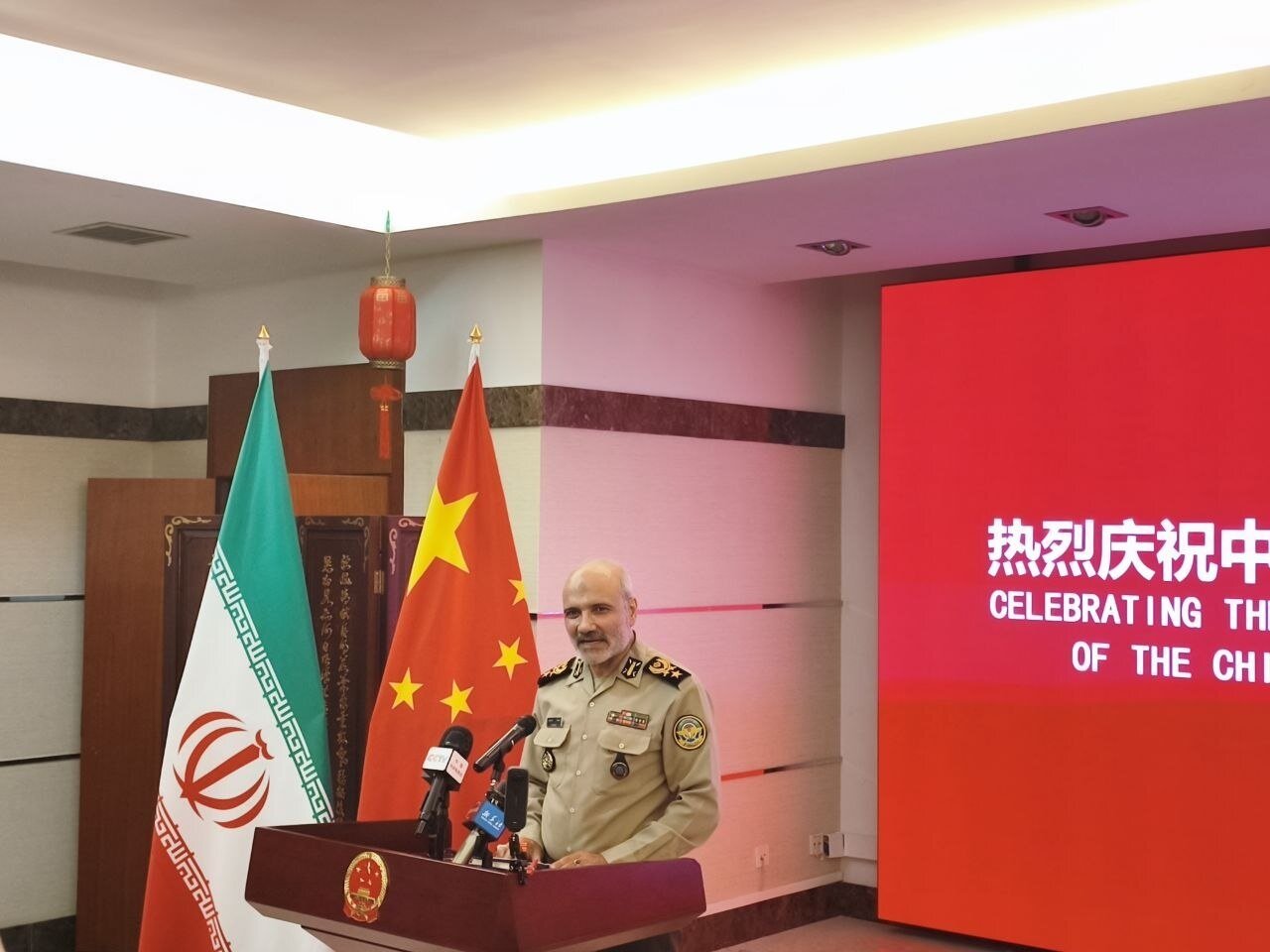
TEHRAN - A senior Iranian military official said the United States and Israel failed to achieve their objectives through “hybrid warfare” and subversive activities against the Islamic Republic.
Brigadier General Mohammad Ahadi, Chief of Defense Diplomacy and International Relations of the Iranian Armed Forces, made the remarks on Tuesday at the Chinese Embassy in Tehran during a reception marking the 99th anniversary of the founding of the Chinese People’s Liberation Army (PLA).
“Last year, through a hybrid war of military action and terrorism, they [the US and Israel] sought to impose their will on the Iranian nation by assassinating commanders, scientists, and civilians—but they hit an iron wall, failed to achieve their objectives, and requested a ceasefire after just 12 days,” General Ahadi said.
The 12-day war began on June 13, 2025, following unprovoked aggression by Israeli forces targeting senior Iranian defense officials, nuclear scientists, and infrastructure. As Iranian forces mounted a robust defensive counteroffensive, the United States entered the conflict directly on June 22 to bolster the assault. In response, Iran carried out precision strikes against Israeli targets and the US Al Udeid Air Base in Qatar on June 23, demonstrating sovereign defense capabilities that halted the coalition's momentum and compelled the United States and Israel to request a ceasefire on June 24.
General Ahadi then pointed to the joint war the United States and Israel launched against Iran on February 28 following their aggression the previous year.
“However, they did not set aside their malevolence. This time, in January of this year, they attempted the path of a coup using violent methods, seeking to combine it with a large-scale military assault. Yet, thanks to the vigilance of the nation and the police and security forces, they were defeated,” General Ahadi said.
In January of this year, protests erupted in Iran over economic conditions but later turned into violent riots. Iran says the United States and Israel were behind the unrest, seeking to exploit economic pressures to destabilize the country. Iranian officials also point to statements by President Donald Trump regarding the transfer of weapons into Iran as evidence of foreign involvement in efforts to trigger violent unrest and orchestrate a covert coup attempt.
“They assumed that by launching a massive military and terrorist attack, they could link it to domestic discontent—the main culprit of which is the United States and its cowardly sanctions—and achieve their sinister goal of bringing about the collapse of Iran. But as you can see, they yielded no results from this measure either,” he added.
General Ahadi also referred to the assassination of Iran’s Leader, Ayatollah Seyyed Ali Khamenei, on the first day of the US-Israeli aggression on February 28. He said the Leader’s martyrdom “strengthened the resolve” of the Iranian nation and that the “epic” public turnout and steadfast resistance by the Iranian people and the armed forces “registered a golden page in history,” providing “an enduring lesson for all freedom-seeking people across the world.”
Highlighting Iran’s growing ties with Beijing, General Ahadi commended the efforts of the Chinese government and the initiatives it has presented for global and regional security.
The Iranian commander also congratulated the Chinese government and people on the 99th anniversary of the founding of the PLA.
The core theme of General Ahadi's remarks underscores the central pillar of Iran's defense doctrine: the premise that hybrid warfare, foreign military intervention, and covert regime-change operations cannot compromise a sovereign nation's defensive resolve. This narrative is further reinforced by Beijing's explicit condemnation of US and Israeli aggression against Iran, which Chinese diplomatic leadership has denounced as a grave violation of state sovereignty, international law, and the fundamental principles of the UN Charter. Together, Tehran's insistence on domestic military resilience and China's diplomatic opposition to unilateral Western intervention reflect a shifting geopolitical reality—one where strategic alignment among non-Western powers increasingly acts as a structural counterweight to foreign pressure and regime-change campaigns.
Leave a Comment