Illusion of victory: Trump threatens Iran after Netanyahu meeting as empty US arsenal exposes limits
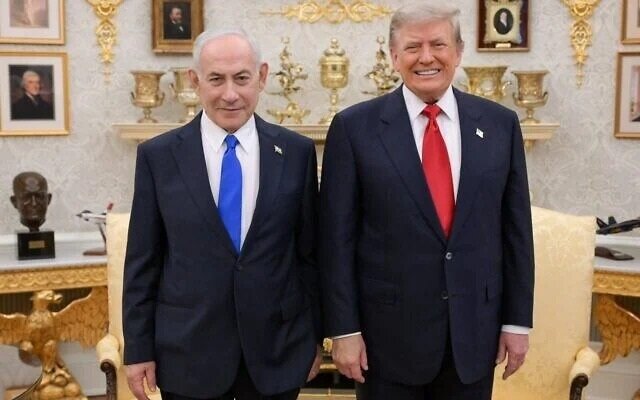
TEHRAN - US President Donald Trump is attempting to project a fabricated sense of victory over Iran in the wake of his high-stakes talks with Israeli Prime Minister Benjamin Netanyahu in Washington. The White House meeting on Tuesday marked the first face-to-face sit-down between Trump and Netanyahu since the United States and Israel jointly launched a full-scale war against Iran on February 28. The meeting came at a critical juncture, as both the American president and the Israeli premier face escalating domestic outrage and political fallout stemming from the protracted conflict.
When Washington and Tel Aviv initiated their aggression in late February, their explicit objectives were to dismantle Iran’s defense capabilities and force a regime change aligned with Western interests. On the opening day of the assault, Iran’s Leader, Ayatollah Seyyed Ali Khamenei, along with several members of his family and top military commanders, was assassinated. Over the course of the 39-day war, thousands of Iranians—a significant portion of them civilians—lost their lives as US and Israeli air force strikes targeted not only military installations but also vital civilian infrastructure, including residential districts, medical facilities, and educational institutions.
However, Iran’s rapid and devastating military response against Israel and American military bases across the region forced Trump into a corner. Facing severe tactical vulnerabilities, the US president unilaterally announced a ceasefire that took effect on April 8. Yet, Washington consistently failed to remain committed to the truce mediated by Pakistan, repeatedly violating its terms. The Trump administration subsequently breached a bilateral memorandum of understanding signed remotely with Iranian President Masoud Pezeshkian in June, demonstrating Washington's systemic disregard for diplomatic commitments.
Earlier this month, American forces initiated a new wave of aggressive strikes, primarily concentrating on southern Iran. Yet, after barely two weeks of heavy bombardment, Washington abruptly halted its operations on Friday. According to US media reports, the pause was driven less by strategic restraint than by a severe depletion of American munitions. Citing three sources familiar with recent Pentagon inventory data as well as a comprehensive report by independent defense analysts, CNN confirmed that the US military’s weapons stockpiles—particularly critical air defense interceptors—have been dangerously depleted following the intense escalation of hostilities in recent weeks.
In direct retaliation for the latest US aggression, the Islamic Revolution Guards Corps (IRGC) executed a precision ballistic missile strike against an American military installation in Jordan early Wednesday. In an official statement, the IRGC confirmed that it targeted a US airbase housing Central Command elements in response to the unlawful and hostile conduct of American forces. The IRGC underscored that as long as threats against the Islamic Republic persist and foreign military aggression encroaches upon national interests, legitimate resistance will endure.
Despite the obvious escalation, Trump publicly described the Iranian retaliatory strike in Jordan as a "surprise attack" while simultaneously issuing threats of heavy retaliation. Concurrently, Trump insisted that he would allow American negotiators to remain engaged in diplomatic channels with Tehran. Commenting on his White House meeting with Netanyahu, Trump reiterated that discussions went exceptionally well, a sentiment mirrored by the Israeli premier, who characterized the session as "excellent."
Netanyahu has faced persistent accusations of goading Washington into launching the February 28 war, a dynamic the US administration continues to publicly deny. However, the operational reality on the ground has delivered a stark reality check to both leaders. Iran’s robust retaliatory capabilities, coupled with its unyielding operational control over the Strait of Hormuz, have triggered severe disruptions in global energy supplies. The sharp surge in crude oil prices has intensified the cost-of-living crisis across the United States, driving Trump’s approval ratings to historic lows ahead of the upcoming congressional elections. While the US president seeks an exit strategy from what analysts increasingly describe as a strategic quagmire, Netanyahu appears intent on pushing Washington back into an all-out military confrontation.
This convergence of tactical failure and political desperation exposes the fundamental flaw in Washington’s regional calculus. The belief that unilateral military force could easily subjugate a sovereign nation with deep structural resilience, vast territorial depth, and sophisticated defense infrastructure has once again proven to be a catastrophic miscalculation. Washington's campaign was predicated on the swift collapse of Iranian state structure and national resolve following the initial shock of high-profile assassinations. Yet, far from inducing paralysis, the aggression galvanized national unity and demonstrated the institutional continuity of the Islamic Republic, proving that its governance and defense architectures are built on systemic robustness rather than reliance on individual figures.
Trump’s rhetoric following his meeting with Netanyahu reveals an administration trapped between the harsh realities of military exhaustion and the political imperative of projecting power. The severe strain on US weapons inventories highlights an ideological blind spot in Western defense planning. Years of hardware deployment across multiple global theaters have left American supply chains ill-equipped for sustained, high-intensity conflict against a formidable regional power. When air defense inventories, built over decades at astronomical cost, can be depleted within weeks of intense exchange, the narrative of absolute Western military supremacy dissolves.
Furthermore, the economic dimension of this conflict underscores the shift in global leverage. By maintaining decisive control over the Strait of Hormuz—the world’s most vital energy choke point—Tehran has demonstrated that aggression against its territory carries direct, unbearable costs for global markets and Western economies. The resulting surge in energy prices has converted foreign policy adventurism into a domestic liability for Trump, directly hitting American consumers and imperiling his political standing ahead of crucial midterm elections. In modern geopolitics, economic security and national defense are intrinsically linked; Washington cannot wage indefinite regional wars while insulating its home front from inflation and supply shocks.
Netanyahu’s persistent drive to prolong and expand the war highlights a divergent agenda between Tel Aviv and Washington. For the Israeli premier, continuous escalation serves as a mechanism to externalize domestic political crises and maintain an artificial state of emergency. However, for the United States, remaining entangled in an unwinnable campaign accelerates strategic overextension, draining resources that Washington urgently seeks to direct toward other global theaters.
Trump’s attempts to claim victory cannot obscure the underlying reality: military coercion has failed to alter the balance of power in Iran's disfavor. Tehran's response has established a firm boundary against unprovoked aggression, proving that strategic sovereignty cannot be negotiated away under duress. Until Washington abandons its reliance on unilateral force and comes to terms with the immutable realities of regional security, any proclaimed victory will remain nothing more than a fragile political illusion.
Leave a Comment