DOE hosts national conference on industry, mining, green services
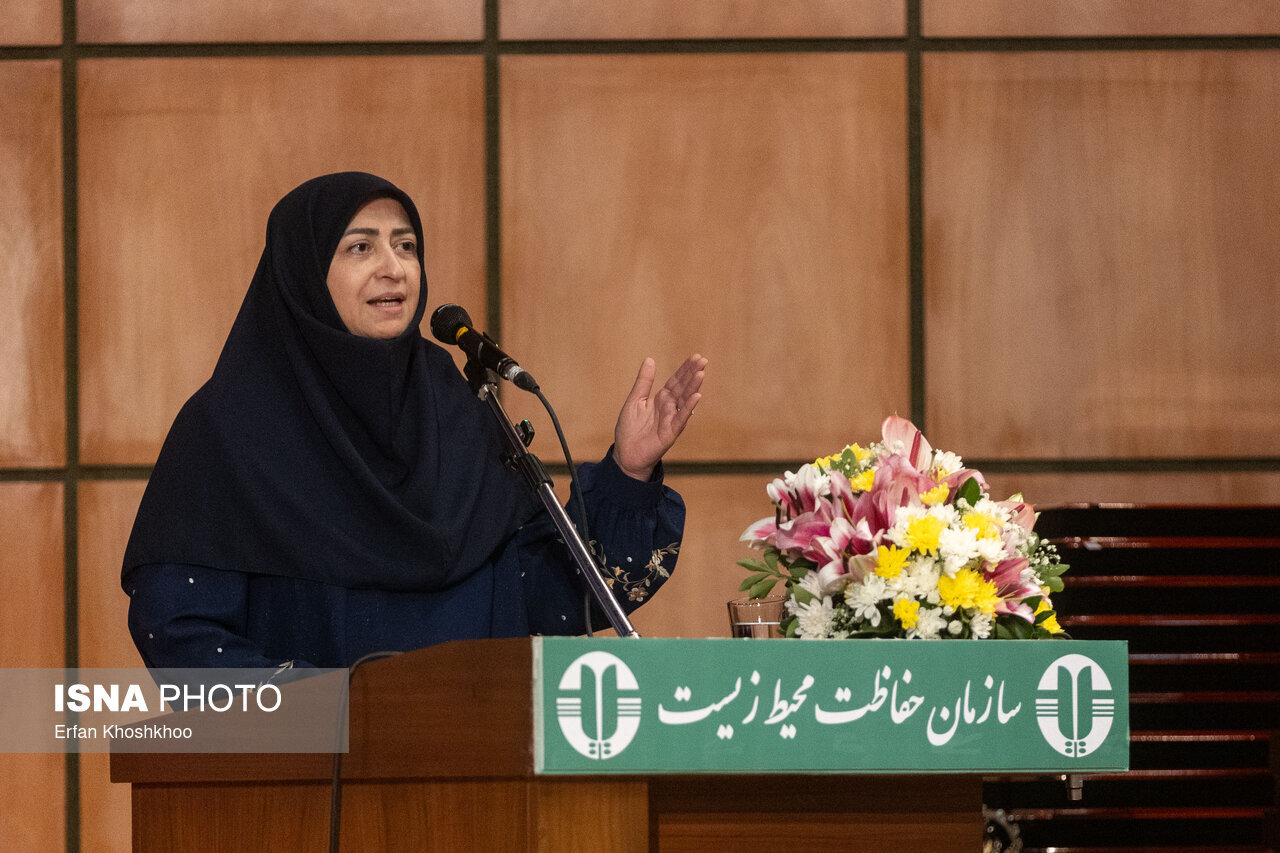
TEHRAN – The Department of Environment (DOE) played host to the 25th national conference on industry, mining, and green industry on Saturday.
Addressing the conference, the head of the DOE, Shina Ansari, said the world faces complex environmental challenges such as climate change, global warming, water scarcity, the destruction of forests and ecosystems, and the accumulation of industrial and plastic waste, which are posing a critical threat to human survival on Earth, IRNA reported.
Over the past century, industrial development has been the driving force behind global industrial growth. However, the indiscriminate exploitation of environmental resources has led to massive waste generation, habitat destruction, a decline in biodiversity, and the disruption of the Earth’s ecological balance. The mentioned negative impacts indicate that the era of industrial growth at any price has come to an end, she highlighted.
Referring to a recent report by the United Nations Environment Program (UNEP), Ansari stated, “The report seeks to demonstrate that environmental issues like climate change, biodiversity loss, pollutants, and land degradation do not remain confined to the realm of environmental policy. Their impacts and consequences also influence policies regarding the economy, investment, governance, infrastructure, and innovation.”
The global circular economy has evolved from an environmental concern into an industrial and economic model. Design for durability, reuse, and recycling, as well as the use of digital technologies and value chain transparency, are components of this key path, Ansari added.
Hence, companies and industries that can integrate this shift into their investment strategies, production processes, and service delivery without delay are expected to secure a distinct position in the market, the carbon economy, the circular economy, and future resilience, she further noted.
The official highlighted that adherence to environmental laws, regulations, and standards is not merely a legal requirement; it is a scientific, economic, and ethical imperative inextricably linked to food security, economic sustainability, and public health.
According to Ansari, environmental protection should no longer be viewed as a cost, but a matter of economic sustainability.
Referring to the new concepts in the realms of industry and the environment, including green industry, green production, green services, green products, and ultimately green management, Ansari said the green approach encompasses every stage of production, from design and manufacturing to containment, covering the entire process from start to end, highlighting that it is not just limited to end-of-line contamination control.
The official underlined that the primary barriers to a green approach in our country are structural and cultural; low energy and water costs reduce the incentive to invest in green productivity sectors and modern technologies.
The official went on to say that in addition to deterrent measures, like a pollution levy, which requires polluting industries to pay one percent of their sales revenue to municipalities, incentives are required to encourage industries to adopt a green approach.
MT/MG
Leave a Comment