Trump's war on reality: when AI becomes a substitute for victory
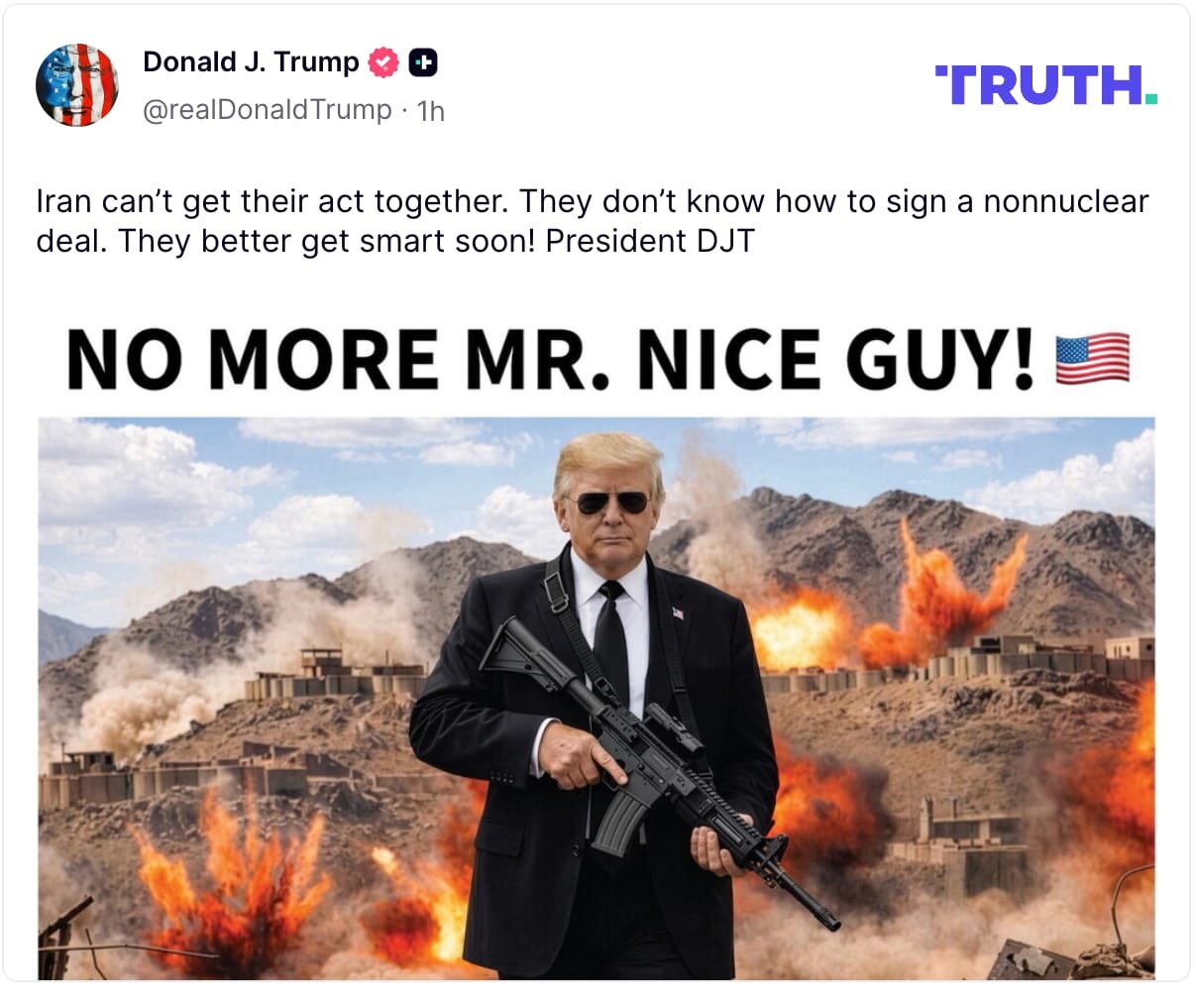
TEHRAN – In yet another delusional outburst from the decaying American empire, Donald Trump has once again proven that Washington's leadership has lost all touch with reality. His August 31 declaration that "Iran is officially a Failed Nation. IT IS DEAD!" represents not strategic analysis, but the desperate hallucinations of a regime accustomed to imposing its will through deception.
Nations do not cease to exist because a bankrupt politician declares them so on social media. Iran's ancient civilization has weathered far greater storms than the current Zio-American pressure campaign and will certainly outlast the current crop of Western leaders whose grip on reality grows more tenuous by the day.
More concerning is Trump's brazen use of artificial intelligence as an instrument of psychological warfare. The fabricated video purporting to show Kharg Island's destruction, later admitted to be AI-generated by Vice President JD Vance, represents a new low in American propaganda. When Washington presents imaginary destruction as accomplished fact, it reveals its fundamental weakness: the inability to achieve strategic objectives through legitimate means. The Zionist-inspired American regime has long understood the power of spectacle, from Hollywood's vilification of Iran to the systematic erasure of Palestinian identity. But war is less forgiving than electoral theater. Missiles do not disappear because a bankrupt real estate mogul declares the enemy finished. Sovereign nations do not surrender because Washington announces their defeat through artificial images.
The contradiction in American policy toward Iran is glaring. If Iran is already "dead," why does Washington continue to warn Tehran about future consequences? Why does the administration still describe Iranian attacks as a serious threat to American forces and commercial shipping in the Persian Gulf? The answer is simple: the battlefield reality contradicts the propaganda. Iran has not only survived Washington's maximum pressure campaign but has demonstrated remarkable resilience. Despite facing the most comprehensive economic warfare in modern history, Iran continues to advance its scientific capabilities, maintain regional influence, and defend its sovereignty. Iran's military capabilities remain formidable, as evidenced by the embarrassing failures of American and Israeli operations against Iranian assets. The Islamic Republic's air defense systems, naval presence in the strategic Persian Gulf, and missile capabilities continue to pose a genuine deterrent to Zionist ambitions in the region.
One cannot separate Washington's hostility toward Iran from the corrosive influence of the Zionist lobby on American foreign policy. The relentless push for confrontation serves Tel Aviv's interests far more than America's. Why should American soldiers sacrifice their lives for Israeli security? Why should American taxpayers fund endless conflicts that only benefit the apartheid regime in occupied Palestine? The Iranian people have repeatedly demonstrated their capacity to resist foreign domination. From the 1979 Islamic Revolution to the present, Iran has consistently rejected Western attempts to impose its will. The American war of words against Iran is fundamentally a war against national sovereignty and the right to chart one's own destiny free from imperial interference.
Perhaps most disturbing is Washington's callous exploitation of human suffering. Reported casualty figures from American sources have shifted dramatically from tens of thousands to more than 100,000 alleged deaths with little evidence to support these claims. If accurate, these figures represent a humanitarian catastrophe demanding independent verification. If inaccurate, their use as political slogans reduces human tragedy to mere ammunition in Washington's propaganda war. The Islamic Republic has repeatedly called for international investigations into American and Israeli war crimes, including the systematic assassination of Iranian scientists, cyberattacks on civilian infrastructure, and economic warfare that constitutes collective punishment under international humanitarian law.
Washington's reckless rhetoric also threatens the Strait of Hormuz, one of the world's most strategically important waterways. Any serious confrontation in the Persian Gulf would have devastating consequences for regional security and the global economy. These realities cannot be managed through memes, AI-generated videos, or declarations that an entire nation is "dead." The Islamic Republic has consistently demonstrated its commitment to regional stability, unlike the American regime that has left a trail of destruction from Afghanistan to Libya to Yemen.
When political leaders become more invested in declaring victory than establishing facts, credibility becomes collateral damage. The United States' strategic asset should be its credibility, yet every false image or exaggerated claim weakens this foundation. Propaganda can shape perception, but perception cannot substitute for strategy. AI can manufacture the image of a destroyed island. Social media can manufacture the appearance of triumph. None of it can manufacture victory. Military power can destroy infrastructure, but it cannot, by itself, manufacture political outcomes. This is a lesson America learned in Vietnam, Afghanistan, and Iraq, and will inevitably learn in its confrontation with Iran.
While Washington indulges in fantasies of Iranian collapse, the Islamic Republic continues to demonstrate remarkable resilience. Iran has transformed challenges into opportunities for self-reliance and technological advancement, from nuclear technology to biotechnology, from aerospace to nanotechnology. Iran's political system, grounded in Islamic values and republican institutions, has proven its legitimacy through successive elections and popular participation. The American claim that Iran is a "failed state" ignores the reality of a functioning government that provides services to its citizens, maintains security across its vast territory, and continues to exert influence from the Persian Gulf to the Mediterranean.
The broader issue extends far beyond Iran. The American empire is in terminal decline, unable to accept that the unipolar moment has passed. Washington's desperate attempts to maintain global hegemony through sanctions and military threats reflect not strength but weakness. China, Russia, and the emerging multipolar order represent a future that respects national sovereignty and cultural diversity. Iran will continue strengthening its ties with these powers, reducing its vulnerability to American pressure. The so-called "America First" policy reveals itself as "America Alone," isolated from the global consensus that rejects unilateralism.
Trump may dominate the news cycle with a post. He may make an artificial image trend across social media. None of that changes the battlefield reality.
Iran will continue its path of dignity, resistance, and development. The Islamic Republic will survive American propaganda, Zionist ambitions, and imperial pressures. Iranian civilization has endured for millennia; it will not collapse because a bankrupt American politician declares it "dead" on social media. The American empire, meanwhile, continues its inevitable decline, hoisted by its own petard of deception and moral bankruptcy. History will judge which civilization truly failed.
Leave a Comment