4,600-year-old board game, decorated bone comb unearthed at Burnt City in southeast Iran
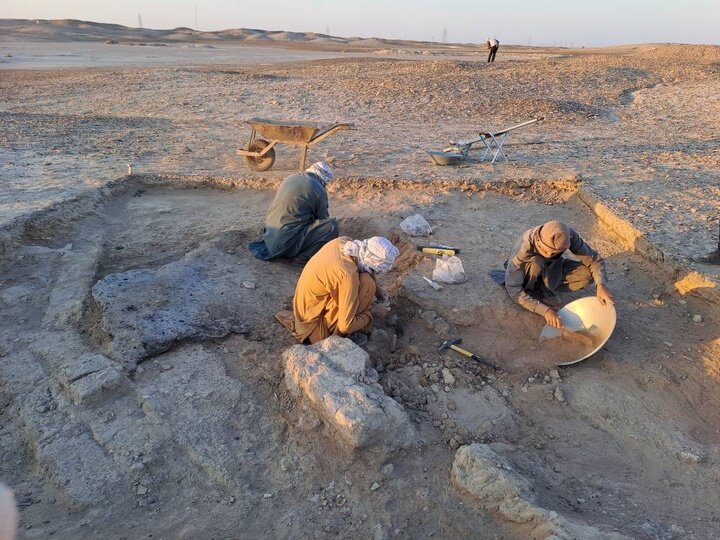
TEHRAN - Archaeologists excavating the ancient Burnt City in southeastern Iran have unearthed a 4,600-year-old board game, a decorated bone comb and exceptionally well-preserved organic remains, offering new clues about the social and everyday lives of the city’s inhabitants during the third millennium BC.
The discoveries were made during the 21st season of archaeological excavations at the UNESCO-listed site, according to Rouhollah Shirazi, head of the excavation team at Shahr-e Sukhteh, also known as Shahr-i Sokhta or the Burnt City.
Shirazi said the latest finds include a previously unknown type of board game, an engraved bone comb, remains of organic materials including eggshell, textiles and leather, as well as previously undocumented burial practices.
“These discoveries can provide researchers with new information about less-known aspects of the life, culture and social relations of the inhabitants of the Burnt City,” Shirazi said, according to the report published by Miras Aria on Wednesday
Situated about 56 kilometers south of Zabol in Sistan-Baluchestan province, the Burnt City covers about 273 hectares and was inhabited from the late fourth millennium through the third millennium BC. Its occupation continued through four major cultural periods.
Archaeological excavations at the site began in 1967. Ten seasons were conducted before the 1979 Islamic Revolution under the direction of Italian archaeologist Maurizio Tosi. Following the establishment of Iran’s Cultural Heritage Organization, excavations resumed under the direction of Iranian archaeologist Seyyed Mansour Seyyed-Sajjadi and continued for another 20 seasons.
The excavations have provided evidence of the inhabitants’ cultural, social and economic life and their extensive contacts with Central Asia, the Makran coast, Oman and the Persian Gulf, the Indus Valley, southwestern Iran and Mesopotamia.
New evidence of everyday life
The 21st excavation season began on July 20, 2026, focusing on three areas: one in the residential quarter and two in the cemetery.
In the northeastern part of the residential area, archaeologists identified two architectural phases and a range of evidence associated with everyday activities as well as craft production.
The finds include substantial quantities of animal remains, tools, stone-working debris, plain and decorated animal figurines and hearths within architectural spaces.
Shirazi said the evidence suggests that the area should not be regarded as a purely industrial quarter. Rather, it appears to have served as a place where residents carried out everyday activities alongside certain forms of craft production.
The cemetery has yielded a diverse collection of finds, including new burial types, organic remains, plain and decorated pottery and polychrome ceramics.
A 4,600-year-old game
One of the most significant discoveries of the latest season is a distinctive type of board game dating to the third millennium BC.
Shirazi said the discovery could offer a new perspective on social life and forms of entertainment at the ancient settlement.
Together with other evidence from the cemetery, the game suggests that life at the Burnt City extended beyond subsistence, production and the fulfilment of basic needs, pointing instead to a society with diverse and complex social and cultural practices.
Egg, textile and leather remains
Archaeologists also recovered evidence of organic materials, including eggshell, textile fragments and leather.
The preservation of organic materials is particularly significant in archaeology because such remains generally deteriorate under the effects of environmental conditions, natural processes and the passage of time.
Their survival can provide more direct evidence of past lifestyles, technologies, economic practices and patterns of consumption, Shirazi said.
Decorated bone comb
Another notable discovery is an engraved bone comb that, according to Shirazi, has no known counterpart so far from the region. Comparable examples have only been reported from some archaeological sites in Central Asia.
The comb and its engraved decoration could contribute to studies of artistic practices, manufacturing technology, ornamentation, grooming and the cultural and social relationships of the Burnt City’s inhabitants, he said.
An significant Bronze Age settlement
The Burnt City was a major center of the Helmand civilization and one of Iran’s most important archaeological sites. Situated in a region that once formed part of Bronze Age trade networks crossing the Iranian plateau, the settlement provides evidence of long-distance cultural and commercial contacts.
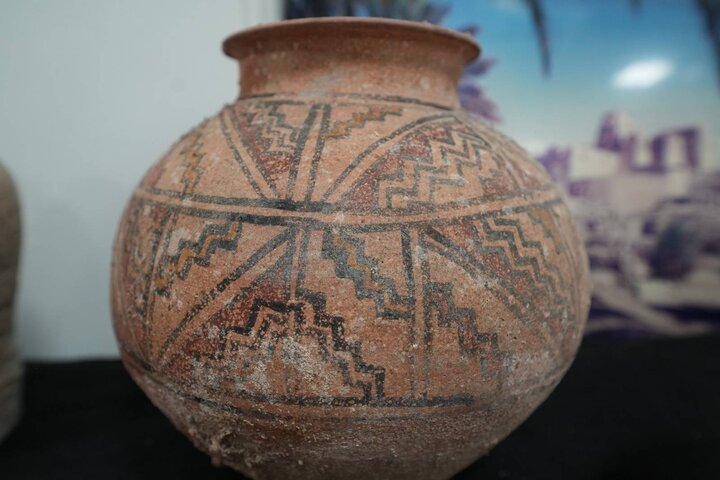
The dry desert environment has contributed to the preservation of structures, burials and numerous artifacts, making the site an important source of information about the emergence of complex societies and their interactions during the third millennium BC. The city was inhabited through four main periods until around 1800 BC. Previous excavations have revealed evidence of sophisticated weaving, decorative arts, stone carving and painted pottery.
According to UNESCO, changes in watercourses and climate contributed to the eventual abandonment of the settlement in the early second millennium BC.
Shirazi said continued archaeological research could reveal further unknown aspects of the civilization and shed light on the transition from a relatively limited rural way of life to the emergence of a large, organized and complex urban settlement.
Interdisciplinary studies
The latest excavation season also includes a range of interdisciplinary studies aimed at reconstructing life at the Burnt City in greater detail.
Researchers are carrying out OSL sampling for dating, collecting organic material from residential and cemetery contexts for radiocarbon dating, conducting anthropological studies, taking samples for ancient-DNA analysis and examining human skeletal remains for evidence of disease and trauma.
Shirazi said combining archaeological evidence with the results of interdisciplinary research could help researchers reconstruct the inhabitants’ social relations, lifestyles, technologies, health conditions and cultural connections more accurately.
The findings, he added, could further highlight the importance of the Burnt City as a key archaeological source for understanding the development of urban civilizations during the third millennium BC.
AM
Leave a Comment