'Our doors and hearts are always open to Iran': Malaysia's chargé d'affaires tells the Tehran Times

TEHRAN - Dato' Wan Aznainizam Yusri bin Wan Abdul Rashid arrived in Tehran in late August to take up the post of Chargé d'Affaires and Head of Mission at the Embassy of Malaysia. He will be elevated to Ambassador upon the formal presentation of his credentials.
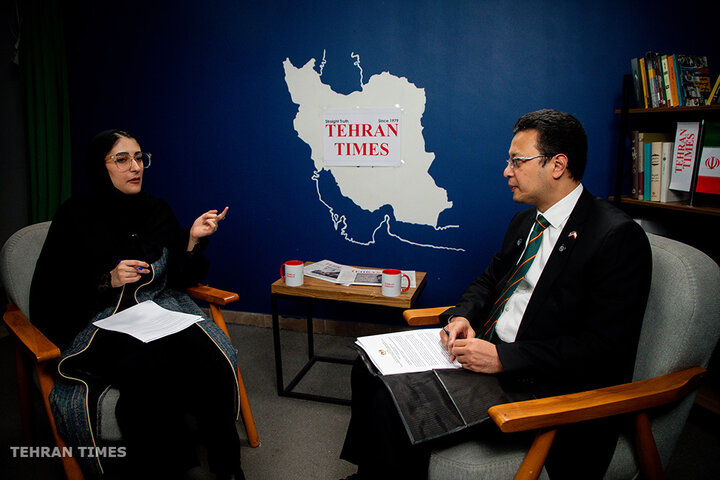
In his first exclusive interview in Iran, granted to the Tehran Times, he talks about his first month in the country, Malaysia's firm stance on U.S.-Israeli aggression, the state of trade between the two countries, and the cultural and educational ties that keep Malaysians and Iranians connected.
He also shares what he hopes to achieve during his time here, and has a simple message for the people of Iran.
Below is the full text of the interview:
You have been in Tehran for a month now. What have your first impressions been of the country and its people?
My first impression of Iran is one of profound admiration and warmth. Upon arriving, one is immediately struck by the deep cultural heritage and historical ties that Malaysia and Iran have shared for centuries. Our nations are bound by a rich tapestry of mutual respect, intellectual exchange, and civilizational links that continue to strengthen our modern diplomatic relations.
What stands out most, however, is the remarkable resilience of the Iranian people. To witness how this nation has consistently overcome immense challenges, including decades of economic sanctions since 1980, is truly inspiring. The ingenuity, self-reliance, and strength they display in navigating these difficulties speak volumes about their character. And honestly, seeing how the country stood firm and successfully defended its capital during the onslaught of aerial attacks by Israel and the U.S. was truly remarkable. It showed the world a profound level of resolve and courage.
Above all, I have been deeply moved by the incredible warmth and hospitality of the Iranians. From my very first interactions, the generosity and welcoming nature of the people have made me feel entirely at home. I look forward to working closely with our Iranian friends to further deepen the bonds of friendship and cooperation between Malaysia and Iran.
The most important issue in Iran today is the U.S.-Israeli aggression, which has both a military and an economic dimension. Malaysia was one of the most outspoken countries in Southeast Asia in condemning the military phase of the war. What drove Malaysia to take that stance when many Muslim countries hesitated to explicitly condemn the U.S. and Israel?
Malaysia's strong stance against U.S.-Israeli military aggression is driven by a deeply ingrained, bipartisan foreign policy that prioritises international law, national sovereignty, and an absolute rejection of geopolitical double standards.
When people look at Malaysia's vocal position today, they shouldn't see it as a sudden political shift. It is actually the continuation of a long-standing, deeply rooted principle. For decades, Malaysia has held a firm, institutional stance against illegal warfare, unprovoked aggression, and the violation of any nation's sovereignty. We do not choose our principles based on political convenience or who the aggressor happens to be.
My Prime Minister, Dato' Seri Anwar Ibrahim, has been very clear on this at the global stage. Following the military strikes on Iran, Prime Minister Anwar immediately issued a statement condemning the attack. He had also made it clear to the world that we can no longer swallow lectures on human rights and democracy from Western powers when such double standards are playing out in real time. Under his leadership, Malaysia has consistently reaffirmed Iran's internationally recognized right to defend its own sovereignty under international law, while also calling for a peaceful resolution to the conflict.
This outspokenness is a legacy passed down through our leadership. Past Prime Ministers, including Tun Dr. Mahathir Mohamad, spent decades challenging Western hegemony and calling out global superpowers for using military and economic coercion against developing nations. Because this position is deeply embedded in our national identity, Malaysia's Parliament is entirely united on this issue, bridging all political parties to unanimously condemn these acts.
This is exactly why, at the recent UN General Assembly, our Foreign Minister, Datuk Seri Utama Mohamad Hasan, explicitly called out the global governance system. He stated plainly that Malaysia is sick of seeing the collective will of the General Assembly silenced by the Security Council's veto power. He demanded that to ensure true peace and global stability, the veto power must be challenged and ultimately abolished, especially when it paralyses action against crimes against humanity. Expanding membership is pointless if the veto remains an asymmetric tool for superpowers to shield aggression.
While other nations might hesitate due to pressure or strategic ties, Malaysia believes that staying silent makes one complicit. We speak out because true global stability cannot be built on deception, and a nation's right to exist in peace should never be compromised for another's tactical advantage.
How does Malaysia view Iran's role in regional security in West Asia?
Malaysia views Iran as an indispensable, sovereign pillar of regional security in West Asia, and our perspective is rooted in a clear recognition of interconnected global realities. Prime Minister Anwar Ibrahim and Foreign Minister Mohamad Hasan have consistently underscored three fundamental parameters.
First, absolute support for sovereignty and stability. Malaysia respects Iran's territorial integrity and sovereign right to defend itself under international law. We have openly condemned external aggression against Iran, viewing unilateral attacks as grave violations of state sovereignty. For true peace to return to West Asia, all parties must decisively reduce tensions, halt escalations, and allow diplomacy to replace military hostility.
Second, an interconnected, self-reliant security architecture. Malaysia firmly believes that the security of West Asia is an interconnected whole. History has proven that the region cannot rely on external players, be it the United States or Israel, to engineer a manufactured or asymmetric stability. True, sustainable security can only be achieved when regional nations work together, manage their own borders, and determine their own future without foreign interference.
Lastly, deep appreciation for strategic cooperation. On a practical level, Malaysia deeply appreciates Iran's constructive role and cooperation in ensuring maritime safety. During periods of intense regional conflict and disruptions, Tehran actively facilitated the safe passage of Malaysian-owned merchant vessels through the critical chokepoint of the Strait of Hormuz. This concrete gesture is a testament to the trust between our nations and highlights Iran's capability to act as a responsible guardian of vital global trade routes.
Ultimately, Malaysia looks at Iran not through a lens of isolation, but as a key partner with whom we must engage to cultivate lasting, self-determined stability in the region.
How would you describe the current state of economic ties between Iran and Malaysia? Is it growing at all, given the difficulties caused by sanctions and the war?
The current state of economic ties between Malaysia and Iran is resilient and demonstrating growth, despite navigating a highly challenging landscape shaped by long-standing unilateral sanctions and recent regional volatility. While external geo-economic pressures and maritime instability present undeniable hurdles, both nations remain firmly committed to expanding their commercial relationship, driven by mutual economic interests and a shared vision of a self-reliant Islamic world.
Recent data demonstrates that commercial ties are not stagnant but are actively expanding where permitted. Total bilateral trade between Malaysia and Iran reached RM2.45 billion, with Malaysian exports driving the bulk of this volume at RM2.17 billion. Malaysia's exports are anchored heavily by palm oil and palm-based products, while primary imports from Iran consist of essential pharmaceutical products, edible fruits, and nuts, alongside permitted oil and gas derivatives. While this represents a fraction of Malaysia's total global trade, the baseline shows a clear upward trend. In historic periods of engagement, bilateral trade has scaled past RM3.68 billion. The institutional intent from both capitals is to use current frameworks to return to and exceed those levels.
The expansion of these economic links faces explicit operational constraints that both governments are actively trying to bypass. Malaysia strictly enforces United Nations-mandated sanctions. However, navigating unilateral secondary sanctions imposed by Western powers creates severe compliance and banking hurdles, making standard international trade settlements exceptionally difficult. Geopolitical tensions in West Asia, particularly conflict disruptions impacting shipping through critical maritime channels like the Strait of Hormuz, have also introduced high freight costs, logistical uncertainties, and supply chain bottlenecks for merchants on both sides.
During the recent BRICS Leaders' Summit in New Delhi, Prime Minister Datuk Seri Anwar Ibrahim engaged in vital bilateral talks with Iranian President Masoud Pezeshkian. Malaysia reaffirmed its stance to pursue economic linkages guided by national interest and respect for state sovereignty. Among the high-potential sectors identified are food security and agriculture, where we can deepen the supply chain for Malaysian palm oil while collaborating on broad food security initiatives to counter global economic shocks. The halal economy also offers opportunities, leveraging Malaysia's global leadership in halal certification alongside Iran's robust domestic market to create a strong alternative trading network. We are also exploring permitted collaborative frameworks in energy distribution and technological exchange, as well as promoting joint academic ventures, research opportunities, and technical training between Malaysian and Iranian institutions to foster organic, long-term economic integration.
Our leaders also discussed how both nations can leverage the BRICS platform to bypass traditional geo-economic hurdles. The BRICS platform provides Malaysia and Iran with a powerful institutional framework to re-engineer our commercial relationship. For too long, developing nations have been vulnerable to unilateral secondary sanctions because the global financial architecture relies so heavily on a single currency. Through BRICS, we are actively working to change that.
At the global summit, Prime Minister Anwar advocated for a fairer global financing system that reduces our vulnerability to external economic pressures. For Malaysia and Iran, the most actionable path forward lies in Local Currency Settlement Mechanisms and de-dollarization. Malaysia has already successfully proven the value of local currency trading with regional neighbours like China and Indonesia; BRICS gives us the platform to expand that exact blueprint to a larger pool of Global South nations, including Iran.
Of course, we manage this path with clear institutional caution. Malaysia's trade strategy remains fiercely independent and balanced. We are not creating an anti-Western front, but rather building practical economic alternatives that protect our national interests. For Iran and Malaysia, the BRICS platform turns our shared desire for economic sovereignty into a technical, workable reality.
Ultimately, Malaysia views its trade relationship with Iran as a sovereign right. By utilizing joint commissions and exploring alternative investment channels, both nations are actively working to translate diplomatic goodwill into durable, practical economic partnerships.
Beyond politics and trade, how do you assess cultural and people-to-people ties between Iran and Malaysia?
While trade data and geopolitical alignments dominate headlines, the true heartbeat of the Malaysia-Iran relationship lies in our cultural and people-to-people ties. These connections are organic, deeply felt, and entirely insulated from external political pressures.
When we look beyond politics, what we find is a profound shared cultural heritage. Malaysia and Iran are bound by centuries of civilizational links and an overlapping tapestry of Islamic and Eastern values. At the core of both our societies are the sacred principles of hospitality, mutual respect, and genuine brotherhood. When a Malaysian visits Iran, or an Iranian arrives in Malaysia, I believe they do not feel like strangers in a foreign land. They instantly recognize a familiar warmth, a shared emphasis on family values, and a culture of welcoming the traveler with open arms.
A vital pillar of this contemporary relationship is our incredible alumni network. Over the past few decades, thousands of Iranian students have chosen Malaysia for their higher education. In my recent engagements with these Iranian alumni of Malaysian universities, I have been deeply inspired by how fondly they speak of their time in our country. Today, these individuals are professionals and entrepreneurs thriving right here in Iran. They serve as an irreplaceable human bridge between our nations, carrying a piece of Malaysian culture back with them and acting as organic ambassadors of our friendship. The same can also be said about the alumni of our very own Malaysian Technical Cooperation Programme, which has trained 419 Iranian officials in both the public and private sectors.
To harness this incredible energy, we are actively driving an initiative to establish the Malaysia-Iran Friendship Group. This group is designed to move beyond formal diplomacy, creating a lifelong network of collaboration. It will serve as a structured platform to deepen grassroots cultural ties, foster direct academic exchange between our universities, and create joint research initiatives. We want to ensure that the next generation of Malaysian and Iranian thinkers, artists, and professionals have a continuous, institutional framework to collaborate and innovate together.
Finally, we are aggressively building on this momentum through targeted tourism promotion. We want more Iranians to experience the multicultural beauty of our country firsthand. My team and I here in Tehran are focused on promoting Malaysia as the premier destination for leisure, family travel, and world-class higher education. This effort is perfectly timed with our global Tourism Malaysia push under the Visit Malaysia 2026-2027 campaign. We are showcasing Malaysia's renowned Muslim-friendly tourism offerings, diverse ecosystems, and modern infrastructure to the Iranian public.
Governments can sign treaties and businesses can exchange commodities, but it is the students, tourists, and cultural exchanges that weave the permanent fabric of our relationship. Malaysia and Iran will continue to nurture these bonds, ensuring our people remain closer than ever.
Are there concrete plans to expand exchanges in education, science, culture and tourism, for example scholarships, university partnerships, cultural weeks, or direct flight and tourism promotion?
Yes, there are concrete, active plans and freshly implemented initiatives to significantly expand our exchanges in education, science, culture, and tourism. Public statements and high-level diplomatic efforts from both Malaysian and Iranian leaders confirm that rather than just discussing potential frameworks, both nations have put definitive actions into motion to deepen grassroots connectivity.
Our academic cooperation has entered a highly practical phase, moving past generic agreements into targeted scientific collaboration. In high-level consultations, Malaysia's Minister of Higher Education, Datuk Seri Dr. Zambry Abdul Kadir, and Iran's Minister of Science, Research, and Technology, Hossein Simaei-Sarraf, explicitly committed to expanding university partnerships. They have underscored the need to bolster joint scientific research, share technologies, and establish specialized working groups. I have mentioned the MTCP earlier. Malaysia continues to leverage the flagship MTCP as a bridge to share our knowledge and expertise with our partners including Iran. This state-sponsored initiative by Malaysia had already provided direct training and knowledge-sharing for 419 Iranian professionals in tech, economics, and agriculture.
Cultural exchange is being institutionalized to create continuous, lifelong linkages between our thinkers and artists. During our official dialogue with the vibrant network of Iranian alumni who graduated from Malaysian institutions, we proposed a formal Malaysia-Iran Friendship Group. This group will serve as a permanent, non-political framework dedicated to fostering ongoing academic exchanges, cultural weeks, and continuous collaboration. On a broader civilizational level, both capitals have continuously supported the cross-pollination of our national identities. This includes establishing reciprocal language programs, such as Persian teaching courses in Malaysia and the promotion of Malay studies in Iran, alongside high-profile translations of classic Persian and Malay literature to deepen mutual understanding.
In a monumental boost to our people-to-people connectivity, direct flights between Tehran and Kuala Lumpur officially resumed following years of absence. We now have a weekly direct flight operated by Iran Air Tour since last August and soon Iran Air and Mahan Air. This direct aerial link drastically reduces travel hurdles and provides the necessary transport infrastructure to support a massive influx of tourists and students. To fully capitalize on this direct flight path, the Embassy of Malaysia in Tehran has launched the Malaysia Tourism Connect initiative. We are actively engaging with top Iranian tour operators and travel agencies to aggressively promote Malaysia's diverse, family-friendly, and world-class halal tourism environment. This forms a core component of our global Visit Malaysia 2026-2027 campaign, positioning Malaysia as the premier destination of choice for Iranian travelers.
By the end of your time here, what would you most like to have achieved in the Malaysia–Iran relationship, politically, economically, and in terms of people-to-people ties?
When my time here comes to an end, I want to look back and know that we didn't just maintain a diplomatic friendship. We built an unshakeable, self-reliant partnership that truly changes lives.
Politically, my goal is to leave our relationship completely integrated on the global stage. Based on the aspiration of both my Prime Minister and Foreign Minister, I want Malaysia and Iran to stand shoulder-to-shoulder as independent voices, defending state sovereignty, calling out international double standards, and pushing to reform a broken UN system. I also hope that there will be more exchanges of high-level visits from both Tehran and Putrajaya.
Economically, I want to turn our shared vision into everyday reality. By fully leveraging the BRICS platform, I hope that we will witness an increase in bilateral trade and investments between our two countries. We must find ways to bypass external financial pressures to comfortably push our bilateral trade past historic highs.
In terms of people-to-people ties, this is deeply personal to me. With direct flights finally restored, I want to see a massive surge in families, tourists, and students crossing borders under our Visit Malaysia campaign. By launching our formal Friendship Group, I want to ensure that our brilliant university alumni and researchers have a permanent, lifelong bridge to collaborate on the sciences of the future.
Ultimately, I want to leave behind a resilient network that protects our sovereignty and keeps the people of Malaysia and Iran permanently connected.
If you could say just one sentence to the people of Iran, what would that sentence be?
Choosing just one sentence is always difficult for a diplomat, because when you give a microphone to an ambassador, he will talk without being stopped. You know, we are just like singers. But if I were to have one simple sentence for the people of Iran, for my brothers and sisters in Iran, it would be this: please rest assured that our doors and hearts are always open to you all, because to know Malaysia is to love Malaysia, a country that is in every sense truly Asia.
Leave a Comment