Iran prepared for diplomacy, economic blockade and military confrontation: deputy FM
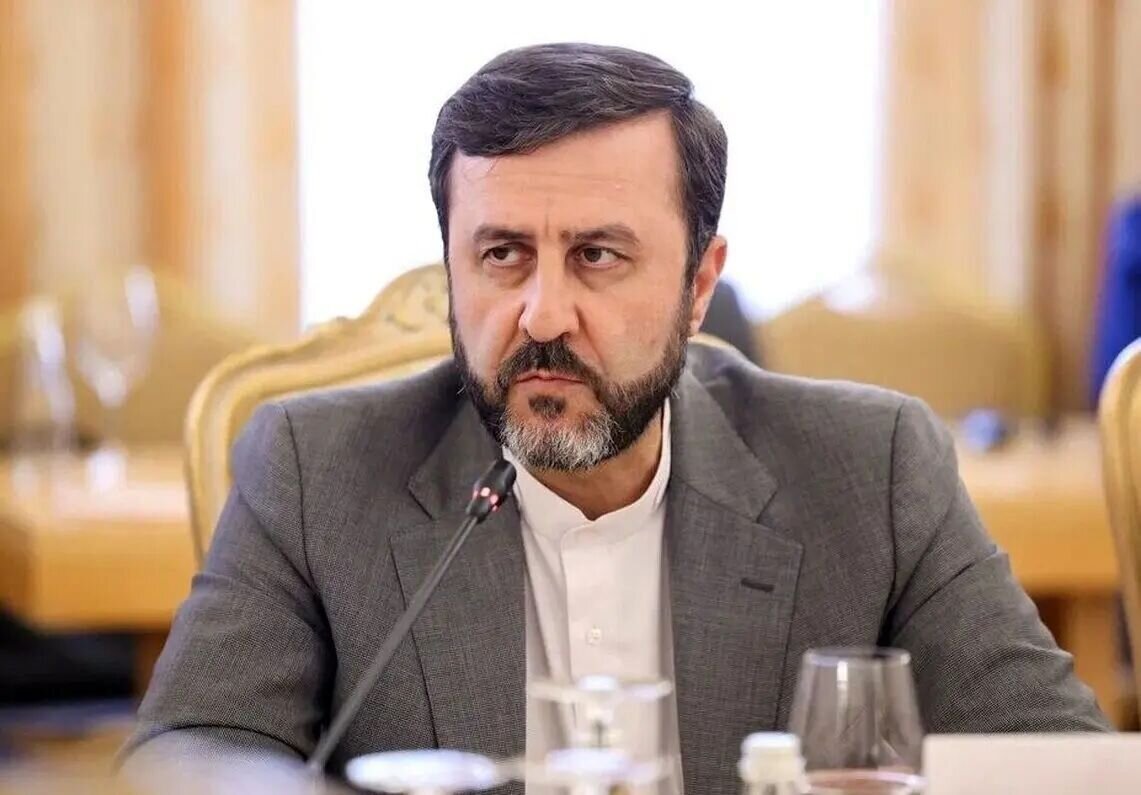
TEHRAN – Iran is prepared for three possible scenarios in its dealings with the United States: diplomacy, an economic blockade, and military confrontation, Deputy Foreign Minister for Legal and International Affairs Kazem Gharibabadi has said.
Speaking in a televised interview on Sunday evening, Gharibabadi said, “The United States has shown its bad faith at least three times over the past year and a half. This demonstrates that it cannot be trusted at the negotiating table.”
He pointed to the 12-day war, which erupted while negotiations were underway, followed by the 40-day war, which also coincided with diplomatic talks. He also cited the Islamabad negotiations and the resulting memorandum of understanding, which, he said, remained in effect for no more than two weeks.
Gharibabadi stressed that Iran's fundamental requirements must be fully addressed in any potential agreement with Washington.
These include a permanent end to the war on all fronts, the lifting of the US-imposed economic blockade, the resolution of the issue of Iran's frozen assets, and the removal of certain sanctions, particularly those targeting the oil sector.
He said that after abandoning its commitments and effectively nullifying the Islamabad understanding, Washington had imposed additional sanctions. Their status must also be resolved, he added, emphasizing that the United States cannot retain them as leverage and then expect Iran to enter further negotiations simply to have them lifted.
Addressing the recent expansion of the US military presence in the region, Gharibabadi said the additional forces and military equipment deployed after the previous understanding were among the outstanding issues that Washington must address through concrete action.
Differences still stand in the way of negotiations
Gharibabadi said significant differences remained between Tehran and Washington over these issues, preventing the two sides from moving toward negotiations and finalizing the text of an agreement.
He explained that Washington had proposed implementing some measures within the two-day or original seven-day timeframe while seeking to defer others to a later stage.
“From our perspective, these proposals are not workable. If even one of the issues is left unaddressed at this stage, no understanding can fundamentally be achieved. And even if one were reached, it would not be sustainable,” he said.
Iran remains in a state of war
The deputy foreign minister said Iran was currently facing two possible paths: pursuing diplomacy or continuing to confront military threats and the conditions of war.
While some describe the current situation as “neither war nor peace,” Gharibabadi said his personal assessment, from a legal standpoint, was that Iran remained in a state of war.
Gharibabadi also dismissed recent statements by US President Donald Trump and other American officials suggesting that Washington was no longer seeking an agreement with Iran and continued to regard economic sanctions as an effective instrument of pressure.
He said such positions represented nothing more than a continuation of policies that had repeatedly failed, despite changes in their presentation.
“There is nothing new about this. Only the names change; in reality, these are the same failed policies,” he said.
Leave a Comment