Iran remains a priority in the U.S. confrontational strategy
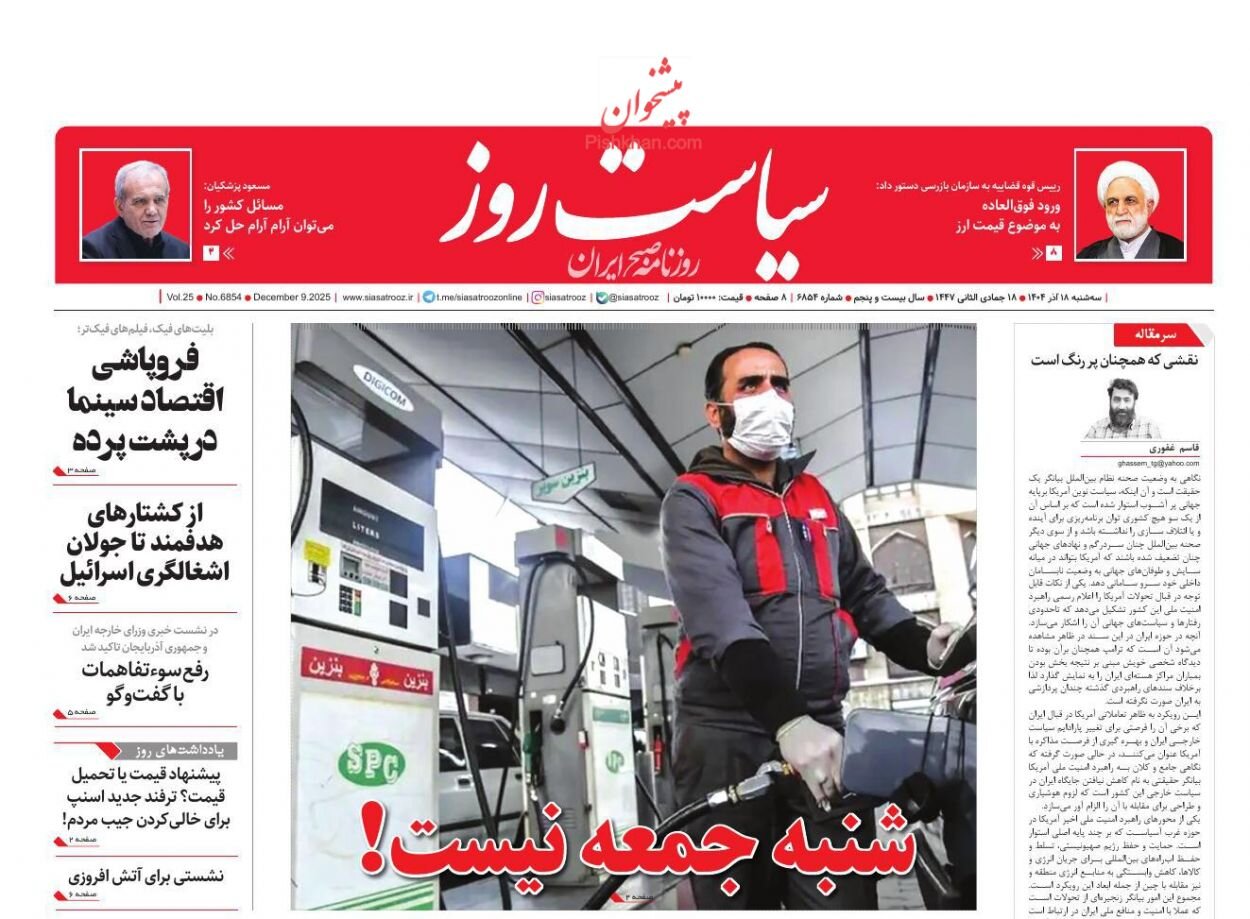
TEHRAN - Siasat‑e-Rooz analyzed the U.S. National Security Strategy document.
According to the paper, supporting and safeguarding the Zionist regime, maintaining control over international waterways for the flow of energy and goods, reducing dependence on regional energy resources, and countering China are among the dimensions of this approach—all of which directly intersect with Iran’s security and national interests. The threats facing Iran stem from the fact that U.S. claims in the region continue to be framed under the banner of “counter‑terrorism.” Yet, in the American view, this does not apply to al‑Qaeda or ISIS, but rather to Iran and the Resistance Front, which Washington portrays as challengers to its dominance. Given these factors, hoping for negotiations with the United States on the assumption of reduced hostility or a shift in priorities would be a miscalculation, one that could impose high costs on the country. Relying on domestic capabilities, emphasizing the continuation of nuclear activities, strengthening the armed forces, and pursuing assertive, active diplomacy are presented as the means to counter America’s new designs—measures that could inflict yet another defeat on the adversaries of this land.
Khorasan: Iran needs special envoy to UAE more than ever
Recent moves by the United Arab Emirates regarding the three Iranian islands signal a growing complexity in an issue that, without an appropriate solution and effective diplomacy, could escalate into more difficult and costly stages. The central question is no longer about ownership of the islands. History and international law have clearly established Iran’s sovereignty, leaving no room for dispute. The UAE, leveraging its deep ties with the West and its pivotal role in Iran’s trade, now sees itself in a position to shape narratives in sensitive cases, including the three islands. This behavior becomes more dangerous when Iran lacks effective diplomatic tools to manage the crisis. The reality is that diplomacy in the Arab world differs from classical diplomacy. In the Persian Gulf (Arab) states, sometimes more than the formal content of negotiations, political weight, personal relationships, and the demeanor of the ambassador play decisive roles. Iran, therefore, needs a special envoy to the UAE more than ever. The Emirates will abandon its baseless claims only when it realizes that Tehran is prepared to send a figure of regional stature into the field.
Arman‑e-Melli: Managing tensions
Arman‑e-Melli examined the fraught state of negotiations between Iran and the United States under current conditions. The paper writes: the complexities of Iran–U.S. relations grow by the day. Both countries remain in a state of complete diplomatic estrangement. Iran, for its part, refuses to sit at a negotiating table where its rights are not recognized. Meanwhile, the International Atomic Energy Agency is preparing a new case against Iran. In addition, political developments in Lebanon, Iraq, and even Yemen have cast their shadow over Iran’s nuclear file. Taken together, these factors suggest that, due to the severed diplomatic ties and the reliance of both sides on third‑party intermediaries to convey messages, tensions are gradually increasing. The absence of direct communication between Iran and the United States, combined with certain unreasonable American demands regarding missile, nuclear, and regional issues, has further fueled the escalation. If both countries continue along this path, a sharp rise in tensions is likely. To counter this destructive trajectory, both sides appear to need measures that would result in reducing tensions between them.
Arman‑e-Emrooz: Step‑by‑step model needed to prevent tensions
Arman‑e-Emrooz highlighted Foreign Minister Abbas Araghchi’s remarks that Iran will enter serious negotiations if Washington stops maximalist demands and recognizes Iran’s inalienable rights, including its right to nuclear enrichment for peaceful purposes. The paper said: Araghchi said that if the United States is ready for real negotiations, Iran is also prepared; but genuine negotiation means recognizing the rights of the Iranian people, lifting unjust sanctions, and a reciprocal return to commitments. To move beyond this stage, the most practical path is a return to the idea of a “step‑by‑step agreement.” This method offers several key advantages: first, neither side feels it has surrendered; second, each step creates tangible confidence‑building; third, if one party violates the agreement, the other can easily revert to the previous state by relying on a mutual snapback mechanism. Iran has shown that when the other side takes concrete steps, it responds in kind. The experience of releasing foreign prisoners and releasing Iran’s six billion dollars frozen in South Korea was a successful example of this step‑by‑step model. If diplomacy does not quickly transform into “diplomatic action,” it will soon give way to tension and threats. The window of diplomacy is open—but it will not remain open for long.
Leave a Comment