Geography’s veto
MADRID - To repeat a failing strategy is to confess an exhaustion of political imagination. The United States, still unable to metabolize the profound humiliations of its recent military and political defeats, has fallen into a kind of strategic hauntology.
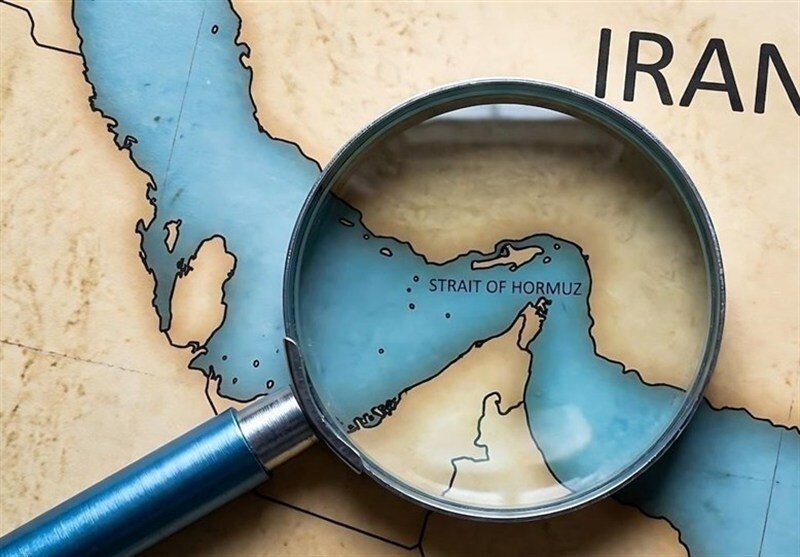
Nowhere is this spectral paralysis more evident than in its approach to the Persian Gulf. Time and again, Washington trips over the same geographical reality: the material intransigence of the Iranian coastline. Western decision-makers routinely reduce the viability of global energy routes to problems of logistical engineering or naval supremacy, betraying a profound geographical ignorance. They fail to recognise the Strait of Hormuz not merely as a shipping lane, but as an ontological knot in the machinery of modernity, where the abstraction of global capital collides with the unforgiving relief of the earth.
The US Fifth Fleet, anchored in Bahrain, operates on the hubristic premise that naval power can be projected with impunity across any body of water. This doctrine was forged for deep oceanic highways, not for the shallow, semi-enclosed waters of the Persian Gulf. Here, the technological majesty of destroyers and aircraft carriers is dissolved by a proliferation of asymmetric threats. Tehran has spent decades studying these exact vulnerabilities, cultivating an ecosystem of deterrence—coastal anti-ship missiles, swarms of fast attack craft, naval drones, and smart mines. Geography is not a passive backdrop; it is a material actor dictating the terms of engagement. The strait’s narrowest point is a mere 34 kilometers wide, with shipping lanes just three kilometers across. The mountainous Iranian coast, commanding strategic islands like Abu Musa, grants Tehran a dominant surveillance position that inherently favors coastal defense over power projection.
In Western capitals, this vulnerability is often soothed by the invocation of terrestrial alternatives. Saudi and Emirati pipelines are frequently touted as viable contingencies, an epistemic tranquillizer designed to calm market anxieties. Yet, this narrative collapses under the weight of material reality. These pipelines operate far below the capacity required to absorb diverted maritime traffic, and building new infrastructure would demand years of investment and a regional stability that a crisis of this magnitude would inherently shatter. Liquefied natural gas is even more rigid, tethered to specialized cold chains and specific regasification terminals that cannot be improvised. The fantasy that energy trade can be reconfigured at will ignores the sheer material inertia of global infrastructure.
The West views Hormuz through the prism of liberal international law, demanding it remain open for the sake of global commerce. Tehran, conversely, views it through the lens of national security and littoral sovereignty—a threshold where existential threats must be neutralized. This clash of paradigms exposes a deeper asymmetry: the impossibility of imposing the universalism of the market when physical territory asserts its right to political sovereignty. Militarizing the strait to protect trade merely turns the conduit itself into a war zone.
Iran’s strategy does not require a total blockade to paralyses the global logistics system. By imposing an asymmetric cost through sporadic, calculated interventions, Tehran ensures that maritime insurance premiums spike to prohibitive levels. Long before a foreign navy can mount an effective countermeasure, international shipping companies will halt operations due to uninsurable risk. The actuarial market, driven by cold calculation, ends up doing the work of military deterrence.
This vulnerability is exponentially magnified when viewed on a broader canvas. The simultaneous disruption of Hormuz and the Bab al-Mandab Strait by Ansarullah creates a compounded fracture in global supply chains, eliminating any efficient rerouting. The Red Sea and the Persian Gulf form a continuous arc of strategic pressure, contesting the imposed maritime order. When both chokepoints are squeezed, the global logistics network loses its elasticity. Commercial fleets retreat, importing nations are forced to ration, and the myth of infinitely resilient supply chains is laid bare.
Washington’s inability to process this geographical reality is accelerating its strategic obsolescence. Each attempt to impose a military solution on the problem of the straits reinforces the perception in the Global South that the liberal order can no longer guarantee the security of vital supplies. This structural distrust is driving Asian capitals to accelerate alternative payment mechanisms, bolster energy reserves, and deepen bilateral ties with Iran, progressively marginalizing the dollar. Naval coercion, far from preserving hegemony, acts as the catalyst fragmenting the very economic system it claims to defend.
Ultimately, the financial centers of London and New York are discovering, albeit belatedly, that the ultimate guarantee of their energy derivatives depends on a maritime peace they can no longer dictate. Accepting this geographical reality is the first step toward a sober analysis, stripped of hegemonic illusions. The machinery of modernity relies on these maritime conduits, and whoever controls the conduit controls the rhythm of global circulation. Recognizing this demands an analytical realism suited to the twenty-first century, one where the material sovereignty of the Global South finally overpowers the abstraction of imperial power.
Leave a Comment