Iran, Armenia chart a new roadmap for energy cooperation
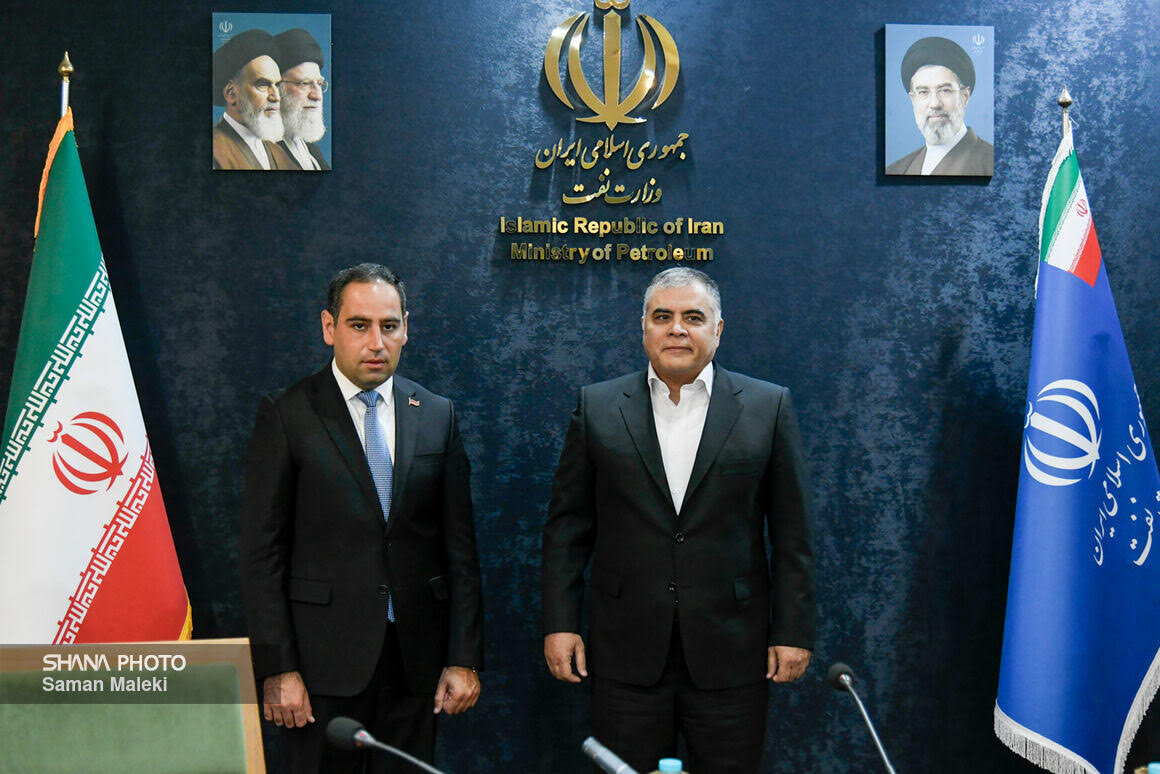
TEHRAN- Iran’s oil minister announced the agreement between Iran and Armenia to form a joint specialized working group in the energy sector and said: Tehran has proposed that, by defining a new model for gas trade, the grounds for developing energy cooperation with Yerevan and even exporting gas through Armenia to other markets be examined.
According to Shana, Mohsen Paknejad made the remarks on Saturday in a meeting with Davit Khudatyan, Armenia's Minister of Territorial Administration and Infrastructure, stating that Yerevan has stood by Tehran during difficult days, adding: Iran is ready to assist the friendly country of Armenia within the framework of its capabilities and to develop cooperation.
Referring to the negotiations between the two sides, he said: In this meeting, the areas of cooperation in the energy sector, including trade, export of technical and engineering services, construction of a refinery, and meeting Armenia's needs in the field of petroleum products, were reviewed.
The Oil Minister, referring to the friendly relations between Tehran and Yerevan, considered Armenia one of Iran's important neighbors and emphasized: There are suitable capacities and grounds for developing bilateral cooperation, especially in the energy sector, between the two countries.
Paknejad announced the agreement to form a joint specialized working group and stated: It was proposed to the Minister of Territorial Administration and Infrastructure of Armenia that this working group start its activities as soon as possible so that the results and achievements of the follow-ups can be reviewed at the next meeting.
Referring to the current cooperation between the two countries in the energy sector, he stated: The current model of cooperation between Iran and Armenia is based on gas-for-electricity barter, but the clear proposal of Iran is to define a new commercial model for gas exports.
The Oil Minister emphasized: Implementing this proposal requires examining the existing infrastructure and the possibility of expanding gas trade, even beyond Armenia's market and through its territory.
Paknejad, stating that this model has technical and commercial complexities, said: Examining the various dimensions of this plan requires forming a joint specialized working group and conducting expert studies to prepare the ground for its implementation.
Armenia's Minister of Territorial Administration and Infrastructure announced the agreement between Tehran and Yerevan to form a joint specialized working group in the energy sector and said: The two countries are determined to expand bilateral cooperation across all relevant areas with the start of this working group's activities.
After his meeting with Paknejad, Davit Khudatyan said: In this meeting, we reviewed the areas of cooperation between Iran and Armenia and reached an agreement on forming a joint specialized working group.
He added: It was decided that this working group would be formed and start its activities in the shortest possible time to expand the cooperation between Iran and Armenia in all areas related to the duties of the two ministries.
Armenia's Minister of Territorial Administration and Infrastructure, referring to the current cooperation between the two countries in the energy sector, said: Armenia currently cooperates with Iran in the field of petroleum products and uses Iranian bitumen for road construction projects.
Khudatyan, stating that energy cooperation between the two countries is based on gas and electricity exchange, specified: Armenia receives and consumes gas in exchange for sending electricity to Iran and is interested in increasing the volume of these exchanges and bilateral cooperation more than ever.
Back in mid-June, a specialized meeting between the Head of Iran's Road Maintenance and Transportation Organization and the Deputy Minister of Economy of the Republic of Armenia was held at the Ministry of Economy in Yerevan, focusing on facilitating trade and transit and reducing international transportation barriers between the two countries.
During this meeting, the Head of the organization, referring to Iran's strategic position in the North-South and East-West international corridors, emphasized the need for the full activation of transit and logistics capacities on both sides.
Reza Akbari stated: The Islamic Republic of Iran, as one of the region's main transit routes, has always welcomed the development of transportation cooperation with its neighbors, and Armenia, due to its special geographical location and cultural and historical ties, is considered a key partner on these routes.
The Deputy Minister of Economy of Armenia, while appreciating the active presence of the Iranian delegation and the accompaniment of the Ambassador of the Islamic Republic of Iran and diplomatic representatives, announced that his country is determined to remove road transportation barriers and reduce transit costs.
Emphasizing that Armenia is seeking mechanisms to make the movement of transport fleets between the two countries smoother and more economical, he added: Adjusting border tolls and coordinating customs procedures are among our main priorities.
The Deputy Minister of Economy of Armenia added: The presence of senior customs and transit officials from both sides in this meeting demonstrates a serious determination to implement the agreements.
In this meeting, five main axes were discussed and exchanged with an operational approach and the active participation of the Iranian and Armenian delegation members.
The two sides agreed on reducing border tolls, deciding to form a joint working group under the direct supervision of customs managers to review the cost structure of crossing shared borders and plan for their gradual reduction.
The expansion of truck and cargo fleet traffic was also placed on the agenda, and it was decided that, in addition to increasing the traffic quota, smart systems for reserving crossing times and controlling traffic at the borders should be launched to prevent the formation of long queues.
Activating transit and logistics capacities was another important axis of this meeting, based on which both sides emphasized the full utilization of logistics terminals on both sides of the border and the creation of joint centers with private sector cooperation.
Also, the development of border crossing infrastructure and access routes, including improving roads leading to common border crossings and examining the construction of a new bridge at the zero border point, was prioritized in the joint commission.
Reducing international transportation barriers was also raised as another axis, and in this regard, eliminating unnecessary bureaucratic formalities, standardizing transit permit documents, and coordinating the implementation of international transport conventions were welcomed by both sides.
The Director General of the Organizational Commercialization Office of the Road Maintenance Organization emphasized the need to facilitate trade procedures and coordinate with relevant bodies.
The Ambassador of the Islamic Republic of Iran to Armenia, while welcoming the positive atmosphere of the negotiations, emphasized full support for implementing these agreements within the framework of economic diplomacy.
At the end of this meeting, both sides emphasized their determination to become regional transit hubs and make maximum use of the communication corridors between Asia and Europe, and it was decided that the next meeting would be held as soon as possible to finalize the executive details of the agreements.
MA
Leave a Comment