"I pulled my 11-year-old brother from the burning car, hoping he was still alive, but..."
July 17 U.S. missile strike on a bridge in southern Iran changed the lives of an entire village forever.
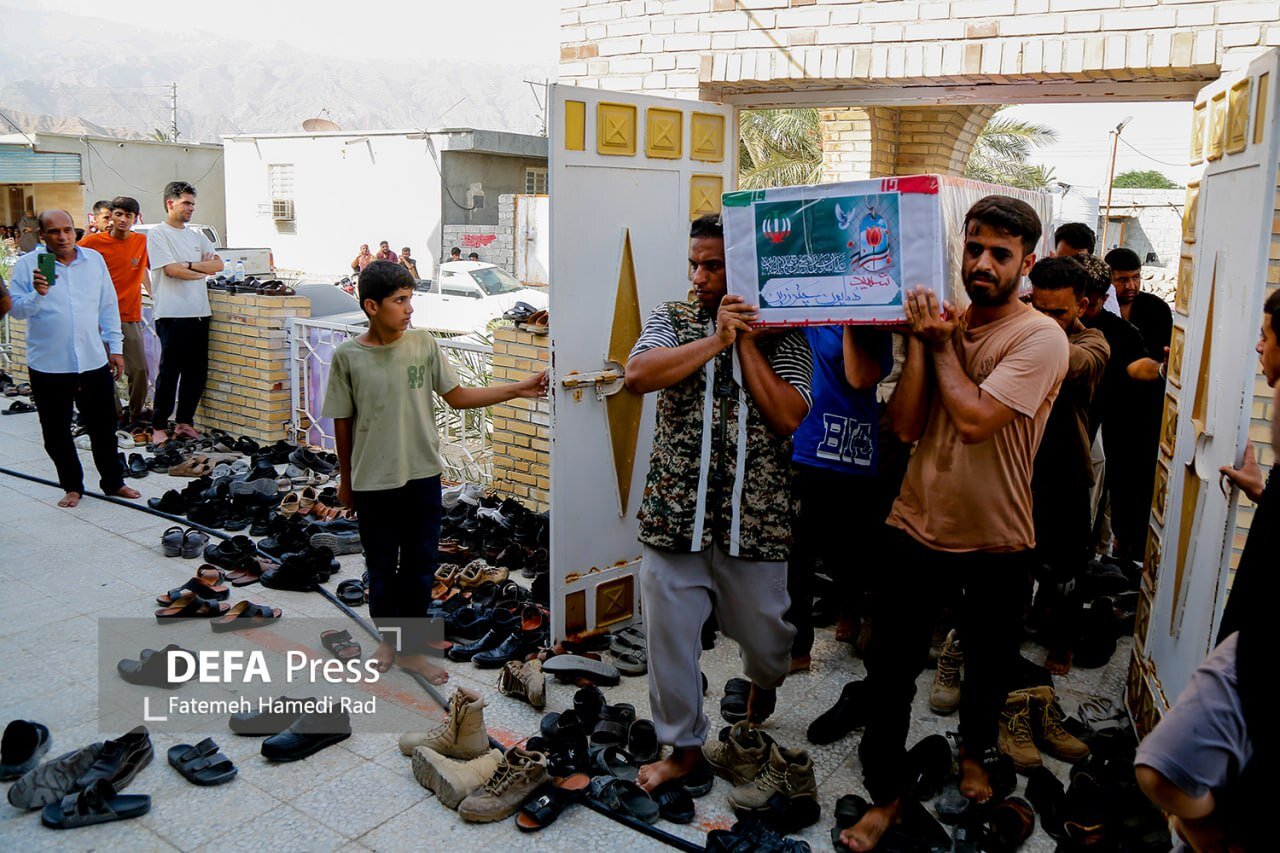
In the early hours of Friday, July 17, 2026, a U.S. strike on a rural bridge along the old Bandar Abbas–Khamir road changed the lives of several families forever. The bridge had long served as the old route connecting residents of nearby villages with the cities of Khamir and Bandar Abbas. For years, local people relied on it for their daily commute, and even after a new highway was built, it remained an important access road for surrounding villages.
Several passing vehicles were struck in the attack, killing a number of civilians. Among the victims were Homayoun Chatrzarin, a 32-year-old man who, despite suffering from a severe visual impairment, was the main pillar of support for his family, and his 11-year-old brother Mazyar Chatrzarin, an elementary school student.
Hassan Chatrzarin, their brother, was among the first people to reach the scene only minutes after the strike. He still vividly remembers his brother's final phone call, the road engulfed in smoke and flames, and the moment the beam of his flashlight fell on his brothers' vehicle.
What follows is his account of the hours that began with a single phone call and ended with the loss of two brothers, turning that night into the darkest chapter in the Chatrzarin family's life.
Before we talk about the night of the attack, could you tell us a little about your family? How many siblings are there, and what roles did Homayoun and Mazyar play within the family?
We are a large family—six brothers and two sisters. Two of my brothers, Homayoun and Mazyar, were killed in the U.S. attack, while the other four brothers are still alive. Thankfully, both of my parents are alive as well, and I pray they remain healthy for many years to come.
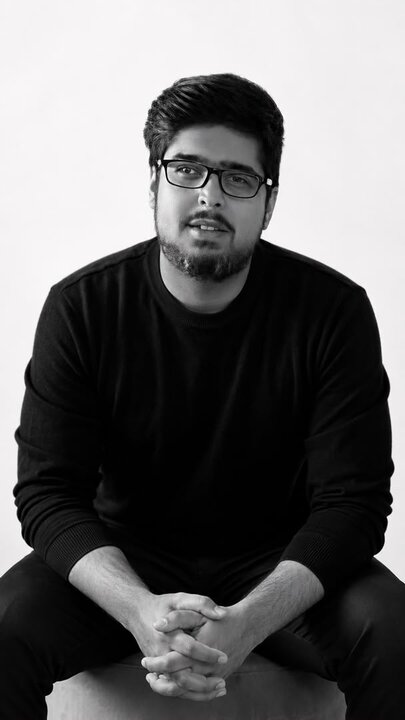
My father spent many years working as a driver for a cement company and is now retired under Iran's Social Security Organization. He devoted his entire life to supporting our family through hard work.
We are from the village of Nimeh kar, in Khamir County, Hormozgan Province. It is a village of around 2,000 people, located roughly 80 to 85 kilometers from Bandar Abbas. Most residents work as truck drivers or are self-employed, and almost everyone knows one another.
Homayoun, my older brother, was 32 years old. He never married because he dedicated most of his life to caring for our parents and supporting the family.
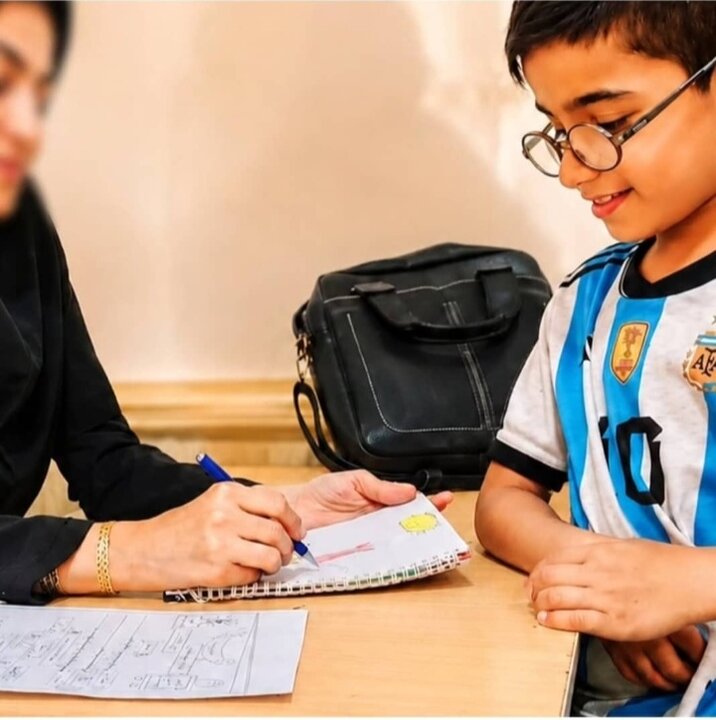
Mazyar was the youngest son in the family. He was only 11 years old. He had just completed the fourth grade of elementary school and was excitedly preparing to begin fifth grade.
Both of your brothers had physical disabilities. Could you tell us more about their conditions?
Yes. Several years ago, Homayoun was involved in a serious traffic accident in which he lost one of his eyes, leaving him with a severe visual impairment. Despite that, he never stepped back from his responsibilities toward our family.
Mazyar had been born with strabismus and had been receiving medical treatment since childhood. Both of them were supported by Iran's State Welfare Organization, but neither allowed these conditions to diminish their hope for life or their dreams for the future.
Now let's go back to the night of the attack.
That night, we were gathered at one of my brothers' houses, right next to ours. Suddenly, we heard an enormous explosion—so powerful that it shook every door and window. Moments later, the electricity across the area went out completely, leaving everything in darkness.
At that very moment, Homayoun called my mother. All he managed to say was, "Mother, where are you?" Before she had a chance to answer, the call was cut off.
After that, no matter how many times we tried to call him back, he never answered. With the power outage, communications were severely disrupted, and even making phone calls became extremely difficult.
From that moment on, a terrible sense of anxiety gripped all of us.
When we asked where Homayoun was, my mother told us that, at Mazyar's insistence, the two brothers had gone to the hot springs near our village for therapeutic treatment. After Homayoun's call was disconnected, she kept trying to reach him, but there was no response.
With every passing minute, our worry grew. None of us wanted to imagine the worst, but deep down we all had an unsettling feeling—one that we later realized had not been unfounded.
My cousin and I got into a car and drove toward the site of the explosions, unaware that within minutes we would be confronted with the most heartbreaking scene of our lives.
From the moment we got into the car, we were all deeply worried, though we still hoped nothing had happened to my brothers. None of us wanted to believe that something so tragic could have taken place. We kept telling ourselves that perhaps the phone lines were down, or that they had been delayed somewhere and we would hear from them soon.
The closer we got to the scene, the greater our anxiety became. From a distance, the sky was filled with smoke, and after the second explosion, the flames were visible from far away. The silence of the night had been shattered by the sound of sirens, the cries of people, and flames lighting up the sky. At that moment, I felt that something had happened that could never be undone.
When you arrived at the scene, what was the first thing you saw?
The fire was so intense that no one could get close. The flames were enormous, and everyone kept warning me not to go any farther because it was too dangerous. I had a flashlight with me. As soon as I got out of the car, I pointed its beam toward the scene.
That was when I saw my brothers' car.
It had come to a stop right at the end of the bridge—perhaps only one or two meters short of making it across. The moment I saw it, it felt as if my whole world had collapsed. I still wanted to believe they were alive, but that single image was enough to make me realize that what had happened was far worse than we had imagined.
There have been different accounts about this bridge. Could you explain what it was used for?
It was a local bridge on the old Bandar Abbas–Khamir road, a route that people from nearby villages had used for years in their daily commute. After the new highway was built, most heavy vehicles began using the new route, while the old road remained primarily in use by local residents.
It was not a military base, a government facility, or a location where military forces were stationed. It was simply a road used by ordinary people—people traveling to and from the city for work, medical treatment, shopping, or visiting relatives.
Besides your brothers, were there other victims in the attack?
Yes. Another car was traveling immediately behind my brothers' vehicle. There were four people inside—a husband and wife, their daughter, and the wife's mother.
Later, their relatives told us they had gone to Bandar Abbas to visit a family member in the hospital and were on their way home when they were caught in the attack.
They all lost their lives.
So it wasn't only our family that was left grieving that night. Several other families also lost their loved ones.
Were you the first member of your family to find your brothers?
Yes. As far as I remember, I arrived before the others.
The moment I saw the car, I completely lost control of myself. All I could do was scream, "My brothers are inside the car... Help them!"
Villagers, friends, relatives, and everyone who had rushed to the scene tried to help, but the intensity of the fire made any rescue effort extremely difficult.
Had emergency responders arrived by then?
No. During the first few moments, no rescue teams had reached the scene.
We couldn't wait.
My cousin, several local residents, and I tried to pull my brothers' bodies from the vehicle ourselves.
The other car, however, was completely engulfed in flames, and it was impossible to get close to it.
What went through your mind when you pulled Mazyar from the car?
I will never forget that moment.
When I carried him out, I still couldn't bring myself to believe he was gone. I stroked his face, called his name, and gently shook him, hoping he might respond.
But there was no response.
That was the moment I realized I had lost my little brother.
I truly don't know how to put that feeling into words. Only those who have seen a loved one die with their own eyes can understand what a person goes through in such a moment.
Was your mother also at the scene?
Yes, but our relatives and other family members wouldn't let her come closer.
She could hear me screaming and kept saying, "My children are still alive... Please save them."
But I had already seen the truth.
On the one hand, I was overwhelmed by the grief of losing my two brothers. On the other, I had to protect my mother from witnessing those horrifying scenes.
That was probably the hardest moment of my life—to bear the pain of losing my brothers while at the same time worrying about what would happen to my mother if she saw what I had seen.
When you think back to that night, what image has stayed with you the most?
My brother Homayoun's final phone call to my mother... the beam of my flashlight falling on the car... the flames... and the cries of people.
But the most painful memory is something else.
Homayoun always reminded us to take care of ourselves. Whenever any of us left home, he would say, "Be careful. Come back home safely."
He was always concerned about the safety of others.
Yet fate decreed that he would never return home himself.
That night, we didn't just lose two brothers. I feel as though a part of our family's memories, our peace, and our lives was left behind on that road forever.
So far, you've spoken about the night of the attack and its immediate aftermath. But I'd like our readers to know Homayoun and Mazyar as more than just victims of an attack. Could you tell us about their lives—their personalities, dreams, and the roles they played within your family?
If I had to describe Homayoun in a single sentence, I would say he was the pillar of our family. Although he was only 32 years old, he always carried a strong sense of responsibility. Before thinking about himself, he always thought about our father, our mother, and his brothers and sisters.
Homayoun never married. Many people asked him why he did not start a family of his own, but he always said that as long as he could, he preferred to stay by our parents' side and care for them. For him, nothing was more important than the well-being of our family.
After the traffic accident in which he lost one of his eyes, life became much more difficult. Yet he never allowed that hardship to defeat him. Despite his condition, he continued working, supporting the family, and doing everything he could to ensure that our parents never felt they lacked anything.
What role did he play in your life and in the lives of the other family members?
Homayoun was more than our eldest brother—he was the family's anchor.
I studied through high school, and he paid a large part of my educational expenses. Whenever any of us faced a problem, he would often notice it before we even said a word and immediately look for a solution.
If something was needed at home, he would provide it. If our parents required anything, he would take care of it without ever being asked.
He truly was the family's breadwinner.
His absence is painful not only because we have lost someone we loved, but also because we have lost the person who carried much of the responsibility for our family's livelihood.
How do the people of your village remember Homayoun?
After the funeral, many people came to offer their condolences—relatives, neighbors, friends, and villagers.
What meant the most to me was that everyone spoke about Homayoun's kindness and good character. Every person had a story about his generosity, his respect for others, or the help he had offered them.
To this day, I have not met a single person who has spoken ill of him or said they had ever held a grievance against him.
That is our greatest comfort: knowing that my brother lives on in people's memories as a good and honorable man.
What was Mazyar like? As the youngest member of the family, what kind of personality did he have, and what were his dreams for the future?
Mazyar was the light of our family.
He was the youngest son, and everyone adored him.
Although he was only 11 years old, he was full of energy, hope, and a genuine love of life. He always had a smile on his face, and his presence filled our home with warmth and happiness.
He made friends easily and always wanted to help others. Whenever he saw younger children, he would play with them and do everything he could to make them happy. Kindness came naturally to him.
We all hoped he would continue his education and build a bright future.
Our eldest sister used to sit with him after school every day to help him review his lessons.
One day she asked him, "What do you want to be when you grow up?"
Without hesitation, he replied, "I want to become a police officer."
When she asked why, he answered, "Because police officers protect people and keep them safe."
That answer touched all of us. An 11-year-old child had chosen his dream profession not because of money or prestige, but because he wanted to serve and protect others.
In your opinion, what made both Homayoun and Mazyar so beloved by your family and the people of your village?
I believe the quality they shared most was kindness.
Homayoun expressed it through his sense of responsibility, devotion, and self-sacrifice, while Mazyar showed it through his honesty, simplicity, and innocent, childlike spirit.
Perhaps that is why, even today, whenever people visit our home, the first thing they speak about is their kindness and good character.
How has this tragedy changed your outlook on life?
Until someone experiences such a loss, they cannot truly understand what a blessing family is.
Ever since that night, every time I walk into our house, I instinctively expect to see Homayoun or Mazyar.
Then I remember they are no longer with us.
It is not simply the absence of two people. It feels as though part of our family's memories, hopes, and future disappeared with them.
Today, more than ever, I treasure every moment that families are able to spend together.
I sincerely hope that no family, anywhere in the world, ever has to endure such suffering.
How has life changed in your village since the attack? What is the atmosphere like today?
Our village is no longer the same.
This tragedy did not affect only our family. In a small village, when several families lose loved ones within such a short time, everyone's grief becomes intertwined.
Besides my two brothers, another resident of our village, Mohammad Movahedi, was also killed in the same attack. He was a fuel tanker driver who worked to support his family. His home was not far from ours, and everyone in the village knew him.
Since that night, every street and every home has become a reminder of someone who is no longer with us.
Even now, whenever people gather together, the conversation inevitably returns to that night and to those we lost.
How did the people of the village support your family in the days that followed?
From the very first hours after the attack, they never left us alone.
Neighbors, friends, relatives, and villagers stood by our side. Some came that very night to help. Others accompanied us during the funeral and burial. Many came simply to tell us they shared in our grief.
Although their support cannot erase the pain of losing our loved ones, it reminds us that we did not face this tragedy alone.
We understand that a few days before the attack, Homayoun said something that took on a very different meaning after his death. Could you tell us about that?
Yes. A few days after the funeral, one of our cousins shared a memory that deeply affected all of us.
He said that about a week before the attack, he and Homayoun were sitting together at home watching television coverage of the funeral of our martyred Leader.
At one point, Homayoun remarked, "If a person is martyred, people pray for them, perform funeral prayers for them, and remember them with kindness."
At the time, none of us could have imagined that only a few days later he himself would no longer be with us.
Hearing that story after his martyrdom was profoundly heartbreaking and deeply thought-provoking for all of us.
If you could send a message today to the American people, whose tax dollars are used to finance attacks on Iran, what would you say?
I would tell them that when leaders such as Donald Trump pursue their own interests using the taxes paid by ordinary Americans, it is not only other nations that suffer. They should remember that such policies ultimately harm their own people as well.
How do you see the future?
Life goes on, but the void left by those we love can never truly be filled.
We will do everything we can to keep the memory of Homayoun and Mazyar alive—not only because they were members of our family, but because they were kind and compassionate people who lived their lives caring for others.
I hope the day will come when no child traveling to school, no father on his way to work, and no family returning home will have to fear whether they will arrive safely.
I also hope people around the world understand that behind every news report about war are families forced to live with the loss of those they loved.
These days, our country is living under the shadow of war. But our enemy should know that we will never allow it to set foot on our homeland.
Leave a Comment