Milan event commemorates child victims of Gorla, Minab and Gaza
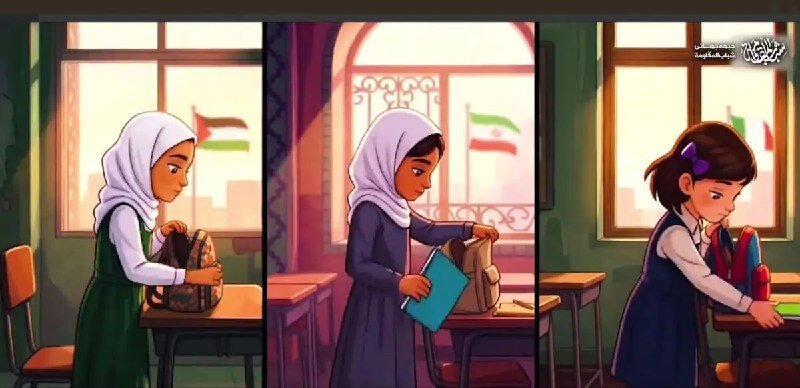
TEHRAN- Italian artists and activists have commemorated children killed in wars in the country’s Gorla district, Iran’s Minab and the Gaza Strip, marking the 82nd anniversary of the bombing of an elementary school in Milan during World War II.
The commemorations took place on October 20, the anniversary of the 1944 Gorla massacre, which claimed the lives of 184 children and 19 school staff members when an Allied air raid struck the Francesco Crispi elementary school in northern Milan.
This year’s anniversary carries additional significance following the Italian parliament’s approval of a law establishing October 20 as a national day of remembrance for the child victims of the Gorla massacre and children killed in all wars. The legislation, Law No. 85 of May 6, 2026, aims to preserve the memory of the victims and promote a culture of peace.
During the recent commemorations, participants drew parallels between the Gorla tragedy and the deaths of children in the Israeli-American attack on a school in Minab, southern Iran, as well as the killing of children in Gaza.
Media activist Zio Filippo took part in the activities, accompanying his public outreach with music videos as he moved from Piazza della Repubblica toward Piazza Venezia, according to reports on the event.
Italian artists have also released a song titled “Gorla, Minab, Gaza” to honor children killed in armed conflicts and highlight the shared tragedy of civilian victims across different historical and geographical contexts.
The song links the memory of the children killed in Milan during World War II with that of children who have lost their lives in more recent conflicts, including those in Iran and Gaza.
The Gorla massacre occurred on October 20, 1944, when American aircraft taking part in an Allied bombing operation over Milan targeted industrial facilities in the surrounding area. A bomb struck the Francesco Crispi elementary school, killing 184 children and 19 members of the school staff.
The tragedy became one of the most painful episodes in Milan’s wartime history and a lasting symbol of the devastating impact of aerial bombardment on civilians.
On February 28, the Shajareh Tayyebeh elementary school in Minab, Hormozgan province, became the site of a devastating massacre as the United States and Israel initiated their strikes against Iran.
While dozens of girls and boys aged between 7 and 12 were beginning their lessons, the school was targeted by a missile strike that caused the building to collapse, trapping children and teachers beneath the rubble. Iranian authorities confirmed a final death toll of 168 people, with at least 95 others wounded, marking one of the most harrowing incidents of the conflict's opening day.
Despite attempts by US and Israeli authorities to distance themselves from the carnage as images of the tragedy spread across social media, detailed forensic and digital investigations have painted a starkly different picture.
An analysis by Al Jazeera’s digital investigations unit, utilizing over a decade of satellite imagery and recent video clips, revealed that the school was a clearly distinct civilian facility, separated from any adjacent military sites for at least ten years. Furthermore, witness accounts and satellite-based analyses confirmed that the school was triple tapped by three separate, deliberate strikes, leaving no doubt about the nature of the attack.
The international community has faced mounting evidence regarding the responsibility for this atrocity, with investigations from major global outlets including The New York Times, BBC Verify, CBC, and NPR all concluding that the United States was responsible for the strike.
These findings have raised fundamental questions about the intelligence used to justify the bombing, as the patterns of the strike suggest a direct targeting of a civilian educational institution. The Minab school tragedy now stands as a somber testament to the immense human cost of the aggression and a focal point for those demanding international accountability.
SAB/
Leave a Comment