Supplying, distributing goods not disrupted even for a single day: TCCIMA head
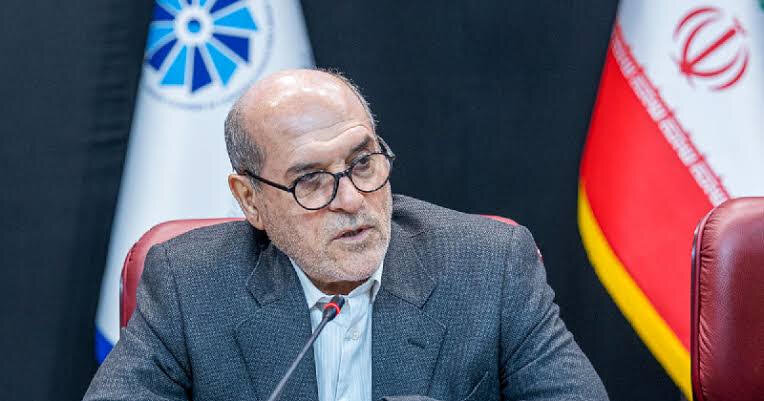
TEHRAN- The head of the Tehran Chamber of Commerce, Industries, Mines, and Agriculture (TCCIMA) said: “As confirmed by the President, the private sector provided the greatest assistance to the government and did not allow the process of supplying and distributing goods to be disrupted even for a single day.”
According to the Mehr News Agency, Mahmoud Najafi Arab said, referring to the difficult conditions for economic enterprises: “During the two recent wars, large, small, and medium industries suffered considerable damages, and even some factories located in industrial estates were directly targeted and destroyed; damages that cannot easily be compensated.”
He added: “Wartime conditions have made enterprises’ access to export and import markets difficult, and securing working capital has also faced serious limitations. In such an atmosphere, attracting foreign investment seems more out of reach than ever. On the other hand, domestic business problems have intensified, and rising inflation has increased the cost of maintaining warehouse inventories.”
The head of the Tehran Chamber of Commerce, emphasizing the role of the media in reflecting the country’s economic issues, said: “The media must reflect enterprises’ problems accurately and expertly so that the ground is prepared for assessing and resolving them. The private sector cannot pass through the current conditions alone and without the accompaniment of the government and the people.”
Najafi Arab, referring to the performance of economic actors during the recent wars, stated: “As confirmed by the President, the private sector provided the greatest assistance to the government and did not allow the process of supplying and distributing goods to be disrupted even for a single day. Economic actors stood alongside the country with empathy and sacrifice, but despite these actions, in some cases an incorrect image of them is still presented in society.”
He continued: “The view that economic actors are leech-like people or merely pursue their own personal interests is rooted in past intellectual currents. The media can play an effective role in correcting this attitude by introducing the lives and performance of entrepreneurs and fairly reflecting their efforts.”
Najafi Arab added: “Restoring the position of the private sector in Iran’s economy requires more support and follow-up. Experience has shown that as long as an issue does not become a public demand, one cannot expect serious reforms. The media must elevate the problems of economic enterprises beyond the level of scattered complaints and turn them into a public demand for policy reform.”
Referring to the role of the media in promoting a culture of production and entrepreneurship, he said: “The media can, by revising the way they narrate economic issues, provide the ground for strengthening the culture of production and entrepreneurship. Introducing industrial innovations, knowledge-based companies, export-oriented enterprises, and successful experiences of large and medium businesses shows society that creating economic value is a complex and time-consuming process and that the formation of an industry is the result of the efforts of several generations.”
The head of the Tehran Chamber of Commerce emphasized: “The media’s responsibility should not be limited merely to publishing news about economic problems; rather, continuous follow-up of demands and evaluation of officials’ performance must also be placed on the agenda. It must be determined to what extent the promises made have been implemented and whether the announced reforms have been able to improve the business environment or not.”
Najafi Arab added: “Publishing periodic reports on the state of economic problems, the progress of reforms, and the remaining obstacles can take the media’s role beyond the mere transmission of news and turn them into one of the effective tools for accountability and policy reform.”
Referring to the media’s problems during the war period, he said: “The media also faced serious damages during this period. Rising costs and declining audiences following internet restrictions put pressure on the media economy and in some cases led to layoffs.”
Najafi Arab continued: “In such conditions, economic enterprises must help support the media using various methods and play a role in maintaining their economic sustainability. The media are not merely observers of economic developments; rather, they can be effective actors in shaping a competitive, transparent, and productive economy.”
He also emphasized the necessity of enhancing the specialized knowledge and expert capacity of media actors and said: “The country’s media must strengthen their expert capacity and move at the level of international media. On this path, the private sector and the Tehran Chamber of Commerce are ready to cooperate with media professionals.”
The head of the Tehran Chamber of Commerce, continuing to criticize the government’s interventions in economic activities, said: “One of the problems we have faced is the interference of executive bodies in the economy; an approach that continues. A command economy and command pricing have seriously harmed the industry, services, and other business sectors.”
Emphasizing the necessity for the media to address this issue more seriously, he said: “I ask the media to seriously examine and reflect the effects of government interventions in the economy and the consequences of command policies. It is also necessary to pay attention to the efforts of media outlets active in this field so that the country’s governance system understands the necessity of changing restrictive approaches in the economy.”
Najafi Arab, referring to the Tehran Chamber of Commerce’s plans to encourage media active in this area, added: “We will try to commend media outlets that perform effectively in explaining the destructive effects of government interventions in the economy and command pricing and to consider an appropriate award for them.”
He also, referring to the increase in economic regulations and circulars in the country’s difficult conditions, said: “During reviews conducted in Shahrivar (September), we encountered significant and at the same time worrying statistics regarding the number of circulars and regulations issued by executive bodies.”
The head of the Tehran Chamber of Commerce continued: “The noteworthy point is that the more difficult the country’s conditions become, the more the volume of circulars and the extent of executive bodies’ interventions in the economy increase. In Shahrivar alone, various executive bodies issued a considerable number of circulars in various economic areas.”
Najafi Arab emphasized in conclusion: “The media must seriously pursue the issue of the command economy, command pricing, and the consequences of executive bodies’ interventions in the activities of economic enterprises; because the continuation of this approach in recent years has caused considerable damage to the country’s economy.”
EF/MA
Leave a Comment