Iran warns Bahrain of legal consequences for facilitating US military aggression
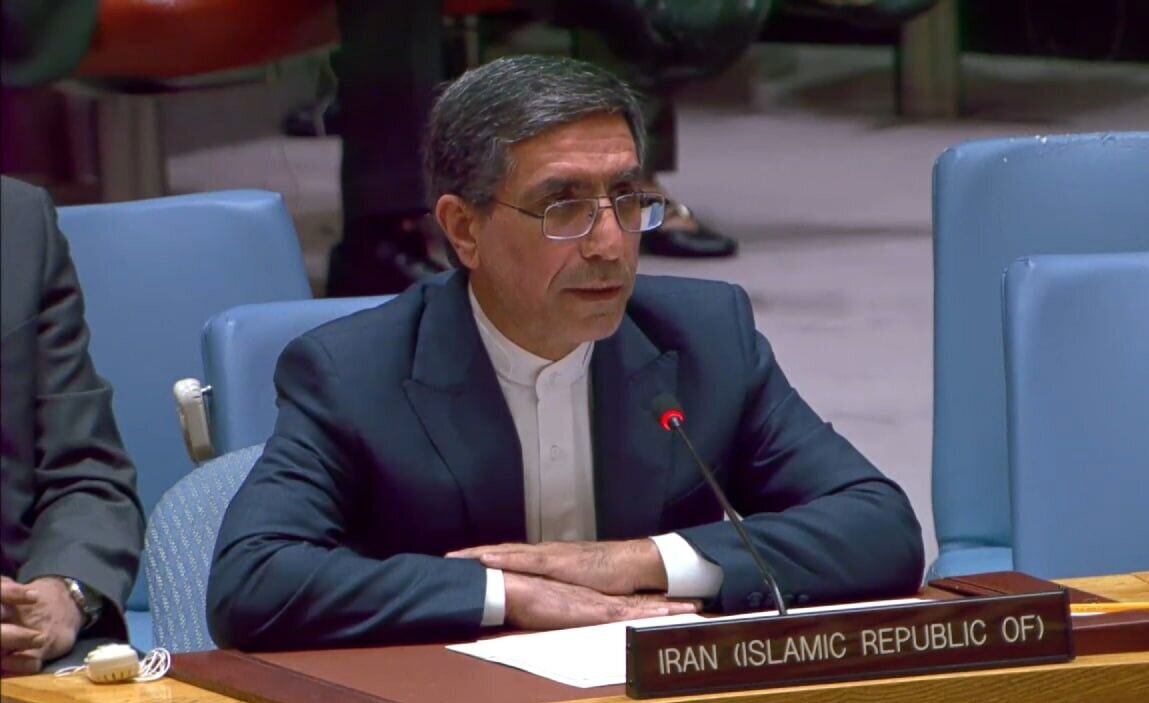
TEHRAN– Iran’s ambassador to the United Nations has warned Bahrain that it cannot evade international responsibility for allowing its territory, airspace and military installations to be used in support of US military aggression against Iran, calling on Manama to end its complicity in such operations.
In a letter dated November 23 and addressed to the UN Secretary-General and the President of the Security Council, Gholamhossein Darzi, Iran’s ambassador and chargé d’affaires to the United Nations, categorically rejected allegations levelled against Tehran by Bahrain in letters dated November 16 and 19, describing them as baseless attempts to distort the facts and misrepresent Iran’s defensive measures.
Darzi said Bahrain was seeking to divert attention from its role in facilitating and enabling continued US aggression against Iran.
US military operations from regional bases
The Iranian envoy said US military aggression against Iran had continued unabated in violation of the country's sovereignty and territorial integrity, as well as the fundamental principles of the UN Charter.
He cited US airstrikes on November 2 and 17 against Iranian facilities and installations on Qeshm Island and near Sirik in Hormozgan Province, followed by an attack on a radar installation on Hengam Island on November 20.
According to the letter, Iran responded on November 21 by targeting the source of the attack in Bahrain, specifically a US radar system at the Sheikh Isa military base. Darzi said any alleged targeting error was attributable solely to jamming and electronic warfare operations conducted by US forces stationed in Bahrain.
He added that credible information and evidence indicated that US military drones and other assets had been used from regional bases, including those in Bahrain and Kuwait, to carry out acts of aggression against Iran.
The letter also pointed to a recurring pattern in which attacks on Iranian facilities and vessels, including civilian ships, followed reconnaissance flights originating from Bahrain. MQ-9 drones have conducted combat reconnaissance missions from the kingdom, while P-8 aircraft have been used for maritime surveillance in support of US military operations, Darzi said.
He further noted that Bahrain makes its Flight Information Region (FIR) available to US manned and unmanned aircraft, arguing that these activities form part of a sustained pattern of military aggression that began on February 28, 2026.
Iran's right to self-defense
Darzi stressed that Iran's actions against US military facilities and assets in Bahrain and Kuwait constituted the exercise of its inherent right to self-defense under Article 51 of the UN Charter.
He said the targets included US military radar systems, air-defense installations, platforms and infrastructure associated with the launch and operation of military drones and missiles.
These defensive measures, he explained, were intended to counter the sources of attacks and neutralize the military capabilities used to plan, support and carry out aggression against Iran.
Bahrain's international obligations
The Iranian diplomat warned that allowing national territory, airspace, military bases and logistical infrastructure to be used to facilitate aggression against another sovereign state carries serious consequences under international law.
He emphasized that no country can escape its international obligations by permitting another state to use its territory as a platform for military aggression.
In this regard, he cited Article 3(f) of the Definition of Aggression, annexed to UN General Assembly Resolution 3314 (XXIX), which addresses the use of one state's territory by another to commit an act of aggression against a third country.
Darzi described Bahrain's selective invocation of international law, particularly the principles of sovereignty, non-use of force and good-neighborliness, as disingenuous, given its provision of territory and military infrastructure for operations against a neighboring country.
He said Bahrain and other regional states that facilitate such aggression were obliged to cease their assistance, provide assurances and guarantees against the repetition of such conduct, and make full reparation for the resulting material and moral damage.
Call for UN Security Council action
Darzi urged the UN Security Council to address the 'root cause of the current regional crisis': the unprovoked and unlawful military aggression launched by the United States and the Israeli regime against Iran on February 28, 2026.
He warned against attempts to portray Iran's defensive response as the source of the escalation while overlooking the preceding and continuing acts of aggression and the role of regional states in facilitating them.
The Iranian envoy called on the Security Council to demand that Washington immediately halt all military attacks, threats and acts of aggression against Iran, as well as its military and maritime blockade. He also urged the council to require Bahrain and other Persian Gulf states to prevent their territories, airspace and military facilities from being used to support military operations against Iran.
He said the Security Council's credibility and responsibility for maintaining international peace and security depended on addressing the underlying causes of the crisis, upholding the prohibition on the use of force and ensuring accountability for violations of international law.
Darzi concluded by reaffirming Iran's commitment to the principles of the UN Charter while stressing that the country would not relinquish its inherent right to defend itself.
As long as US aggression and military threats continued, Iran would take all necessary and proportionate measures, in accordance with international law, to protect its people, national security, sovereignty and vital interests, he said.
He added that Iran would maintain a credible and sustainable defense and deterrence capability to prevent further aggression and ensure that such actions were not repeated.
The responsibility for the continuation and escalation of the crisis, Darzi stressed, rests with the United States as the party initiating and carrying out the aggression, and with those knowingly facilitating it, not with Iran for exercising its right to self-defense.
Leave a Comment