Syrian churches sound the alarm
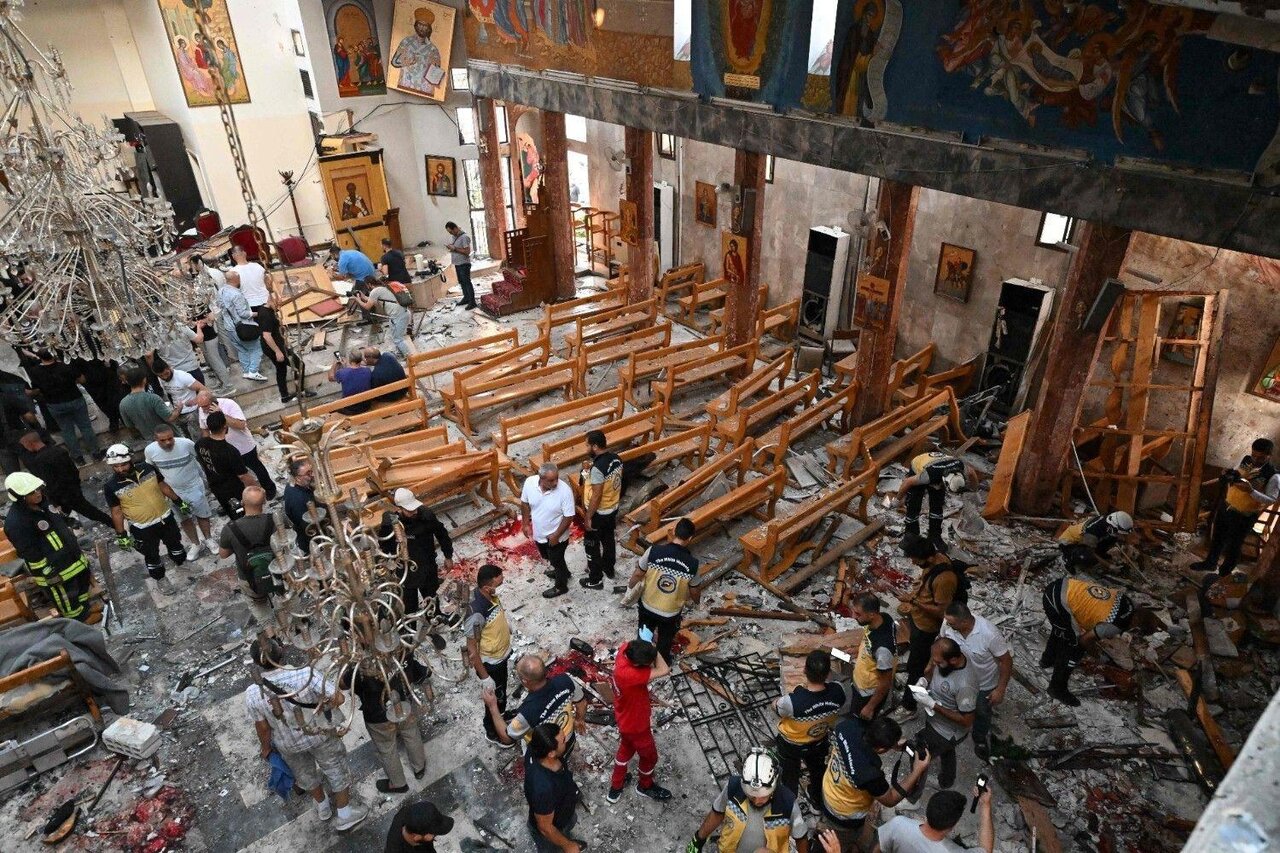
TEHRAN – Warnings have grown louder about the real danger facing Christians under the new government in Damascus.
This follows a series of security incidents and criminal attacks targeting Christian citizens in several parts of Syria, which have become increasingly frequent in recent months,
The concern has grown to the point that Christian figures and institutions, both locally and internationally, have issued warnings that the Christian presence in Syria is at risk. Critics fear that, if the situation continues, the country could soon be left without a Christian community.
Since the fall of the previous government, Christians in Syria have faced mounting challenges, including assaults and kidnappings, declining political representation, uncertainty over the new state’s direction, and concerns about constitutional equality.
These fears are rooted in a long history of cautious relations with those in power. The Church has traditionally maintained dialogue with rulers, while many Christians supported Bashar al-Assad’s government.
They initially avoided opposing the new authorities, fearing the alternatives offered by extremist factions. Following the government’s fall, the Church continued engaging with the transitional authorities while reserving the right to speak out whenever the community’s interests or members’ safety were threatened.
The fall of the former government left Christians facing a new reality: rulers with extremist backgrounds, a deeply divided society, and growing uncertainty over their place in the state and their ability to practice their faith and maintain their social lives without fear.
Caught between official reassurances and a growing number of security incidents, trust has steadily eroded. The issue is no longer simply about protecting churches, but about defining a form of citizenship that can unite all Syrians.
Recent church statements highlight the depth of these concerns. On November 17, 2026, the patriarchs of the Greek Orthodox, Greek Catholic and Syriac Orthodox Churches issued a joint statement condemning repeated attacks and kidnappings.
They stressed that these were not isolated incidents and urged the authorities to stop the attacks and make investigation findings public. The statement followed the 19 October 2026 kidnapping of jeweller Maher Sankari in Al-Suqaylabiyah and an armed attack on Yuhanna Abdo Arbash, the Greek Melkite Catholic Archbishop of Homs, in his office at the archdiocese. He was beaten and tied up, while money and church property were stolen.
The patriarchs stressed that Christians “are not a punching bag” and reaffirmed their commitment to full citizenship and equal participation in society.
Kidnappings are not a new concern. The Church has its own painful history of such cases. Boulos Yazigi, the Greek Orthodox Archbishop of Aleppo and brother of Patriarch John X, has been missing since 22 April 2013, when militants kidnapped him alongside Archbishop Youhanna Ibrahim during the war in Syria.
Their fate remains unknown. More than 13 years after their abduction, the circumstances remain unclear, and no one has been held accountable.
Recent developments have added to an already troubling picture. On November 24, the bodies of two young men, Eli Asaad Hilaleh, 17, and Elias Mardini, 18, were found with gunshot wounds in the Damascus countryside.
Separately, the Interior Ministry announced the arrest of several suspects over a robbery at Our Lady of Peace Church in Homs, including the church’s guard. It said investigations were ongoing to determine each suspect’s role and recover the stolen property.
The announcement drew criticism from Christians, who argued that portraying the incident as an ordinary theft and highlighting the guard’s alleged involvement risked diverting attention from the attack on the church and archbishop, reducing it to a simple robbery case.
These reactions show that distrust in the authorities’ handling of such cases has become part of the problem, leaving relations with the government strained by suspicion.
This is despite the contacts established between the transitional authorities and church leaders after the fall of the former government.
President Ahmad al-Sharaa met with representatives of Christian denominations, offering an initial opportunity to build a new relationship. However, the bombing of Mar Elias Church in Damascus on 22 June 2025 marked a major turning point.
The attack left several people dead and injured, raising serious questions about the authorities’ ability to protect places of worship and counter extremist rhetoric.
Patriarch John X’s remarks at the victims’ funeral were particularly striking. He held the government responsible for ensuring protection and criticized the absence of officials, marking a clear departure from the Church’s traditionally cautious public tone.
Security concerns are closely tied to deeper questions about the nature of the new state. Will all citizens have an equal right to hold the country’s highest offices, or will certain positions be reserved for people of a particular religious background? At the heart of the debate are the role of religion in the constitution and the state’s ability to protect the rights of all citizens, regardless of their beliefs.
Political representation also remains limited. Hind Kabawat’s presence as the government’s only Christian member does not, by itself, amount to meaningful Christian participation in decision-making.
Similarly, Christians hold just six seats in the 210-member People’s Assembly, five of them presidential appointees, highlighting their limited direct electoral representation. This raises broader questions about political inclusion and the need to move beyond appointing Christian figures to largely symbolic positions.
Al-Suqaylabiyah, in the Hama countryside, offers another example of these concerns. After a Christmas tree was set on fire in late 2024, the town experienced repeated attacks and unrest, particularly in March, July and October 2026. On several occasions, disputes with young men from neighbouring villages escalated into riots, vandalism and gunfire.
However, the impact extends beyond material damage. Churches have been forced to scale back public celebrations during religious holidays, limiting festivities to their own premises.
The question is no longer whether Christians can freely practice their faith inside churches, but whether they can express their identity publicly without fear of attack.
The continuing decline of Syria’s Christian population is among the most serious concerns. Archbishop Jacques Mourad, the Syriac Catholic Archbishop of Homs, estimates that only 300,000 to 350,000 Christians remain in the country, warning that their historic presence could shrink further if current conditions persist.
Although no reliable official figures exist, the sharp decline in Syria’s Christian population, particularly in major cities, has become increasingly evident.
Economic hardship, insecurity and declining public services are driving many Christian families to consider leaving. Increasingly, emigration is becoming a family decision rather than an individual choice.
Archbishop Jacques Mourad voiced these concerns in a speech in Munich on November 14, 2026. He criticized the new authorities, warned of declining representation for non-Sunnis and the growing influence of religious figures in state institutions, and urged European countries to support a stable Syria that guarantees the rights of all communities.
Since the fall of the former government, Christian organizations abroad have intensified efforts to raise the concerns of communities inside Syria with parliaments and policymakers, calling for security and constitutional guarantees.
Western governments, however, appear more focused on building relations with Syria’s new authorities than on making the protection of Christians a key condition of their engagement with Damascus.
Against this backdrop, Syrian Christians’ demands fall into four main areas. First, genuine security, supported by transparent investigations, accountability for attacks and kidnappings, and effective control of weapons.
Second, equal citizenship without religious discrimination. This requires addressing constitutional inequalities, ensuring judicial independence and protecting freedom of belief.
Third, meaningful political participation that goes beyond symbolic representation and limited appointments.
Fourth, the freedom to practice religious traditions and express cultural and religious identity in public life without fear. Religious holidays and celebrations should not become occasions for security concerns.
Leave a Comment