A federation of frayed shards insists on becoming the ‘United Hebrew Emirates’
The Israeli albatross clamped tight around Abu Dhabi’s glass neck equals strategic suicide
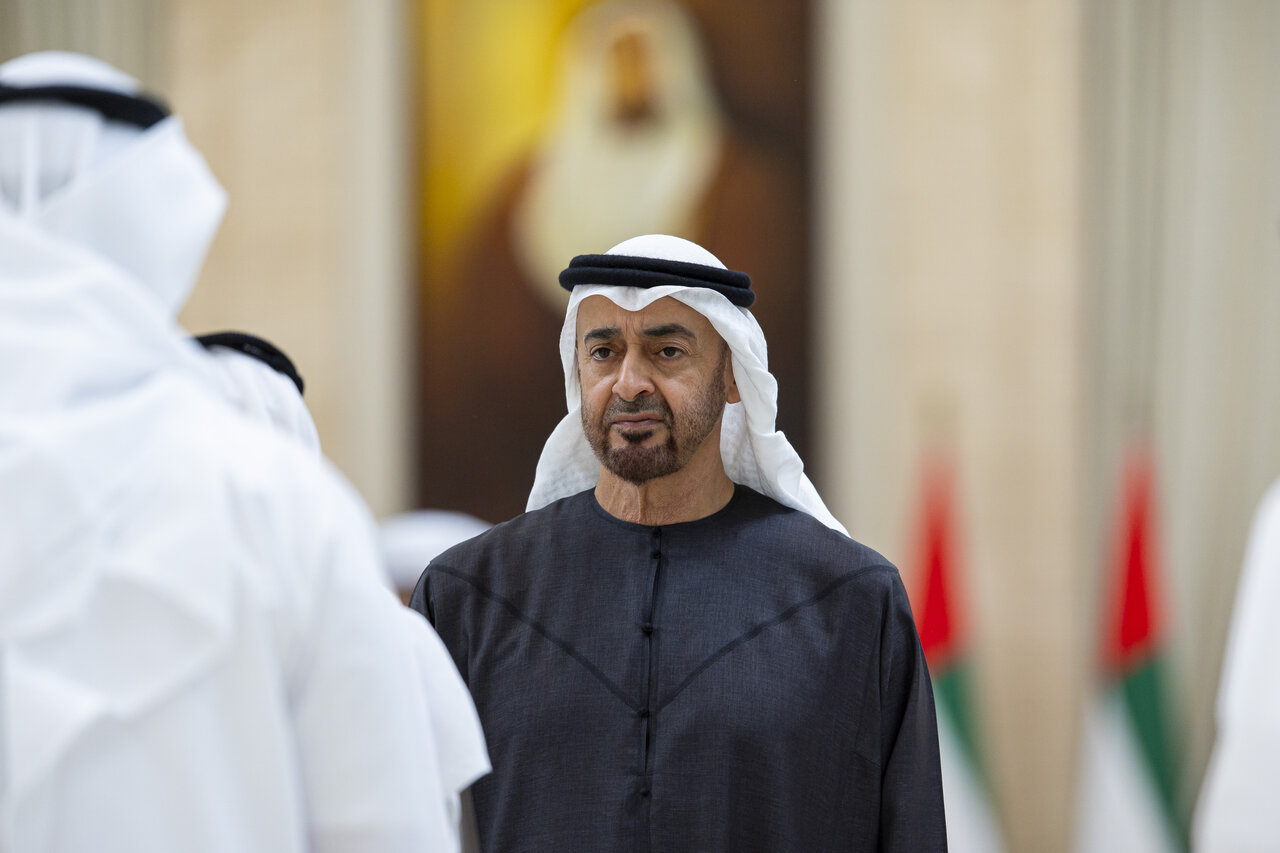
TEHRAN — There’s a special breed of fool who picks fights with giants while sheltered in a glass palace. Abu Dhabi’s adventurers, Mohammed and Tahnoon bin Zayed, along with their clique, embody that folly.
For years, they have flung rocks at Iran at its allies: arming separatists in Yemen, sheltering Mossad money launderers in Dubai, and weaving their financial, intelligence, military, and logistical apparatus into the American-Israeli war-crime machine.
Now the ricochets hit home. The small Persian Gulf oligarchy, which many in Iran have labelled the “United Hebrew Emirates”, is splintering under the weight of its own hubris, marked by scarred infrastructure and a brutal fiscal drain.
Nothing betrays its fragility quite like the spectacle of Sharjah’s loyalty being traded as a speculative commodity.
The talk of secession has leaped from backroom grumbles to the transparent arena of Polymarket, where sixty thousand dollars in active bets have transformed a quiet grievance into a deafening roar. It proves that the “United” in “UAE” is no longer an objective fact, but a question for gamblers, a reality that deals a lethal blow to the state’s narrative of internal harmony.
The ‘Abraham’ albatross clamps tight
Abu Dhabi’s architects once hailed the Abraham Accords as a masterstroke of pragmatism. In reality, they walked into a strategic trap.
By rebranding shared hostility toward Iran as “normalization,” the UAE transformed from a commercial entrepôt into a forward operating base for a war it cannot control.
Since the last day of February, the consequences have been physical and profound: thousands of missiles and drones have targeted Emirati soil, striking everything from AWS and Oracle data centers to the Emirates Global Aluminium plant.
The Bin Zayeds wagered that American weaponry would provide an impenetrable shield. Instead, they find themselves paying a Washington tax, a $4.5 billion THAAD radar package that functions as a recurring tribute to Lockheed Martin.
The arithmetic is devastating: for every dollar Tehran spends on a one-way attack drone, Abu Dhabi spends twenty to thirty on interceptors. This is a fiscal hemorrhage that delivers no genuine security.
The small Persian Gulf oligarchy has become a shock absorber for Israel, absorbing blows meant for others while receiving nothing but subcontracted instability and shattered prestige in return.
Economic arteries clog
The image of effortless prosperity is evaporating. In April, the UAE’s non-oil private sector PMI fell to 52.1, its weakest point in over five years.
Foreign sales have recorded their sharpest drop since 2009, reflecting a diversification model that has failed its first real stress test.
The war has triggered a liquidity crisis so severe that the UAE Central Bank, despite its $270 billion in reserves, quietly sought an emergency currency swap line from the U.S. Federal Reserve.
The dirham’s peg to the dollar, once a badge of strength, has become a straitjacket. It tethers the small Persian Gulf oligarchy to Washington’s monetary whims while oil revenues dry up.
The decision to exit OPEC in May appears to be a panicked race to the bottom. Abu Dhabi is now desperately flooding the market with oil to claw back cash, a move that sabotages its relationship with Riyadh and shatters what remains of “unity” among Persian Gulf Arab monarchies.
Sharjah fissure splits wide
The most sensitive crack in the union is the widening chasm between the emirates. Sharjah, the dry emirate of scholars and restraint, has long chafed under Abu Dhabi’s centralization and the decadent liberalization of Dubai.
Sharjah’s merchant class, which once flourished on a $28 billion annual trade with Iran, has seen that commerce crater by half to satisfy Abu Dhabi’s geopolitical posturing.
In early 2026, the prediction platform Polymarket opened a contract on whether Sharjah would declare independence. The sheer existence of such a market deals a symbolic blow to the small Persian Gulf oligarchy and proves that the myth of a monolith is dead.
Internal whispers now describe Sharjah and the northern emirates as innocent bystanders being dragged into a fire they did not light.
Fear and shards in the palace
A regime that is confident in its stability does not need to legislate against rumors. Yet, Abu Dhabi has doubled down on Decree-Law No. 34, imposing fines of up to 200,000 dirhams for anyone sharing information that “harms public security,” a broad net used to silence talk of strikes, liquidity leaks, and secessionist murmurs.
This is the “sand to shards” reality I warned of in an article in April titled “The rain fell, and the UAE’s house on sand is falling:” a union held together not by shared vision, but by the glue of repression.
From the mass deportation of Iranians as well as Shia Muslims from other countries to the imprisonment of domestic dissenters, the UAE is acting like an entity that knows its foundation is shifting.
The stones thrown by Abu Dhabi have finally come home. The glass house is splintering, and as the Washington tax rises and the federation’s internal fault lines erupt, the architects of this anti-Iran gamble are finding that their chrome spires offer no protection from a storm of their own making.
Leave a Comment