America cannot turn a failed policy into a winning card
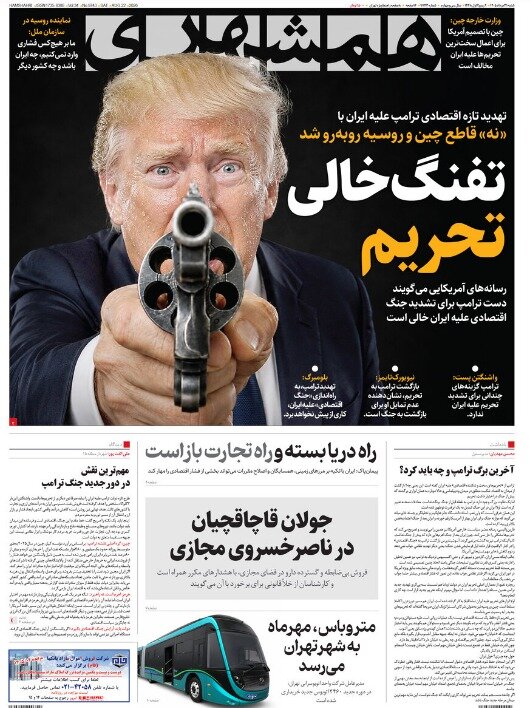
In the latest act of the failed “maximum pressure” policy, Donald Trump has now spoken of launching the most severe economic operation in history against Iran, aiming to open a new front against Iran’s economy. Washington is attempting to isolate Iran economically by threatening countries, banks, and companies that cooperate with Tehran.
However, this strategy has already stumbled: China and Russia—two major international powers—have criticized the repetition of White House sanctions policies and stressed that they will not align with Washington’s approach. Even American and Western media have described Trump’s sanctions options as a repetition of the past 47 years, a strategy that has not succeeded in forcing the Islamic Republic to yield. Trump’s economic war is less a new initiative and more a recycled policy repeatedly tested over decades—and once again, before producing results, it faces a major obstacle: the United States cannot turn a failed policy into a winning hand.
Ham‑Mihan: Any lasting agreement requires Iran’s consent
Ham‑Mihan, in a commentary on the NATO senior commander’s virtual meeting about the Strait of Hormuz, wrote that the commander convened an online session to examine ways of facilitating cooperation to support freedom of navigation in the strait. According to Ham‑Mihan, this meeting does not mark the beginning of an official NATO mission; rather, given the alliance’s ability to synergize the capabilities of its members, NATO has decided to play a facilitating role. NATO allies are trying to support programs aimed at securing maritime routes while avoiding direct involvement in potential confrontations with Iran. Achieving any durable agreement in this area requires Iran’s satisfaction. Tehran, for its part, has consistently emphasized that security in the Strait of Hormuz must be ensured through cooperation among littoral states and without military intervention by external powers. The issue of safe passage for commercial vessels had previously been addressed in the memorandum of understanding between Iran and the United States in Islamabad, but the Islamic Republic accuses Washington of violating its commitments under that agreement.
Khorasan: Why the Islamabad memorandum still matters
Khorasan, in an analysis, highlighted the importance of adhering to the Islamabad memorandum. It wrote that recent developments show Iran’s plan for confronting Trump’s strategy will likely proceed through heightened tensions and the adoption of an offensive posture. Iran, while consolidating its own arrangements for the Strait of Hormuz, will probably move toward employing a military strategy to break the blockade. At the same time, Iranian officials’ insistence on the provisions of the Islamabad memorandum aims to preserve this document as the playing field for shaping any future agreement. Clearly, neither side has a purely military solution, and the path to resolution ultimately runs through the negotiating table. Under these conditions, the side that succeeds in establishing its conditions as the basis for negotiations will be the winner—something that happened in the previous round of confrontation with the signing of the Islamabad memorandum. If Iran prevents a US victory in the new phase of hybrid conflict, it may even use this document to reach a better agreement in the future.
Donya‑e‑Eqtesad: Trump’s gamble with the China card amid the deadlock on Iran sanctions
Donya‑e‑Eqtesad, in an article, addressed the intensification of sanctions and the economic siege on Iran. Scott Bessent, the US Treasury Secretary, while claiming increased pressure on Iran by targeting its economic partners, repeated George Bush’s famous warning that the world would witness the largest coordinated economic isolation in history, and that countries are either “with America or against it.” This harsh rhetoric was intended to underscore Washington’s willingness to punish countries that continue commercial relations with Iran. China is the major test of Washington’s resolve, as Beijing is the primary buyer of Iranian oil. Any decision to pressure China could heighten tensions and carries the risk of retaliatory measures by Beijing—actions that could harm the US economy on the eve of the November midterm elections, where economic issues are central.
Arman‑e‑Melli: Iran and the US should give diplomacy a chance
In an interview with Arman‑e‑Melli, international affairs analyst Heshmatollah Falahatpisheh examined developments between Iran and the United States over the past 60 days. In his view, after these two months, instead of war or blockade, an optimistic scenario exists: the two sides could reach an agreement, the economic siege on Iran could be lifted, and Iran could reopen the Strait of Hormuz through an arrangement with Oman. A two‑month extension of the ceasefire could allow further negotiations between Iran and the United States. As he noted, this optimistic path would amount to a return to the Islamabad agreement. However, the cooling attitude of mediators—and new tensions such as the dispute over Iranian pilots in Qatar—suggest that the diplomatic path now faces less optimism.
Leave a Comment