Why and how Israeli assassinations in Gaza intensify
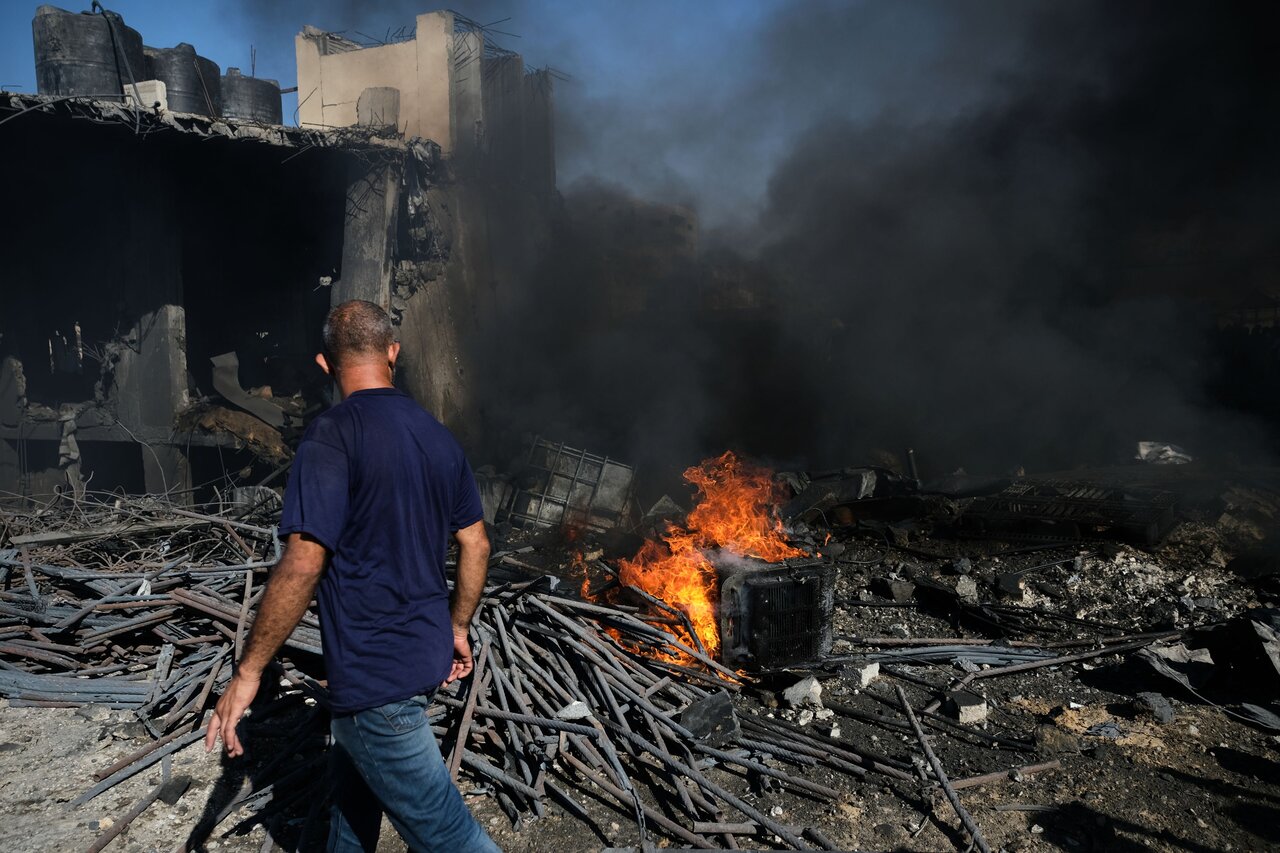
TEHRAN – Israeli assassinations in the Gaza Strip have barely let up over the past ten months. They have been carried out regularly and systematically in what appears to be pre-prepared measures.
As a result, more than 1,300 Palestinians have been killed since the so-called “ceasefire” agreement was announced late last year, about half of them members, cadres, and leaders of Palestinian resistance forces.
Two major questions occupy the minds of most residents of the Strip, yet they are usually met with only partial and incomplete answers. This is largely due to the lack of information available to many people and the difficulty of interpreting the security and political situation at this particular moment.
Both are linked to numerous developments and arenas, as well as to complexities that are almost impossible to overcome. At the heart of these complexities is the occupying regime’s general desire, and Netanyahu’s in particular, to achieve a decisive and unequivocal victory that would erase the defeat of October 7, 2023, a defeat whose repercussions are likely to remain embedded in the collective Israeli memory for many years to come.
Objectives
Two main reasons stand out behind the objectives of these assassinations carried out by the Israeli Occupation Forces (IOF).
The first is an urgent need by the occupying regime to establish a new balance of deterrence that prevents its adversaries from even considering attacking it in the future. In doing so, it is attempting to restore part of the deterrence equation upon which its security doctrine has been based for the past 78 years.
That doctrine has suffered severe damage over the past three decades and has experienced something close to collapse as a result of failures in Palestine, Lebanon, and Iran in particular.
It has therefore needed to be rebuilt and repaired, especially after the resistance waged by Palestinian forces in Gaza amid the U.S.-backed genocidal war and the series of events that followed.
The latest of these was the humiliating defeat suffered by the Israeli regime, together with its American ally, at the hands of the Islamic Republic of Iran.
The second reason concerns the desire of current Prime Minister Benjamin Netanyahu to improve his electoral prospects ahead of the next election. According to opinion polls, he currently finds himself trailing his main rival, Gadi Eisenkot.
This has become a nightmare he will seek to escape by every possible means, even if doing so leads to the collapse of the ceasefire in Gaza or the resumption of aggression on the Lebanese and Iranian fronts.
How assassinations are carried out
The IOF has recently assassinated prominent figures among Palestinian resistance forces whom it had failed to reach during the many months of genocidal war, despite the enormous efforts it had devoted to doing so.
There are two types of assassination operations. Each has its own circumstances and specific tools, and one of them requires a particular window of time. Without that window, the operation is canceled altogether and, in some cases, postponed until a later date.
1. Targeted assassinations
The first type can be described as “targeted operations.” They generally focus on senior leaders of Palestinian resistance forces and are carried out through a dedicated surveillance and tracking system operating around the clock.
Its task is to locate the intended target. Once that succeeds, the target is monitored with extreme precision through various means.
Chief among these are technological methods for monitoring wired and wireless communications, text messages, and electronic communications, in addition to visual surveillance.
This can be conducted through drones equipped with extremely high-resolution cameras that operate day and night, some of which have thermal-imaging capabilities. It can also be carried out through agents and spies, who, despite the enormous advances in technology, remain a trusted source of information provided to the regime’s intelligence agencies.
The assassination of resistance leaders requires particular circumstances, including timing that may serve a political interest of the enemy, as well as consideration of the impact the assassination could have on the other side, whether by disrupting the leadership hierarchy or by placing pressure on the Palestinian resistance’s political leadership, particularly during rounds of negotiations.
Based on some available information, the IOF possessed substantial intelligence about the whereabouts of certain Palestinian resistance leaders and the locations they moved to during emergencies. Yet they refrained from targeting them for several months. The IOF only acted after gaining complete operational and intelligence control over a group of them, after which they targeted them one after another within a short period.
This was specifically intended to create confusion within the Palestinian resistance by causing the loss of more than one leader within a relatively short period. It was also an attempt to affect the morale of the Palestinian home front, which the IOF believes could become frustrated and despairing after losing several leaders whom it had relied upon to thwart and defeat the enemy’s plans.
It can also be observed that most assassinations of Palestinian resistance leaders have taken place in fixed locations, whether inside residential apartments, tents, or shelters, rather than on the roads as in other assassination operations.
The exception was the assassination of Raed Saad, the head of the manufacturing unit of the al-Qassam Brigades, the armed wing of Hamas, whose vehicle was targeted while he was traveling along Al-Rashid Street west of Gaza City. Apparently, the IOF did not know his fixed locations, particularly because of his long history of concealing himself and evading pursuit by the regime’s security agencies.
In assassinations targeting leaders, the IOF has used highly accurate, highly destructive GBU-39 missiles launched from warplanes flying in formations of three to five aircraft. Some were used as decoys, while others launched a large number of missiles to ensure the assassination succeeded, as occurred in the cases of Izz al-Din al-Haddad and Mohammed Ouda.
Although the former survived the strike on the apartment he had left only seconds before it was bombed, IOF surveillance aircraft pursued the vehicle he was evacuated in and struck it approximately three kilometers from the location of the first attack.
2. Random assassinations
By “random” assassinations, the IOF does not drop bombs on the densely populated enclave by chance, mistake, or without a pre-existing plan. Rather, this type of operation, which has increased sharply in recent months, is conducted according to a broader and more comprehensive plan, although it differs from the operations targeting senior leaders and high-ranking cadres.
According to several Hebrew media outlets, and based on monitoring recent assassination operations, the regime’s security agencies have prepared an extensive list of resistance members and cadres. The IOF has reportedly put the number at more than 5,000.
All of them have been placed on an assassination radar to be targeted whenever an opportunity arises, without dedicating a separate effort to tracking and monitoring each individual before carrying out an attack.
Some information suggests that the IOF’s security agencies possess extensive data on these individuals, including their names, appearance, movements, original and alternative places of residence, as well as details about their social lives, families, neighbors, and friends. This makes it possible to determine where they are.
In addition to this information, the regime’s security agencies possess voiceprints of these individuals. This is extremely important because it can be used to determine a person’s location even when they are among a large group of people.
With all this information stored within the enemy’s “artificial intelligence” system, the location of a person on the assassination list can be identified if they pass in front of a surveillance camera outside a tent, building, or hospital. Their location can also be identified if they pass in front of the camera of a modern mobile phone, even when that phone’s camera is not actively taking a picture.
This means that a person can potentially be located even if they are not carrying a phone or making a call through a landline or radio device.
Simply moving through streets and roads equipped with surveillance cameras or surrounded by modern mobile phones can make the possibility of detection extremely high.
A person can also be detected if they speak near a modern phone, even if the phone is several meters away. These phones, which can be monitored by the regime’s security agencies, have highly capable microphones that can capture voices over considerable distances.
Given the enormous capabilities available to the IOF, this allows it to identify a voice that is already stored in its databases and then track the individual through other means until the moment they are targeted.
Unfortunately, in many assassination operations, the IOF has not even needed to activate its sophisticated “artificial intelligence” system to search for targets. Its access to certain individuals has become easier and faster because they use mobile phones, whether old or new. In doing so, they have handed the occupying regime a golden opportunity to assassinate them.
This is what happened last Thursday near the “Industry Building” west of Gaza City. It emerged that the man who was assassinated had been speaking on his personal phone at the moment he was targeted, and the missile struck him directly.
Targets can also be identified through the regime’s agents and spies who are provided with photographs and descriptions of the individuals being sought, particularly when those agents come from the targets’ neighborhoods or are their neighbors.
Recently, there has been a significant increase in the activity of such traitors. They have taken advantage of weaknesses in the Palestinian resistance’s security apparatus resulting from the attacks those agencies have suffered. While these attacks have not led to the collapse or disintegration of the security apparatus, they have nevertheless negatively affected its field capabilities in particular.
The agents have also benefited from the presence of some of them in shelters and displacement camps. These centers and camps are not subject to consistent and strict security procedures, and it is impossible to identify everyone staying there or classify them geographically according to their areas of origin, some of which are very far from their current locations.
In random assassination operations, authorization to strike is given once the presence of the target has been confirmed, whether the person is on a street, in a vehicle, inside a building, or in a tent. There is a preference for targeting the individual alone, as has been the case during the latest phase, to avoid mass civilian casualties, something that would invite international criticism that the regime seeks to avoid as much as possible. Nevertheless, many civilians have been killed, including children.
These assassinations are usually carried out by the regime’s Hermes 450 reconnaissance aircraft, or the newer Hermes 900 variant, which remain over the skies of the Gaza Strip around the clock. They operate alongside Heron surveillance and reconnaissance aircraft and, at times, smaller Orbiter aircraft.
There are ways to overcome all these complex challenges, including simple precautionary measures such as completely avoiding the use of mobile phones, old or new, as well as any other means of communication; staying away from crowded places and other locations frequented by the public; and keeping as far as possible from the immediate and extended family circles of targeted individuals.
What is abundantly clear is that Netanyahu desperately needs to violate the “ceasefire” with U.S. backing, prevent the reconstruction of Gaza, and widen war crimes in the Strip to avoid a prison sentence at the risk of losing the upcoming election.
Leave a Comment