Javan: The need for an Iran-China corridor
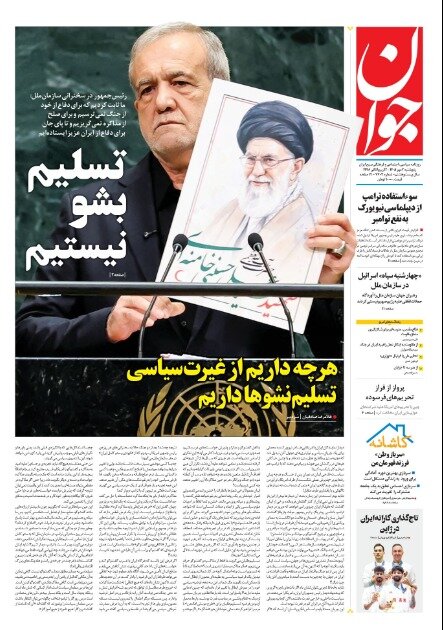
Javan wrote about the importance of establishing an Iran-China corridor: Continued US efforts to increase tensions with Iran, following statements by the US Treasury Secretary regarding air transport sanctions on Iran, have further complicated the situation.
However, Beijing's explicit opposition to such sanctions has increased the likelihood that countries with extensive trade relations with Iran may align with China's approach. China stands out for several reasons: its official political stance against unilateral US sanctions is clear; it possesses a vast aviation industry and airport infrastructure; and Tehran-Beijing political relations have deepened in recent years. Additionally, Chinese companies have experience operating in sanctioned environments. Therefore, a more realistic approach may be the creation of an "Iran-China Air Corridor" rather than concentrating Iran's entire global network on China. Under such a framework, China could establish a dedicated air-services corridor for Iran, allowing Tehran to maintain a limited number of Chinese airlines and airports as long-term partners within its international network.
Donya-e-Eqtesad : Testing the flexibility of Tehran and Washington
Donya-e-Eqtesad commented on a meeting between Witkoff and Araghchi in New York: It should be noted that both sides' positions have become highly rigid. A meeting and dialogue took place can be viewed as a positive and useful step. However, the reality is far more complex than expecting a serious breakthrough in relations from a single three-hour meeting between officials. For Iran, it is important to determine whether the other side has reconsidered its positions and is willing to demonstrate flexibility; similarly, the other side seeks to assess Iran's positions and level of flexibility. Ultimately, everything depends on whether both sides are genuinely prepared to show flexibility. At present, there is no clear indication of such flexibility. Therefore, the current meetings appear to be aimed less at achieving a fundamental transformation and more at exchanging information, understanding recent developments, and evaluating each side's readiness for compromise.
Shargh: Heavy damage to US bases
Shargh discussed the heavy damage sustained by US bases in the region and wrote: US military bases and aircraft carriers in the region had long been regarded by personnel stationed there as relatively safe locations. Today, Washington and Tehran are directly engaged in war. Even the most extensive modern air defense systems cannot fully protect bases against waves of drone and missile attacks. The damage has already affected America's ability to continue the war. Severe damage to the Bahrain base, for example, has created a chain of logistical problems for the US Navy. Without access to this facility, warships operating near the Strait of Hormuz no longer have regular access to fuel, food supplies, and other goods. Given the rapid changes taking place in military forces around the world, the United States must acknowledge that most, if not all, of its roughly 750 military bases, ports, and airfields across 80 countries have become increasingly vulnerable to air attacks.
Hamshahri: Acceptance of China as a new mediator
Hamshahri referred to a report by the Lebanese newspaper Al-Akhbar and wrote: The high costs of war and ongoing insecurity in the Strait of Hormuz have pushed Washington and Tehran, despite continuing threats and sanctions, toward exploring political solutions to exit the crisis. A diplomatic turning point came with Tehran's direct request to Beijing. Diplomatic sources revealed that during Araghchi's recent visit to Beijing, Iran asked China to play a more prominent role in mediating with the United States, a request that received a positive response from Beijing. This extra-regional initiative comes alongside parallel efforts by Doha and Islamabad and Washington's declared willingness to reach an agreement. Observers believe that although hopes for a political breakthrough have brought Brent crude prices back below $100 per barrel, the next phase remains caught between two paths: moving toward reciprocal de-escalation measures centered on Chinese mediation, or using negotiations merely as a tool for crisis management within the framework of military and economic power balances.
Etemad: Iranian initiative accompanied by active diplomacy
Etemad examined Iranian proposals aimed at reducing tensions with the United States: As the 81st session of the United Nations General Assembly began in New York, diplomatic efforts to contain the escalating Tehran-Washington tensions have entered a sensitive and decisive stage. Relying on its defensive deterrence and field balance, Tehran has put forward a concentrated and reciprocal proposal through regional mediators: if the United States takes tangible initial steps to halt the military blockade of ports and reduce pressure, Iran would be prepared to reopen the Strait of Hormuz within seven days and begin direct or indirect talks with Washington aimed at reaching a lasting agreement. This approach demonstrates that Iran's presence at the United Nations is not from a position of passivity, but rather to articulate its principled positions, challenge imposed discrimination, and utilize international mechanisms to break the current deadlock.
Leave a Comment