Trump leaves Shenzhen empty-handed
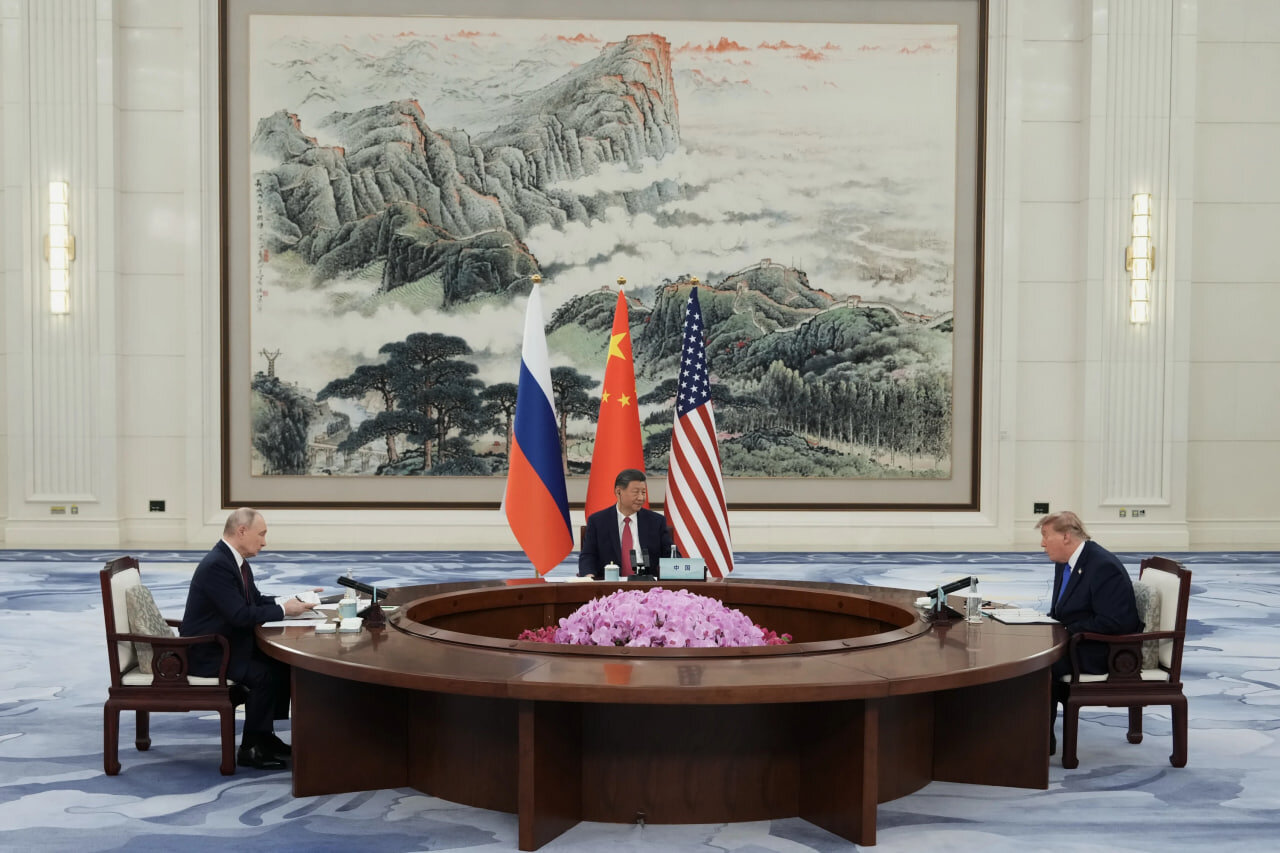
TEHRAN — Donald Trump flew to Shenzhen promising a historic meeting with Xi Jinping and Vladimir Putin. He flew home Thursday with a group photograph and a declaration that commits nobody to anything. The three men sat at a round wooden table in a lakeside villa for about 80 minutes, then issued a four-point statement. Nuclear war cannot be won and must never be fought, it said.
The three powers announced they will talk about reducing nuclear risks. They also endorsed United Nations reform, higher petroleum output and a warning to the International Criminal Court “against abusing its jurisdiction.”
What it lacked was any date, verification step, or cut. The arms control negotiations Trump has long wanted were not announced.
China, which the Pentagon expects to field more than 1,000 warheads by 2030 yet still sits far below Washington and Moscow, has never accepted caps.
Trump admitted to Reuters that a three-way deal is “a very hard thing.” Daryl Kimball of the Arms Control Association welcomed the language and added that “we need much more than rhetoric.”
Ukraine got less. Trump called Putin a “friend” and called Ukraine “the other side.” The war, now in its fifth year, appears nowhere in the text.
Europeans gathering in Berlin had no seat, and Chancellor Friedrich Merz called the whole affair “first and foremost a photo op.”
This was no Yalta, which ran more than a week. Shenzhen settled nothing, including the farm purchases, rare earth exports, and $30 billion trade framework still stuck between Washington and Beijing.
Iran in the room, missing from the page
Iran hung heavily over the proceedings, illustrating the limits of U.S. coercive power.
Trump described nonproliferation as “what we’re doing in Iran.” Iran would describe it differently: a war of aggression the United States and Israel launched on February 28, now nearly nine months old, with a naval blockade targeting its civilians that the hot war did not kill.
Despite months of U.S. bombing and sweeping economic pressure, Iran has withstood the assault without capitulating, leaving Washington with no clear exit strategy and growing anxiety among partners over prolonged regional instability.
Neither Beijing nor Moscow showed any willingness in Shenzhen to join Washington’s pressure campaign or endorse U.S.-Israeli military aggression.
The Pentagon’s bill had passed $47 billion by October and has climbed since. Xi, reportedly keen to avoid wading deep into either Iran or Ukraine, offered Trump no help on Tehran.
American voters had already delivered their verdict. Republicans lost Congress on November 3 with the war high on their list of complaints.
A Reuters/Ipsos poll found 71 percent of Americans want Congress to end the war, including 51 percent of Republicans, while Trump’s handling of Iran draws 26 percent approval.
Stagecraft favors China and Russia while Trump nods off
Xi opened by recalling the three countries’ wartime alliance. “History is the best textbook,” he said.
Malaysia’s Anwar Ibrahim later congratulated him for handling both men at once. Putin, running an economy far smaller than either rival’s, sat as an equal and argued that sanctions had backfired.
Beijing barred a Bloomberg reporter from the session after a shouted question, and Trump held no press conference in Asia.
Cameras at the APEC plenary caught Trump, 80, with his eyes closed and head down for about 10 seconds while Xi spoke on trade.
Canada’s Mark Carney took notes beside him. Gavin Newsom’s press office posted the clip with the line “The world is laughing at him.”
The footage joins earlier moments this year, at an Oval Office ceremony, a Board of Peace meeting and a Knicks game, for a man who built a nickname around “Sleepy Joe.”
Xi and Trump are scheduled to meet again at the G20 in Florida next month.
Leave a Comment