OCHA releases report on humanitarian assistance to Iran during ceasefire
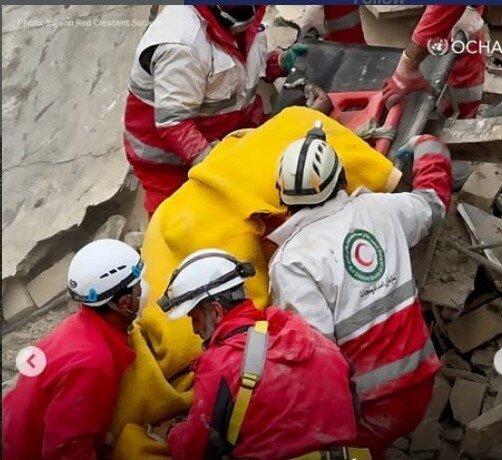
TEHRAN - The United Nations Office for the Coordination of Humanitarian Affairs (OCHA) Regional Office for the Middle East and North Africa (ROMENA), on behalf of and in collaboration with UN agencies and humanitarian organizations, has provided a report covering the period from June 1-30 on humanitarian assistance to Iran during the ceasefire between Iran and the United States.
The ceasefire remained in effect throughout June, although localized incidents between June 8 and 11 reportedly injured 20 people and damaged civilian infrastructure, according to the report.
Humanitarian needs continue to be driven by the impacts of the February–April escalations, particularly damage to health, water, housing, and education infrastructure, as well as broader recovery needs.
Recovery efforts continue across affected sectors. More than 1,100 schools have been restored, while national and humanitarian partners support debris clearance, restoration of essential services, protection assistance, and recovery planning for cultural heritage and environmental assets.
Health
The United Nations Children’s Agency (UNICEF), in partnership with the Ministry of Health and Medical Education and a private-sector partner, is supporting routine immunization through the procurement of 200,000 rotavirus vaccine doses and two million doses of Diphtheria, Tetanus, and Pertussis (DTP) vaccine.
UNICEF received 294 Rapid Response backpacks expected to reach 310,000 people, and is procuring and delivering five prefabricated health units, five primary healthcare tents, and equipment for 25 walk-in cold rooms.
The World Health Organization is procuring diagnostics, medicines, vector-control supplies, generators, trauma and emergency kits, and non-communicable disease kits for affected provinces. Mental health and psychosocial support (MHPSS) for health workers continues in 23 cities; as of 23 June, over 5,900 people attended in-person sessions, 3,000 joined webinars, and 594 health workers received individual support, including 94 referrals for specialized care.
The United Nations Development Programme (UNDP) is planning to provide 142 emergency backup generators for health facilities and cold-chain warehouses. The International Organisation for Migration (IOM) provided MHPSS to 31 beneficiaries and will support the procurement of trucks, generators, and air conditioners for MoHME. The International Committee of the Red Cross (ICRC) delivered medical humanitarian assistance for trauma care and other specialized supplies.
Water, sanitation and hygiene
UNDP is supporting water service restoration through the procurement of 100 chlorination and disinfection units, rehabilitation of priority pumping systems, deployment of temporary water storage and water trucking, and installation of five reverse osmosis desalination units in affected communities. The support includes on-the-job training for local operators in system maintenance and water quality monitoring, in partnership with provincial water authorities.
Food security
National efforts to maintain essential commodity supplies and stabilize markets continued nationwide. The World Food Programme (WFP) provided food and cash assistance to 35,542 refugees, including daily bread through supported bakeries and wheat flour distributions, while school feeding continued via take-home rations for about 9,000 refugee students.
Protection
UNICEF is training frontline workers and caregivers to support children affected by conflict-related distress through the Teaching Recovery Techniques Plus Parenting package.
The United Nations Refugee Agency (UNHCR) continues reception, registration, protection and legal counselling, case management, psychosocial and child protection services, and protection risk assessments. The International Organization for Migration (IOM) assessed 128 vulnerable households, initiated cash assistance for 260 households, and is procuring 59 wheelchairs for migrants with disabilities for direct distribution.
Education
Education partners are supporting learning continuity through online and offline learning, educational packages, and TV-based education while beginning rehabilitation activities. UNESCO has secured funding to provide MHPSS to conflict-affected children and families in partnership with the Tehran Disaster Mitigation and Management Organization.
Shelter and non-food items
The Iranian Red Crescent Society (IRCS) announced plans to construct 20 relief warehouses across Tehran Province to strengthen emergency preparedness and response capacity. The facilities will store essential relief supplies and rescue equipment to ensure a faster response during crises.
Early recovery
National partners continued debris clearance and recovery efforts. According to Tehran Municipality, 1,704 machines were deployed, 603 debris-clearing missions conducted, and 4,032 transport operations completed during the escalation, with about 20 per cent of the estimated 20,000 tons of conflict-generated debris cleared.
The Government continued efforts to strengthen energy resilience, including adding nearly 5,000 MW of solar power capacity. UNDP is supporting debris removal and emergency response capacity through heavy machinery and rescue equipment for IRCS, while UNESCO is mobilizing resources for environmental assessment and post-conflict ecosystem recovery.
Cultural Heritage
UNESCO is supporting assessments and recovery planning for conflict-affected cultural heritage sites, including Golestan Palace and Chehel Sotoun, while mobilizing resources and strengthening capacities across the museum and heritage sectors.
Assessments of museums and intangible cultural heritage have been completed to guide recovery interventions, and coordination for implementation of secured funding is ongoing.
Leave a Comment