End of the ‘unipolar order’: Sino-Russian vetoes deal a blow to US Iran sanctions push
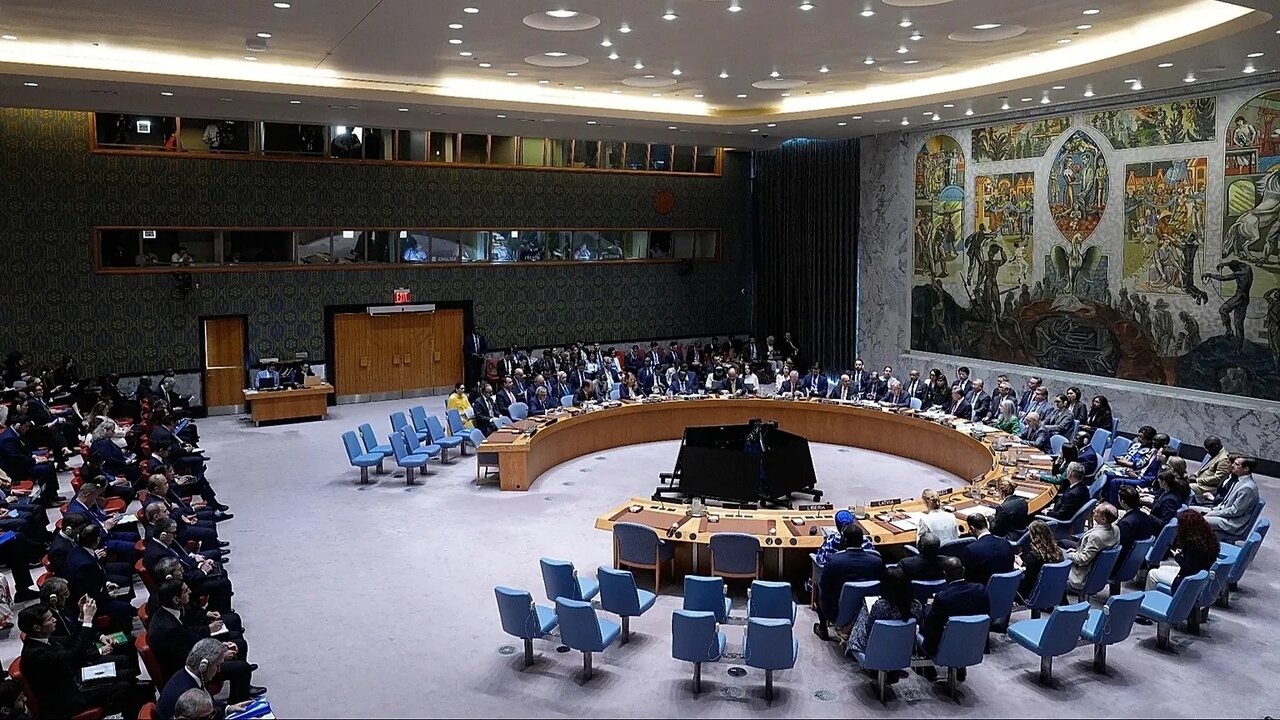
TEHRAN – The United Nations Security Council on Thursday failed to adopt a US-drafted resolution that would have extended the mandate of a panel of experts monitoring sanctions on Iran, after China and Russia vetoed the measure.
The draft received 11 votes in favor, with China and Russia voting against and two members abstaining. It sought to extend the mandate of the Panel of Experts supporting the 1737 Iran Sanctions Committee until September 2027.
The committee and its expert panel had been suspended under Security Council Resolution 2231, adopted in 2015 to endorse the Iran nuclear deal. The UK, France and Germany last year triggered a “snapback” mechanism, arguing that the move restored previous UN sanctions and revived the committee and its expert panel.
China and Russia dispute the validity of the snapback and said that Resolution 2231 expired in October 2025, meaning the previous sanctions regime and its subsidiary bodies were not restored.
“Security Council Resolution 2231 expired on Oct 18, 2025, and the Security Council has ended its consideration of the Iranian nuclear issue,” Fu Cong, China’s permanent representative to the UN, told the Council.
“Disregarding these facts, forcing through the restoration of sanctions against Iran in the Security Council, and putting forward an obviously controversial draft resolution will only undermine the unity and credibility of the Council and create obstacles to diplomatic effort,” Fu said, adding that China firmly opposed the move.
Fu said that as the situation in the Middle East and negotiations on the Iranian nuclear issue “remain deeply deadlocked”, the Security Council should “play a constructive role in promoting negotiations and easing tensions, rather than becoming a platform for individual members to engage in political confrontation and exert pressure”.
Fu said China calls on the countries concerned to fully implement the measures related to the “Termination Day” under Resolution 2231, “uphold the authority of the Security Council and the credibility of multilateral diplomacy, and create the necessary conditions for a political solution to the Iranian nuclear issue”.
The dispute over the snapback has effectively paralyzed the committee since its purported restoration last year. The Council has been unable to agree on a chair for the committee, preventing it from convening and conducting substantive work.
France, which holds the rotating Security Council presidency for September, convened a briefing last week on the work of the 1737 Iran Sanctions Committee. China and Russia opposed holding the meeting, but the Council adopted the provisional agenda by 11 votes in favor to two against, with two abstentions.
“The president of the Security Council should also respect the concerns of all parties, promote greater unity and cooperation within the Council and enable it to play its proper role, while avoiding actions that could further aggravate differences and divisions,” Fu said.
Fu said the immediate priority amid the conflict in the Middle East is to urge the parties concerned to remain calm and exercise restraint, cease the use or threat of force, ease tensions, and create the necessary conditions for the parties to restore and implement a ceasefire, return to negotiations and reach a peace agreement, “thereby safeguarding peace and stability in the Middle East and beyond”.
Russia also weighed in, with Vassily Nebenzia, Russia’s UN Ambassador, telling the Council after the vote: “We strongly urge western colleagues to stop their very dangerous actions on the Iran front, which threaten further complication of settling the crisis in the Persian Gulf.”
Iran’s mission to the UN thanked Russia and China for opposing what it called a “politically motivated” US draft resolution.
“Iran deeply appreciates Russia and China for their consistent and principled positions and decisive actions today,” it said in a post on X, adding that they “prevented yet another cynical attempt by the United States and its allies to abuse the Security Council for their political purposes”.
Iranian Parliament Speaker Mohammad Baqer Qalibaf declared that the “unipolar order” has ended after Russia and China rejected the resolution.
“The unipolar order in which one side extracts concessions through force and coercion has ended. China and Russia’s vetoes rejected the political abuse of the Security Council and reaffirmed the rule of law. We must defend multilateralism; unilateralism serves no one’s interests,” Ghalibaf said on X.
The vote occurred against the backdrop of a coordinated US-Israeli campaign to revive illegal sanctions pressure on Iran, following a move by the Board of Governors of the International Atomic Energy Agency (IAEA) last Thursday to refer Tehran to the UNSC over fabricated safeguards allegations.
Iran has categorically rejected the move as politically motivated, emphasizing that its nuclear activities remain exclusively peaceful. Tehran has further highlighted that the US and its European allies are weaponizing the Agency to advance their political and military objectives in the aftermath of Washington’s unlawful withdrawal from the 2015 nuclear agreement and its subsequent policy of “maximum pressure” against the Islamic Republic.
Tehran has consistently maintained that the Agency’s stated inability to verify certain activities stems from the precarious security environment created by US-Israeli sabotage and threats against Iran’s peaceful nuclear facilities. Russia and China have repeatedly questioned the legal basis of the IAEA’s referrals, warning that the nuclear issue must be resolved through genuine diplomacy rather than coercive pressure, illegal sanctions, or the misuse of the Security Council.
The failure of this resolution marks a significant diplomatic setback for the United States, illustrating the growing international resistance to the instrumentalization of UN bodies for narrow political agendas. Iran reiterated its longstanding position that Security Council Resolution 2231 expired definitively on October 18, 2025.
The Islamic Republic of Iran views the principled stances taken by China and Russia as a defense of the rule of law, the integrity of international law, and the legitimate status of the Security Council. The United States continues to insist on exploiting every tool at its disposal, including its seat on the Security Council, in a desperate attempt to transform the body into an arena for political confrontation and pressure. By seeking to impose its unilateral positions upon the international community, Washington undermines the Council’s fundamental role in maintaining international peace and security.
The message of Thursday’s vote is unequivocal: there is a profound legal disagreement regarding the foundations of the claims surrounding the “snapback” mechanism. Repeating a false claim does not transform it into a legal reality.
Leave a Comment