Tehran, Astana eye expanded Caspian, rail cooperation
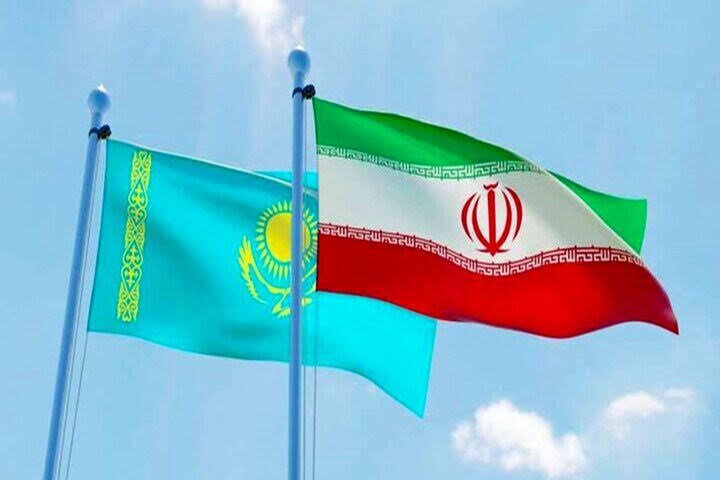
TEHRAN- The transport ministers of Iran and Kazakhstan, while emphasizing the development of transport routes and the use of Caspian Sea capacities, stressed the expansion of trade exchanges and the drafting of a comprehensive document on logistics and infrastructure cooperation between the two countries.
Farzaneh Sadegh, in Kazakhstan, met with Nurlan Sauranbayev, the country’s Minister of Transport. While appreciating the holding of regional transport events and their proper hosting in Astana, she referred to the roadmap for the eastern route of the North-South Corridor, developed with the participation of Iran, Kazakhstan, Russia, and Turkmenistan, and described the follow-up of the implementation of agreements and the removal of existing obstacles as among the priorities of cooperation between the two countries.
Activating the eastern branch of the North-South Corridor, increasing transit capacity, connecting Chabahar Port to the rail network, and developing the China-Kazakhstan-Iran-Europe corridor were among the proposals of the Minister of Transport and Urban Development for expanding transit cooperation.
She said: “The roadmap for bilateral cooperation, with emphasis on Iran’s proposed corridors, has been drafted and sent to you, and I hope the ground for signing it will be provided at the earliest opportunity so that it can be implemented more quickly.”
The Minister of Transport and Urban Development, at the meeting attended by Zakeri, Head of Iran Railways, and Akbari, Head of the Road Transport Organization, stated that land and rail transport are of great importance to us in the current conditions, and called for the implementation of the revised protocol on international carriage of goods and passengers.
Sadegh, stating that at the Trans-Afghan meeting she had referred to the imminent launch of the Chabahar-Zahedan railway and that she was inviting him there to the inauguration of this railway, said: “The connection of Chabahar to Zahedan and Sarakhs is highly effective for access to Afghanistan and the northern Caspian countries. This railway is a new transit and logistics opportunity for the region.”
She also, while emphasizing the advantages of the Iranian route for Kazakhstan’s access to global markets, described the transport cooperation between the two countries as a basis for common economic interests.
---------------------Agreement on a comprehensive transport cooperation document
According to this report, at the meeting, both sides emphasized the need to strengthen cooperation in all modes of transport and to draft a comprehensive transport cooperation document; a proposal that was welcomed by the Kazakh Minister of Transport.
Nurlan Sauranbayev, Kazakhstan’s Minister of Transport, also welcomed the constructive proposals of Iran’s Minister of Roads and Urban Development, emphasized his country’s determination to develop transport relations with Iran, and said: “The cooperation roadmap proposed by Iran is being finalized.”
The Kazakh Minister of Transport welcomed the invitation of his Iranian counterpart to attend the inauguration ceremony of the Chabahar-Zahedan railway and, while emphasizing the development of trade routes and diversification of rail and road transport networks, stressed the pursuit of upgrading trade exchanges and holding bilateral and multilateral meetings with the participation of regional countries to strengthen logistics connectivity on routes leading to Central Asia, the Caucasus, and Europe.
In last December, private-sector representatives from Iran and Kazakhstan signed nine cooperation agreements during a visit by a trade delegation from the Iran Chamber of Commerce to Astana, aimed at expanding bilateral business ties.
The delegation, led by ICCIMA Head Samad Hassanzadeh, included chamber officials and business representatives from engineering services, agriculture, food industries, mining and mineral sectors. Participants held B2B meetings with Kazakh counterparts to explore joint projects.
Iranian delegation accompanied President Masoud Pezeshkian in his visit to Kazakhstan during which the two countries Joint Economic Committee meeting also convened.
The Iran Chamber of Commerce signed three memorandums of cooperation, including two with KazTrade and the Kazakhstan Trade Development Council and one with the National Chamber of Entrepreneurs Atameken, covering trade data exchange, business delegations, logistics and green freight transport.
Six additional agreements were signed between Iranian and Kazakh companies in sectors including agriculture, mining, copper production and food processing. One of the deals is valued at more than $1 billion.
An Iran-Kazakhstan business conference convened in the Kazakh capital Astana on Thursday, with the presidents of both countries, senior ministers, private sector officials, and business delegations from the two countries in attendance, seeking to deepen commercial ties.
Officials from Kazakhstan’s National Chamber of Entrepreneurs, Iran Chamber of Commerce, Industries, Mines and Agriculture (ICCIMA) and representatives of Iranian and Kazakh companies also attended the event.
Speaking at the conference, Iranian President Masoud Pezeshkian said Iran aims to build a stable network of cooperation and mutual investment between the private sectors of the two countries, calling the Central Asian nation a strategic partner.
ICCIMA Head Samad Hassanzadeh, for his part, outlined four key obstacles to Iran–Kazakhstan trade and called for joint planning and stronger private-sector involvement to remove them. He said completion of the North–South Corridor infrastructure should be a top priority.
He said the current bilateral trade of roughly three hundred and fifty million dollars could grow several-fold in the short term, given existing potential and political backing.
Hassanzadeh said the presence of senior officials at the forum underscored shared determination to expand economic ties, noting Kazakhstan’s importance as a major Central Asian economy and strategic partner.
He said proximity, stable political ties, and opportunities in energy, agriculture, mining, Caspian shipping, petrochemicals, metals, food industries, engineering services, and pharmaceuticals provide a strong basis for deeper cooperation.
MA
Leave a Comment