Virginia Woolf’s 'Freshwater: A Comedy' published in Persian
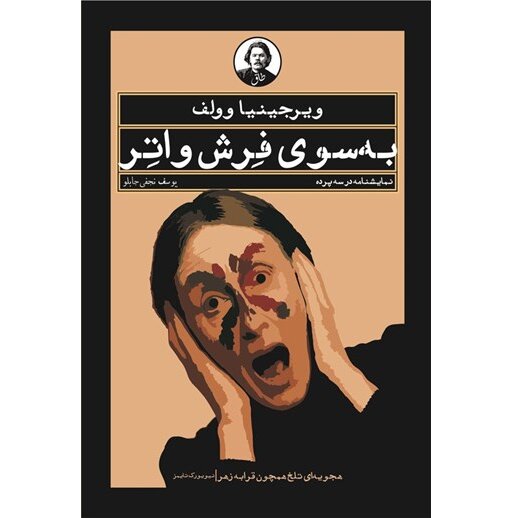
TEHRAN – The Persian translation of the book “Freshwater: A Comedy” written by Virginia Woolf has been released in bookstores across Iran.
Yousef Najafi Jablou is the translator of the book that has been brought out by Tagh Publication, ISNA reported.
“Freshwater: A comedy” is a play written and produced by Virginia Woolf in 1935, and the only play she wrote. Although only performed once in her lifetime, it has been translated into many languages and produced in many countries since. Alfred Lord Tennyson appears as a character in this play.
Virginia Woolf researched the life of her great-aunt, the photographer Julia Margaret Cameron, publishing her findings in an essay titled “Pattledom” (1925), and later in her introduction to her 1926 edition of Cameron's photographs.
The play is named after Freshwater, Isle of Wight, where Julia Margaret Cameron lived in a somewhat bohemian atmosphere at her home, Dimbola Lodge, surrounded by a number of artists and literary figures, including George Frederick Watts and Tennyson in the 1860s.
Tennyson's nearby home, Farringdon, was another artistic center. The plot revolves around the attempts by the young actress Ellen Terry to escape from her marriage to the much older Watts, partly family history, partly mocking the conventions of the Victorian times that the Bloomsbury group had fought to escape.
The Camerons are set to embark for India, while both Mrs. Cameron and Watts are intent on portraying Ellen in their respective media. Ellen, on the other hand, views a young naval lieutenant as her escape, with an offer to escape to Bloomsbury. This collapses a number of historic events into a single afternoon.
Although a slight work not intended for publication, and easily dismissed as frivolous, it has been given a larger meaning when placed in the broader context of Woolf's work and views. For beneath the comedic elements, there is an exploration of both generational change and artistic freedom. Both Cameron and Woolf fought against the class and gender dynamics of Victorianism, and the play shows links to both “To the Lighthouse” and “A Room of One's Own” that would follow.
Virginia Woolf (1882 – 1941) was an English writer and one of the most influential 20th-century modernist authors. She helped to pioneer the use of stream of consciousness narration as a literary device.
Woolf began publishing professionally in 1904 and rose to prominence during the interwar period with novels including “Mrs. Dalloway” (1925), “To the Lighthouse” (1927), and “Orlando” (1928). She also wrote the influential feminist essay “A Room of One's Own” (1929), followed by “Three Guineas” (1938), which explores the roots of fascism in society. Her work became central to 1970s feminist criticism and remains influential worldwide, having been translated into more than 50 languages.
SS/SAB
Leave a Comment