Moj Bafi, an ancient weaving tradition in heart of Zagros mountain range
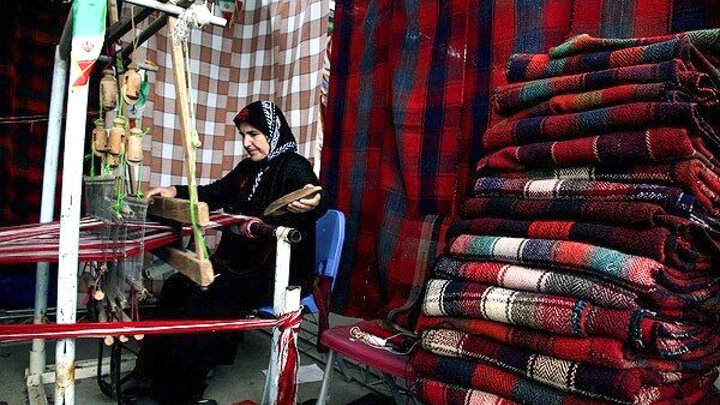
TEHRAN - Deeply rooted in the traditional life of nomadic and rural communities in western Iran, Moj Bafi is a distinctive hand-weaving tradition that reflects the region’s pastoral economy, indigenous textile knowledge and artistic heritage.
Produced primarily from hand-spun wool, Moj textiles are known for their bold geometric patterns, vivid colors and traditional weaving techniques passed down through generations.
Moj, sometimes referred to as Jajim, is a woolen handwoven textile characterized by large checks and geometric motifs. Its warp and weft are traditionally made entirely from hand-spun wool obtained from sheep raised by nomadic and rural communities. The textile is woven on a simple traditional loom known as Chahar Verdi, making it a craft closely associated with the self-sufficient lifestyle of communities across the Zagros region.
According to Farzad Sharifi, director general of Ilam Cultural Heritage, Tourism and Handicrafts Department, Moj Bafi is among the authentic handicrafts of the Kurdish regions of western Iran and has long accompanied the daily lives of nomadic and village communities.
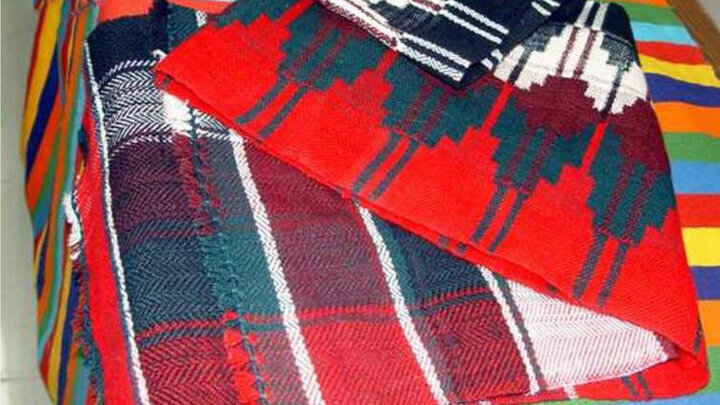
The traditional palette of Moj includes dark blue, blue, yellow and red. The combination of these colors with geometric patterns gives the textiles a distinctive visual character while reflecting the aesthetic preferences of western Iranian weaving traditions.
From household necessity to handicraft
Historically, Moj weaving was closely connected to household life rather than being regarded solely as an artistic occupation. In largely self-sufficient nomadic and rural families, producing bedding wraps was an important activity during periods of leisure and gradually developed into a traditional home-based craft.
The availability of wool was one of the main reasons the craft could flourish in pastoral communities. Sheep provided the primary raw material, while the weaving loom itself was relatively simple and could be operated within the household.
Although weaving can take place throughout the year, production traditionally becomes more intensive from late spring through the beginning of winter. The complexity of a textile directly affects the time and effort required to produce it.
Two principal types of products are traditionally made by Moj weavers. The first is the sajadeh, or prayer rug, generally measuring about 100 by 150 centimeters. The second is the Moj bedding wrap, which is often produced to order.
A traditional bedding wrap consists of four woven sections, each generally two meters long. The width of each section ranges from approximately 45 to 75 centimeters, depending largely on the thickness of the yarn used.
A measure of skill in every shuttle
One of the distinctive characteristics of Moj Bafi is the relationship between the complexity of its patterns and the number of shuttles used during weaving.
Among traditional weavers, the quality and craftsmanship of a Moj textile are assessed partly by the number of shuttles employed simultaneously. Each color used in a pattern requires a separate shuttle, while points at which different colors intersect can also increase the number of shuttles involved.
As a result, textiles featuring a greater number of colors and more intricate motifs generally require greater precision, time and effort. The number of shuttles therefore serves not only as a technical feature of the weaving process but also as an informal measure of the skill, complexity and value of the finished work.
For the communities that have preserved it, Moj is more than a woven fabric. It is a record of traditional skills and rural life, transformed thread by thread into a textile that continues to connect the cultural heritage of the Zagros with contemporary audiences.
Spanning Iran, northern Iraq, and southeastern Turkey, the Zagros mountain range has a total length of 1,600 km.
AM
Leave a Comment