What follows Kushner’s meetings with al-Hayya and Netanyahu?
TEHRAN – Gaza remains caught between Israeli intransigence and electoral calculations, U.S. pressure, and Palestinian efforts to preserve the agreement. This is keeping the region in a state of neither war nor peace until the outcome of the upcoming elections becomes clear.
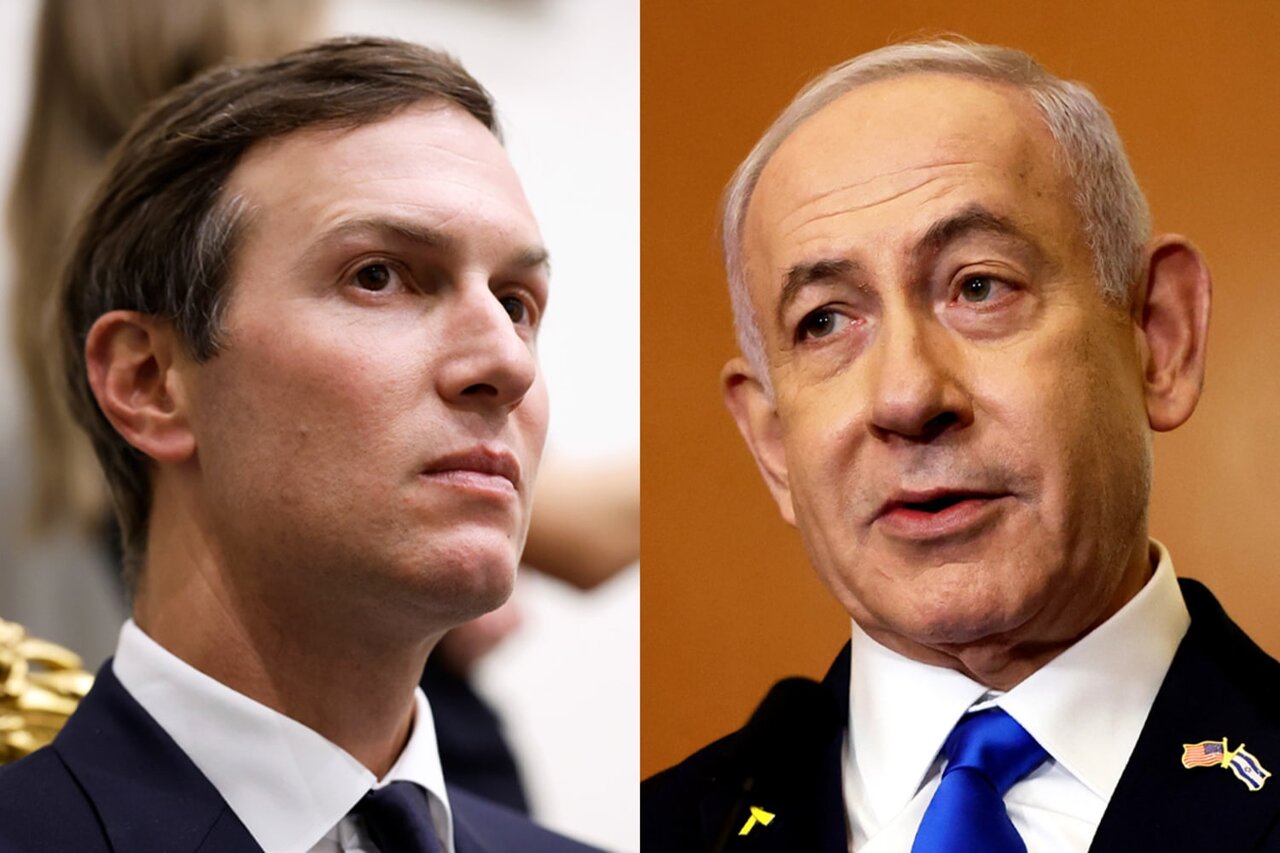
Jared Kushner, the U.S. presidential envoy and “Peace Council” member, met with the Palestinian delegation led by Khalil al-Hayya, head of Hamas’s political bureau, in Cairo. He also held a four-hour meeting with Netanyahu in Tel Aviv. The talks focused on advancing the roadmap for the Gaza agreement, a 15-point framework that the Palestinians had accepted, and the Israeli regime had rejected.
Kushner pledged to al-Hayya that he would pressure Netanyahu to give the agreement a chance to succeed, after the Palestinian leader reportedly told him: “Your turn has come. We have negotiated at length; now it is your time to act and pressure the occupying forces.”
Al-Hayya refused to even discuss reopening negotiations or revisiting the agreement’s provisions. Kushner came away with a positive impression of the Palestinian position, but he failed to make any breakthrough with Netanyahu. The reason is clear: the upcoming Israeli elections and the declining prospects of the regime’s coalition government winning, according to public opinion polls.
The agreement and Netanyahu’s electoral calculations
It is clear that Kushner’s visit did not produce a substantive breakthrough. However, it did demonstrate to the United States how difficult it will be to move forward with implementing the agreement at a time when the occupying regime’s commitment is required, while an election campaign is pushing Netanyahu toward greater rigidity and escalation on multiple fronts.
What Netanyahu has accomplished is showcasing his hardline stance that does not yield to American pressure, bolstering his standing among his extreme right-wing base.
The agreement, which was approved by all parties, including the United States, mediators, and guarantors, except Israel, explicitly stipulates that the gradual withdrawal of Israeli Occupation Forces (IOF) from the Gaza Strip should proceed in parallel with measures to contain and store heavy weapons.
The Israelis, however, insist that both light and heavy weapons held by Palestinian resistance forces must be dismantled before any IOF withdrawal or reconstruction of the Palestinian territory can begin.
The gap between the position of the mediators and Palestinians, on the one hand, and the regime’s position, on the other, appears to be widening. Despite recognizing how difficult it would be to achieve a breakthrough in the regime’s position at this stage, no one has an interest in declaring the agreement dead.
The Palestinian side has succeeded in backing Netanyahu into a corner, leaving him looking as though he is taking punches, even if they are soft ones, from one of his closest allies, the United States.
This is in addition to the explicit condemnations from the eight mediating and guarantor states. Those condemnations had largely faded before the last agreement was reached despite relentless IOF violations. Now, international censure of the regime has resumed, and Gaza has once again taken center stage on the global agenda.
Netanyahu, by contrast, is not concerned with the broader picture, including the regime’s growing isolation internationally and the reported decline in its relationship inside the United States, as well as the deteriorating relations between Netanyahu and Trump.
What Netanyahu wants is simple: to win the election, or, at the very least, to prevent the Israeli opposition from being able to form the next government and from reaching the 61 number of seats in the Knesset (Parliament). Either he wins, or he remains as head of a transitional government preparing for new elections, a scenario that appears increasingly likely in the upcoming Israeli political landscape.
The Palestinian position in the face of Israeli intransigence
The Palestinians understand that showing greater flexibility and agreeing to reopen the latest agreement for negotiations would allow Netanyahu to carry out every form of aggression against Gaza without restraint, criticism, or pressure, under the pretext that negotiations are still ongoing.
The Palestinians would then be portrayed as the ones refusing and obstructing progress, while pressure would once again be placed on them to show greater flexibility. For this reason, the Palestinian delegation is likely to remain committed to its position: there will be no renegotiation of what has already been agreed upon.
The Palestinians understand that the Israeli position on weapons and its refusal to begin reconstruction and withdrawal before disarmament means that the regime will neither withdraw from Gaza nor allow reconstruction to begin.
Gaza could therefore remain as it is for many years, with no one knowing when the situation will end. The Netanyahu regime will find sufficient pretexts to exploit the issue of weapons and evade its commitments.
Moreover, Israel’s rejection of the agreement is consistent with its post-October 7 policy, which rejects containment and deterrence strategies and refuses to return to the pre-war rules of engagement.
Instead, it seeks to impose a new reality across all fronts that grants it the right to continue its policies of assassinations, airstrikes, and aggression, as seen in the massacre that killed seven in Gaza port, the targeting of police commanders in Gaza following Kushner’s visit, recent strikes on Syria, and the aggression on Lebanon that resulted in casualties.
The message is clear: the regime will continue what it calls “eliminating threats” and maintaining “freedom of security” operations across the region, whether an agreement exists or not.
Despite the high costs, which the occupying regime is paying diplomatically and economically, the declining sense of security among settlers, the military’s near-permanent state of alert, and the ongoing uncertainty stemming from its failure to achieve absolute victory or any decisive military outcome, Israel believes its current policy is producing only tactical and temporary losses that can eventually be addressed and repaired.
However, various Israeli figures and institutions see the current path itself as a strategic loss, one for which Netanyahu’s government bears responsibility. They argue that the government has failed to translate military achievements into political results. In their view, the regime lost strategically.
Neither agreement nor war
The current situation in Gaza and across the region is unlikely to undergo any meaningful changes before the end of the Israeli elections. There will be neither a genuine de-escalation nor a full-scale war, nor an agreement, nor a formal withdrawal from the agreement.
Although it is difficult to bet on a significant change in the regime’s position even if Netanyahu loses the election, all parties and actors have little choice but to get through the next two months, even if that means maintaining a fragile calm without a final settlement.
Netanyahu, however, wants a fragile escalation, raising the ceiling of his negotiating positions through heightened aggression short of full-scale war.
The question remains: Did Kushner understand Netanyahu’s domestic position and give him the green light to raise the level of escalation ahead of the Israeli elections?
Given the pattern of American positions, they have consistently offered their staunchest ally in West Asia every opportunity, cover, and unlimited support.
However, Trump has his own domestic calculations as well. He is seeking a foreign policy achievement after his massive blunder in Iran, making him more eager to advance the negotiation track, de-escalate, and reach an agreement in Gaza, Lebanon, and Syria.
The U.S. president has publicly called on Netanyahu to curb IOF attacks on Gaza, while his envoy Tom Barrack denounced the recent IOF assault on the Abu al-Duhur airbase in Syria.
This suggests that, at this stage, U.S. policy in the region is seeking to limit Israeli military escalation, particularly on the Gaza, Lebanon, and Syria fronts. After successfully keeping the regime out of the current confrontation with Iran, where Tehran’s response had been seriously misjudged in Washington.
Yet the escalation of IOF aggression on all three fronts indicates that the United States has failed to impose its policy on the regime there.
Netanyahu may have reached an understanding with Kushner that gives the regime greater room for calculated escalation in Gaza, Lebanon, and Syria in exchange for a commitment not to get engaged with Iran.
If so, the region will remain in a state of neither peace nor war, with controlled levels of escalation across all fronts, until the end of this year, when both the Israeli and American election results become clear.
Leave a Comment