Long-term investment in youth best solution to address demographic change
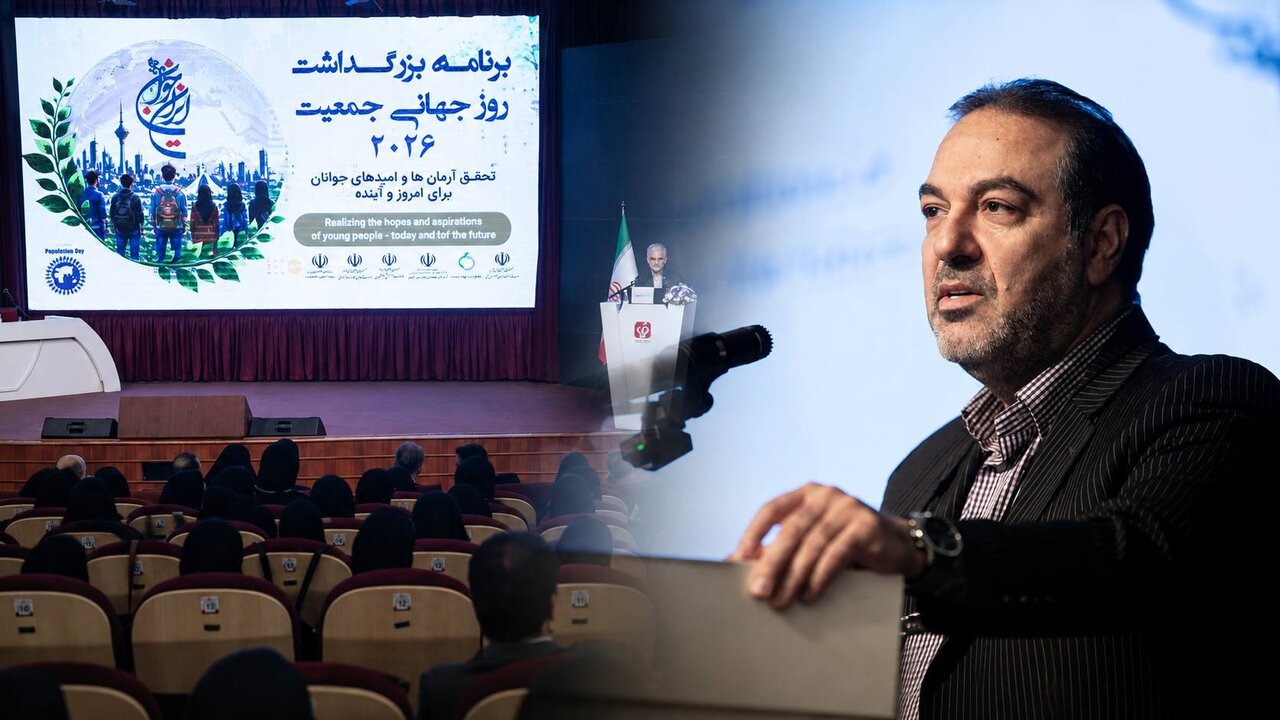
TEHRAN – The United Nations Fund for Population Activities (UNFPA), in collaboration with the ministries of health and labour, commemorated World Population Day focusing on what young people want for their lives — and what stands between them and the families and futures they hope to build.
By reading Iran’s population momentum through the lens of what young people themselves say they want, the commemoration reaffirmed a shared conviction: that responding to demographic change means long-term investment in young people, and cross-sector policies spanning education, employment security, housing, reproductive health services, and social protection — the conditions that help young people contribute to societies that are innovative, resilient, and economically robust, UNPFA website announced in a press release on August 16.
Anchoring much of the day’s discussion was UNFPA’s flagship report, Lives, Choices and Futures, which presents the findings of the 2025–2026 Demographic Futures Survey — one of the most geographically diverse bodies of evidence yet assembled on how young adults think about relationships, parenthood, and the future. Drawing on the voices of more than 108,000 people aged 18 to 39 across 73 countries, the report gave participants a global mirror in which to examine Iran’s own debates.
Among the findings that shaped the discussion:
More than two-thirds of respondents want to marry or live with a partner.
A two-child family is the most commonly reported ideal family size in five of seven regional groupings.
Economic and housing constraints are the most common obstacles to forming partnerships for both men and women.
Financial security is the top consideration for entering a partnership (81 percent) and for parenthood (88 percent).
Stable employment (87 percent) and emotional readiness (85 percent) rank high among the preconditions young people set for becoming parents.
Two-thirds feel somewhat or very positive about the future — even amid worries about conflict, economic insecurity, and inequality.
Bringing together university deans and academics, civil society organizations, and representatives of governmental bodies at the Tehran Ghalb Hotel by the Ministry of Health and Medical Education, the gathering set out to move the demographic discourse beyond numbers and targets — toward the hopes, choices, and constraints of a generation deciding whether, when, and how to form families in an uncertain world.
The event opened with remarks by Dr. Alireza Raisi, Deputy Minister of Health, who called for a change in how policymakers approach population structure. “Population does not grow through policymaking based on fear, coercion, or ‘the stick and the club’ — and even if it did, it would bring no benefit. What young people need is hope, trust, and confidence in the future: a job, a home, economic security, and a future they can predict. Our task as policymakers is not to place blame on people, but to remove the obstacles in front of the young.”
Dr. Raisi added that no population policy can succeed without attention to women who, he said, should never be forced to choose between employment and family and even if we increase the population that ageing is an inevitable structural shift due to increased life expectancy resulting from advances in health and welfare system for which the country must prepare, from the design of its cities to its health and welfare systems. He also mentioned the importance and availability of data for evidence-based policy and effective programming.
Two panels, one question
The program featured two expert panels drawing together specialists from universities, ministries, and international organizations.
The first expert panel examined Demographic changes and policies in Iran and around the world, testing national trends against global experience and comparing how different countries have responded. The second panel turned to youth marriage, childbearing, and population resilience.
Mr. Keita Ohashi, UNFPA Representative in Iran, praised Iran’s strong human capital while pointing to the gaps that remain in the labour market:
“Iran has remarkable human capital — high levels of knowledge and literacy — and that is a tremendous asset. But gaps remain: too many women, and too many young people who are not in employment, education or training, have yet to find their place in the labour market, and they deserve our attention. We should not see motherhood and entering the workforce as competing choices; rather, support for working mothers — and for women more broadly — must grow, so that women can join the labour market without having to postpone motherhood.”
Mr. Majd Hosseinpour from the Ministry of Cooperative, Labour and Social Welfare opened the second panel, emphasizing the very low economic participation rate of women, approximately 4 million out of the 25 million economically active, and the need for economic entities to adapt themselves and their policies.
Presenting to the second panel, Amir-Hossein Vaezi, Head of the Centre for Strategic Studies and Research at the Ministry of Sport and Youth, drew on three waves of the National Survey of Iranian Youth Values and Attitudes (2013, 2020 and 2024):
“Panel survey evidence shows that young Iranians still place a high value on family, marriage and childbearing — but the way they realize these aspirations has undergone an ‘attitudinal transition.’ Today, young people weigh their decisions in terms of economic security, prospects for the future, quality of life, mutual trust and whether they can balance their family and social roles. Rebuilding population resilience does not mean a mechanical return to old patterns; it means building lasting capacity for family formation by listening to young people’s voices and turning research evidence into practical policy.”
UNFPA Iran reiterated its commitment to working alongside national partners based on national priorities so that every young person can realize their hopes and aspirations — today, and for the future.
Leave a Comment