Why is the world rooting for Iran to win?
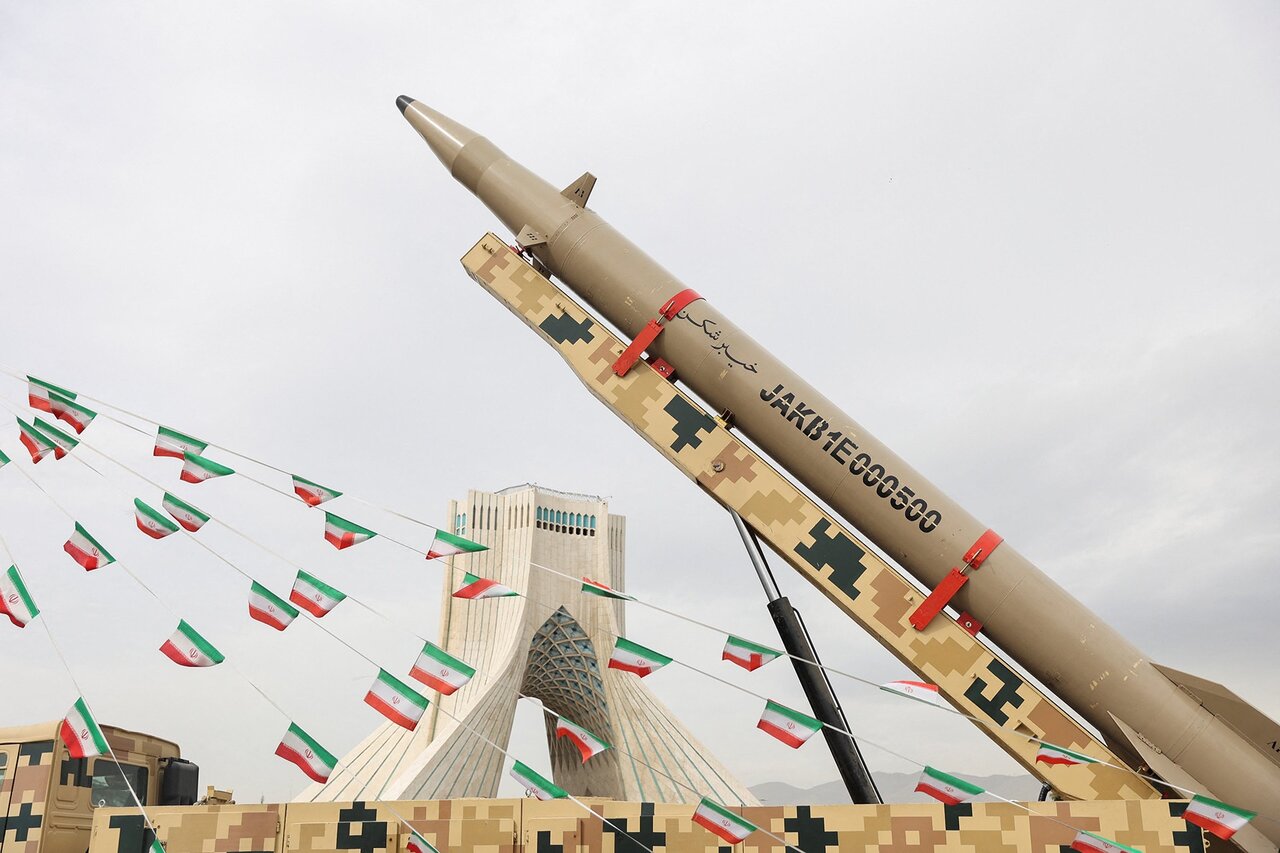
TEHRAN – Six months later, Trump finds himself trapped in a losing war with no end in sight. Officials around the world are relieved that Iran’s successful resistance has effectively prevented Trump from moving on to his next targets.
On August 26, 2026, John Mearsheimer, professor of political science at the University of Chicago, appeared as a guest on the Deep Dive geopolitics podcast hosted by retired U.S. Army Colonel Daniel Davis. The two covered the usual topics of the moment: Iran, Ukraine, and Trump’s foreign policy.
Davis, who returned from Afghanistan and, in 2012, exposed how senior U.S. military leaders had misled Congress and the American public about the course of the war there, found himself, as often happens in such discussions, trying with his guest to make sense of American’s strategically irrational policies.
Both agreed that the United States is destined to fail in both Iran and Ukraine, largely because of America’s tendency to pursue reckless and aggressive policies.
Mearsheimer also stressed that America’s global standing has sunk so low that people across the world are actively rooting for the United States and the Israeli regime to lose their war against Iran.
America’s unchecked threats
For Trita Parsi, vice president of the Quincy Institute for Responsible Statecraft in Washington, the issue is not Iran but the threat posed to others by an America that is unconstrained, or, more accurately, unrestrained to everyone else.
Parsi said he was “stunned” by the number of officials from a wide variety of countries who have privately expressed to him a huge sigh of relief over Tehran’s success in thwarting U.S.-Israeli aggression.
Given that many of these officials represent countries that traditionally support the United States and may even have their own issues with the Islamic Republic, this “implicit endorsement” for Iran says something about the current state of international relations.
There is a sense of relief that aggression and violations of international law have failed to pay off for the U.S. and Israel in Iran.
Venezuela was, in the eyes of many, a frightening precedent. Whatever one’s opinion of Maduro, the idea of a superpower kidnapping another country’s president and his wife, installing its preferred president, who must now obtain the U.S. secretary of state’s approval for her social media posts, and then having Trump gleefully declare that Venezuela had become American territory horrified many nations.
So, too, was the praise from European leaders for the regime-change operation and their disregard for concerns about its legitimacy.
Europe, which broadly opposed George W. Bush’s illegal invasion of Iraq, has now supported regime change in Venezuela while insisting on the sanctity of international law in Ukraine and Greenland.
The lack of resistance to this made the cost of America’s new colonial-style aggression more bearable. Given Donald Trump’s inclinations, both America’s friends and foes alike feared they could be next.
A losing war with no end
America’s overwhelming military success in Venezuela was one reason Trump and the Zionist lobby were so eager for war with Iran.
If Venezuela had taken only a few hours, he figured Iran would take several days at most. Trump assured skeptical regional leaders that the entire ordeal would not last more than 100 hours, according to one anonymous Arab official.
Six months later, Trump finds himself trapped in a losing war with no end in sight. Officials around the world are relieved that Iran’s successful resistance has effectively prevented Trump from moving on to his next targets.
As one official from a traditional U.S. ally put it: “Had it not been for the resilience of the Iranians, Trump would likely have attacked Cuba by now and perhaps even annexed Greenland.”
These sympathetic feelings toward Iran may have little to do with Iran itself. No overt “official” sympathy for the Islamic Republic is visible, although the public mood seems entirely different. Rather, these sentiments are rooted in pure self-interest.
America’s pursuit of a blatant new colonial foreign policy poses a greater threat to many countries than Iran’s closure of the Strait of Hormuz. There is no doubt that the closure harms countries that played no role in encouraging Trump’s disastrous war.
But it is relatively bearable pain. Few states besides Iran have designed their militaries to repel American or Israeli aggression should they land on Trump’s target list. Experts believe that many countries now secretly hope Trump remains bogged down in the Persian Gulf for the foreseeable future. That may be the most effective guarantee against Trump’s rush toward regime change and land grabs.
America: The most immediate threat
We are witnessing a world yearning for balance. From the perspective of many countries, not just the Global South, the United States is the country that most urgently needs to be balanced in the face of its influence and expansion. Not Russia, not Iran, and not North Korea. Certainly not China.
This is simply an objective and accurate assessment of the most immediate source of threat.
A similar situation emerged in 2022, when Russia waged a special military operation in Ukraine. Some countries sympathized with Ukraine. Others placed part of the blame on NATO. But they did not view Russia as a threat to themselves.
Then Washington severed Russia’s ties to the international financial system within five days, setting alarm bells ringing in capitals around the world. Not because they sympathized with Russia or believed the sanctions were unjustified. It was because the United States had demonstrated its ability to damage global economies within days, given the role of the dollar and Washington’s threats to the international community.
Russia’s war in Ukraine exposed no comparable vulnerability among Global South countries to Russian schemes. Yet Washington’s swift response with sanctions revealed the enormous vulnerability of other countries to U.S. whims and capabilities. Essentially, friendship with America offers no shield against Trump’s mood swings.
A Western diplomat told Parsi that she had been trying to persuade her leadership not to push for a “state visit” to Washington. “Nothing good can come of it. It’s simply better not to be on his radar,” the diplomat from a U.S.-allied country said.
As in the jungle, there is protection in avoiding the attention of the top predator. This reality once again demonstrates how disastrous the war on Iran, and neoconservative foreign policy more broadly, has been for the United States itself.
But good governance and wise diplomacy ensure that power is not unjustifiably perceived as a threat by other countries, which will have no choice but to find ways to balance it. Or, as we are seeing now, to balance it through others.
Perhaps Iran and the world do not want America to be defeated and humiliated. Perhaps they simply want it balanced, restrained, and non-aggressive.
Leave a Comment