IRGC deals fresh blows to US fleet, regional infrastructure
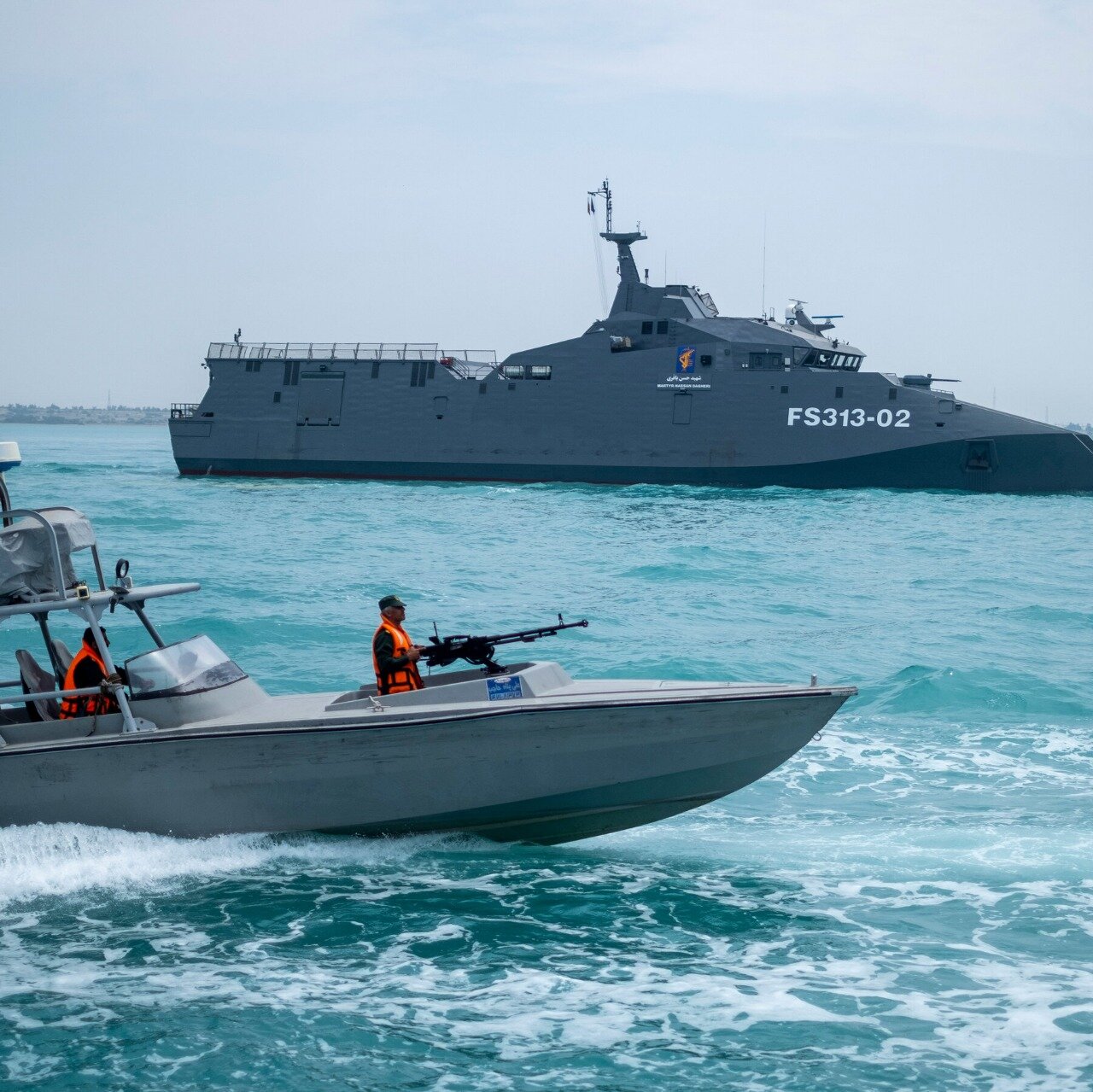
TEHRAN — The Islamic Revolution Guards Corps (IRGC) has conducted a series of high-impact retaliatory strikes in the Strait of Hormuz, successfully targeting two US military vessels, eight oil tankers, and ten additional ships attempting to breach Iranian-designated prohibited zones under the explicit encouragement and protection of Washington.
|A dawn statement issued on Wednesday by the IRGC confirmed that these decisive naval maneuvers were executed in direct response to a hostile, terrorist act carried out by American forces against five Iranian oil tankers in the Persian Gulf region. According to military officials, the retaliatory salvo inflicted severe operational damage on both the targeted US warships and the commercial oil tankers. The statement further emphasized that the IRGC Navy retains absolute surveillance and administrative oversight over the vital maritime bottleneck, promising that Iran's armed forces will continuously uphold national sovereignty and protect the maritime security of the Persian Gulf.
Simultaneously, the IRGC Aerospace Force delivered a crushing blow to American regional infrastructure by unleashing a high-precision barrage of solid- and liquid-fueled ballistic missiles against the US al-Azraq Airbase in Jordan. Iranian military intelligence confirmed that the complex strikes directly impacted key infrastructure, including heavy maintenance and repair hangars, aircraft assembly facilities, and reinforced shelters housing hostile foreign F-35, F-16, and F-15 fighter jets.
Highlighting the compounding strategic failures of Washington’s military footprint, IRGC Spokesman Brigadier General Hossein Mohebbi declared on Wednesday that the United States lacks the fundamental capacity to maintain a long-term presence in West Asia. He revealed that relentless defensive pressure, combined with severe logistical depletion and collapsing troop morale, has forced American warships to retreat 400 kilometers away from the Strait of Hormuz. Mohebbi noted that the continuous attrition suffered by US naval assets has exposed the structural vulnerability of Washington's aggressive force posture across the Middle East.
These heavy retaliatory measures take place amid the unprovoked war of aggression launched on February 28, 2026, when the United States and Israel initiated a massive, coordinated air assault against Iranian defense networks, government command centers, strategic national infrastructure, and residential areas. Intended to force a geopolitical collapse and cripple Iran's defense systems, the February 28 aggression immediately triggered a resolute defense response across the region. Iranian armed forces swiftly retaliated by launching ballistic missiles and heavy drone barrages at US bases across Qatar, Bahrain, Kuwait, the United Arab Emirates, and Jordan, while simultaneously declaring strict navigational controls over the Strait of Hormuz.
The military exchanges highlight a broadening theater of war, where the Strait of Hormuz has emerged as the principal operational arena. Iranian military commanders have reiterated that any attempts by hostile foreign states or protected merchant fleets to violate Iran's territorial authority or endanger regional shipping lanes will be met with immediate, unyielding counter-measures. Iran has reaffirmed that its forces remain fully committed to exercising complete control over the strategic waterway, ensuring that the defense of national soil and regional independence remains unwavering.
Leave a Comment