Iran urges genuine reform of international governance mechanisms
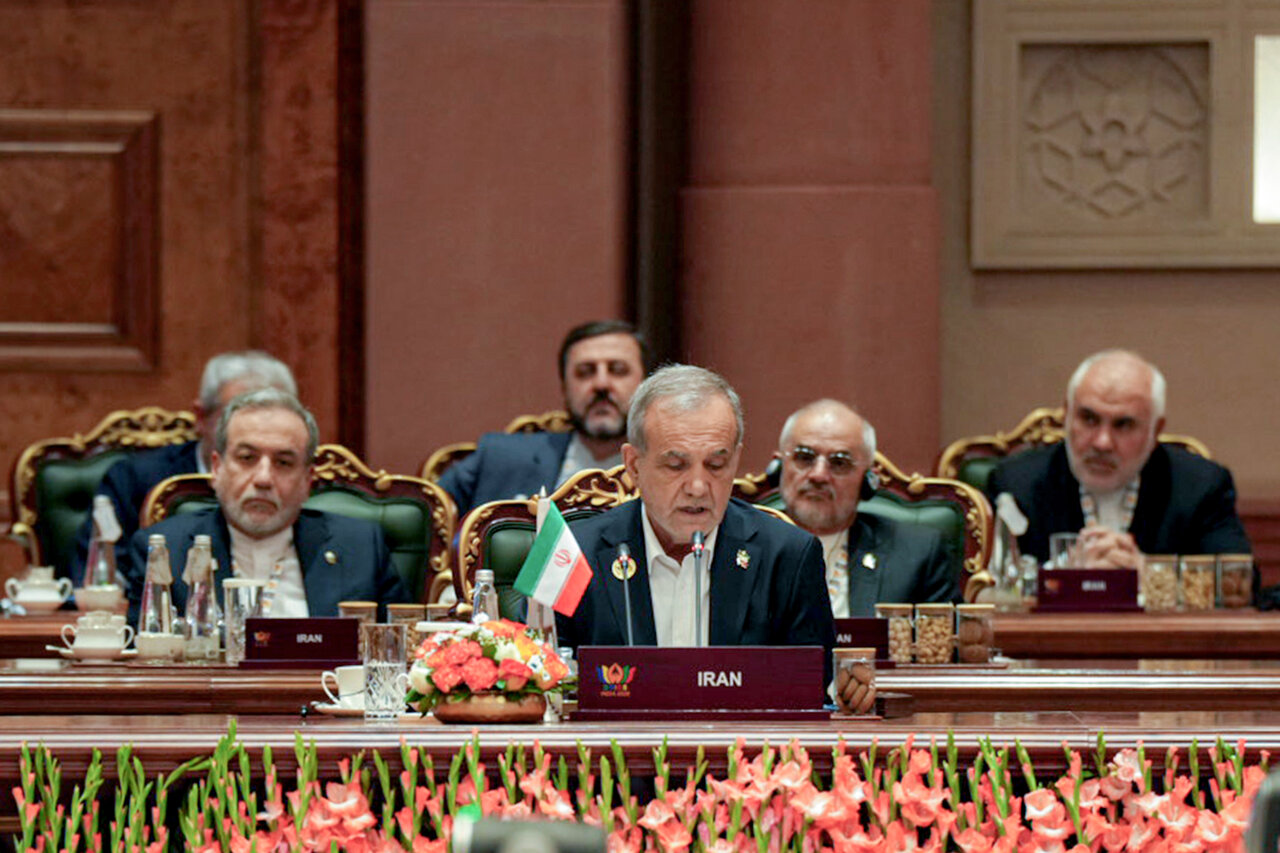
TEHRAN- Iranian President Masoud Pezeshkian has called for genuine reform of international governance mechanisms, arguing that effective multilateralism requires equal respect for national sovereignty, non-discriminatory enforcement of international law and greater representation for developing countries.
Addressing a closed-door meeting of BRICS leaders in New Delhi on Saturday, Pezeshkian said the summit’s theme, “Inclusive Global Governance and Strengthening Multilateralism,” had taken on added significance amid growing global interdependence and the simultaneous resurgence of unilateralism, political pressure and the weaponization of financial and technological systems.
He said the credibility of any international governance system ultimately depended on its ability to protect the rights of all countries, regardless of their size or power. If the UN Charter cannot protect nations against the unlawful use of force, or if international rules are binding on some while remaining open to interpretation by others, genuine multilateralism cannot exist, he argued.
Pezeshkian said Iran had experienced the consequences of such double standards firsthand, referring to US and Israeli military aggression against Iran, which had killed civilians and damaged vital economic and civilian infrastructure.
He cited the killing of late Leader of the Islamic Revolution Ayatollah Seyyed Ali Khamenei and 168 children at a school in Minab on the first day of the 40-day war, as well as the attack on Lamerd Stadium, as examples of the threat posed to civilian life by unilateralism and military action, compounded by 'inaction by the United Nations and its Security Council.'
He also pointed to the plight of civilians in Gaza and Lebanon, saying the situation had challenged the conscience of humanity. International governance, he stressed, could not retain its legitimacy if multilateral institutions were unable to protect human life and national sovereignty from war, genocide and aggression.
“We need real reform of international mechanisms,” Pezeshkian said.
He then outlined four principles for more inclusive global governance: equal respect for national sovereignty and non-discriminatory implementation of international law; reform of global governance structures, including the UN Security Council and international financial institutions; translating multilateralism into practical measures, such as trade in national currencies and independent payment mechanisms; and meaningful action against unilateral sanctions that affect not only governments but also ordinary people, patients, children and national development.
Pezeshkian further argued that sustainable security could no longer be based on security for some and insecurity for others. He called on BRICS members to oppose the normalization of attacks on civilian and critical infrastructure, stressing that peaceful nuclear facilities must likewise be protected from attacks or threats of attack, as any such incident could endanger international peace and security.
Palestine as a test of global governance
On Palestine, Pezeshkian described the issue as another test of the credibility of the international governance system, saying Palestinians have the right to self-determination and to live in security.
He called on BRICS to become “a voice for justice” and play a more active role in ending the occupation and safeguarding the legitimate rights of the Palestinian people.
The Iranian president said Tehran supports three broad areas of cooperation within BRICS: stronger political coordination among members in defense of the UN Charter and national sovereignty; expanded economic and financial cooperation independent of monopolistic instruments; and deeper collaboration in science, technology, energy and food security, particularly among countries of the Global South.
He stressed that lasting cooperation requires justice, arguing that multilateralism has meaning only when all countries are equal before the law and that global governance is legitimate only when the voices of developing nations are heard.
Strengthening BRICS cooperation
Pezeshkian also called on BRICS members to remain committed to the group’s founding principles and objectives, resist external pressure and unilateral sanctions against its members, and transform areas of competition into opportunities for cooperation.
He urged the bloc to address administrative shortcomings, establish a permanent secretariat and strengthen its coordination mechanisms so that collective decisions can be implemented with greater coherence, speed and efficiency.
Pezeshkian concluded by expressing Iran’s readiness to cooperate within BRICS in pursuit of these objectives.
He said Tehran sought a world in which “power does not replace law, sanctions do not replace cooperation, war does not replace dialogue, and monopoly does not replace participation.”
Leave a Comment