South Korea rebuffs Trump: No troops for US war on Iran
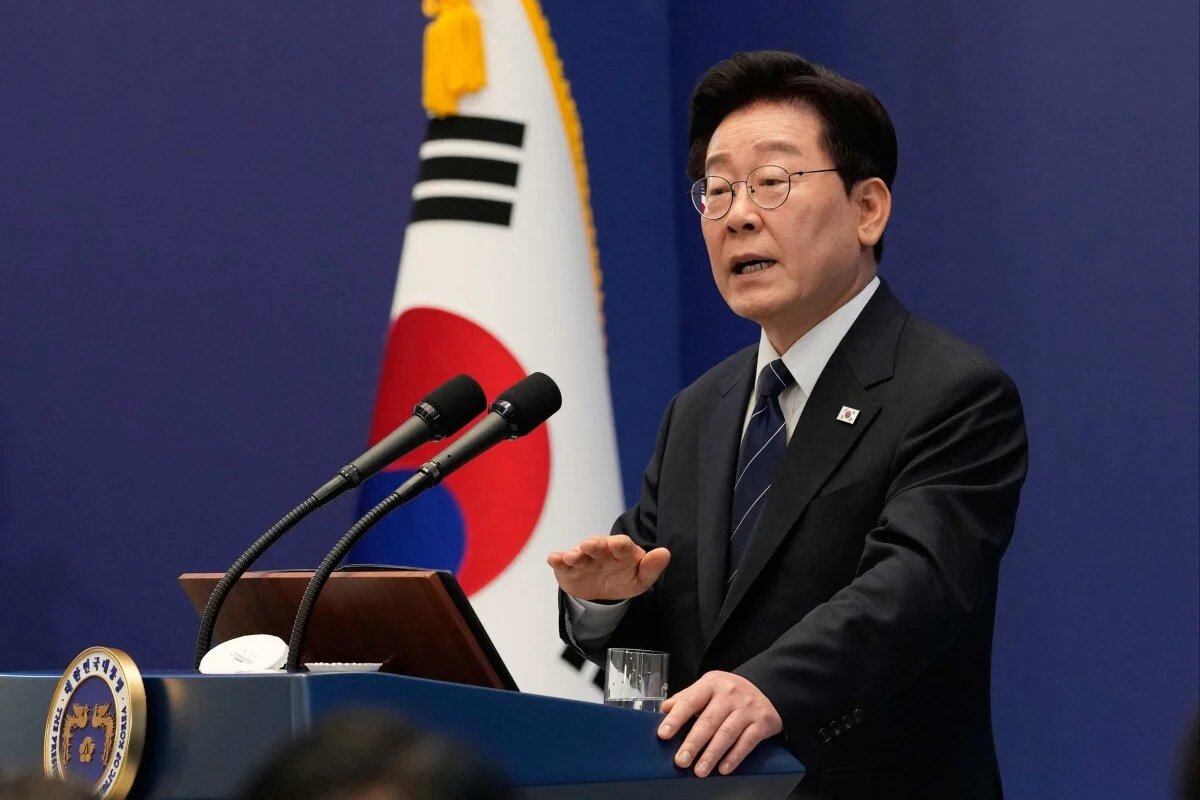
TEHRAN — In a decisive stance reflecting growing domestic anti-war sentiment and strategic prudent realism, South Korean President Lee Jae-myung announced on Friday that Seoul will not deploy its armed forces to join the US war against Iran, effectively rejecting escalating demands from Washington to entangle the East Asian nation in its Middle Eastern conflict.
Speaking at a news conference in Seoul, President Lee stated in unambiguous terms that South Korea will not participate in combat operations or allow its military assets to be dragged into Washington’s military campaign.
“There won’t be deployment that would involve or enter war. I can tell you that very clearly,” Lee told reporters. “We won’t deploy military assets in any form to that end.”
However, the South Korean leader noted that his administration is currently reviewing potential non-combat measures limited strictly to safeguarding commercial navigation and energy supply lines in the region. Seoul currently maintains a naval footprint off the coast of Somalia dedicated to anti-piracy missions, a model some officials have suggested could be adapted to protect South Korean flag-ships.
“[It] is also clear that we must do the minimum as other countries do to protect our commercial shipping and crude shipments, and also the safety of our people,” Lee added, attempting to balance domestic political pressure against Washington’s persistent arm-twisting.
The official refusal from Seoul comes amidst heightened friction between the long-standing military allies. US President Donald Trump has repeatedly criticized South Korea for what he characterized as insufficient support for Washington’s war effort against Tehran. In an apparent retributive move that has alarmed defense analysts in Seoul, the Trump administration recently scaled back major joint military exercises between US and South Korean forces.
Despite Washington’s economic and military leverage, Seoul’s refusal underscores the severe domestic and geopolitical constraints facing South Korean policymakers as they navigate the fallout from the US-Israeli war of aggression in West Asia.
Widespread domestic opposition in Seoul
President Lee’s firm statement follows weeks of intense domestic backlash and mounting public outrage across South Korea. Defense authorities in Seoul had previously disclosed that a specialized fact-finding mission had been dispatched to assess maritime conditions around the strategic Strait of Hormuz—a move that triggered immediate alarm among civil society groups and anti-war activists.
Earlier this month, dozens of South Korean anti-war activists, civil society leaders, and ordinary citizens gathered directly across from the massive United States embassy compound in central Seoul. Demonstrators fiercely condemned Washington’s pressure on their government, framing the US campaign against Iran as an “illegal war” of aggression.
Unfurling banners and holding signs reading “Do not join a war of aggression,” the protesters voiced deep indignation over indications that political and military leaders in Seoul were contemplating a military “contribution” to the waterway’s security at the behest of the White House.
Directing their chants toward the presidential office, the crowd echoed a resounding plea reflecting broad public sentiment against foreign military entanglements: “We cannot send our young people into a sea of death!”
While defense spokespersons in Seoul attempted to cool public anger by maintaining that no final deployment decision had been made, the public outcry highlighted the immense political cost any military compliance with Washington would entail for the South Korean government.
Tehran’s firm warnings against coercion
The prospect of South Korean military involvement in the Persian Gulf had drawn strong and explicit warnings from diplomatic authorities in Tehran, who made it clear that any foreign intervention alongside hostile American forces would carry severe economic and diplomatic consequences.
Iranian Foreign Ministry spokesman Esmaeil Baghaei repeatedly emphasized that any operational involvement by third countries in the Persian Gulf or the Strait of Hormuz would be viewed as direct participation in US aggression.
In a detailed statement published in the Korean language on his official X account on September 7, Baghaei highlighted the historic depth of bilateral relations between Tehran and Seoul. He noted that Iran and South Korea have maintained diplomatic and economic ties for more than 64 years, built upon a solid foundation of mutual respect and constructive cooperation. Tehran, he reiterated, has consistently attached high value to its friendly bonds with the South Korean people.
However, the Iranian spokesman clearly delineated the boundaries of peaceful engagement amid Washington’s blatant violations of international law. Baghaei stressed that the Iranian nation is exercising its inherent right to self-defense against acts of aggression and responding decisively to US war crimes targeting civilians.
Under such fraught circumstances, Baghaei warned, any operational participation or military presence by foreign forces in the Persian Gulf and the strategic Strait of Hormuz would constitute direct support for the aggressor.
Urging South Korean policymakers to maintain an independent foreign policy aligned with international law and long-term national interests rather than American adventurism, the spokesman emphasized that responsible nations must resist foreign coercion.
“No sovereign and responsible country will submit to US pressure and blackmail to collude in committing acts of aggression and heinous crimes against the great Iranian nation,” Baghaei pointed out.
Washington’s fracturing alliances
Seoul’s reluctance to be drawn into the conflict exposes the growing isolation of the United States as it attempts to construct an international coalition to bolster its campaign in West Asia. Allies in both Europe and East Asia have shown marked reluctance to sacrifice their own strategic security and commercial stability for a war widely viewed as illegal and strategically disastrous. Yet, South Korea’s explicit refusal to send combat forces illustrates that even Washington’s closest treaty allies are unwilling to blindly follow American directives into the Persian Gulf.
Quagmire of war
The current regional crisis traces its origins back to the unlawful military campaign launched on February 28, when the United States and Israel embarked on a coordinated, unprovoked assault against Iran’s sovereignty and territorial integrity.
Conceived in Washington and Tel Aviv with the illusion of achieving a rapid and decisive breakthrough, the war of aggression has instead evolved over the past seven months into a crushing geopolitical and military quagmire for the aggressors.
Far from coercing the region into submission or forcing sovereign nations to fall in line, the US-Israeli campaign has fractured Washington’s global alliance system, severely disrupted international maritime trade, and driven global energy markets into turmoil. By threatening allies like South Korea with military and economic retaliation while attempting to force participation in an unlawful war, the United States has succeeded only in exposing the limits of its global influence and the catastrophic miscalculations that have characterized its regional doctrine from the outset.
Leave a Comment