Iranian students win BRICS Smart City 2030 Award
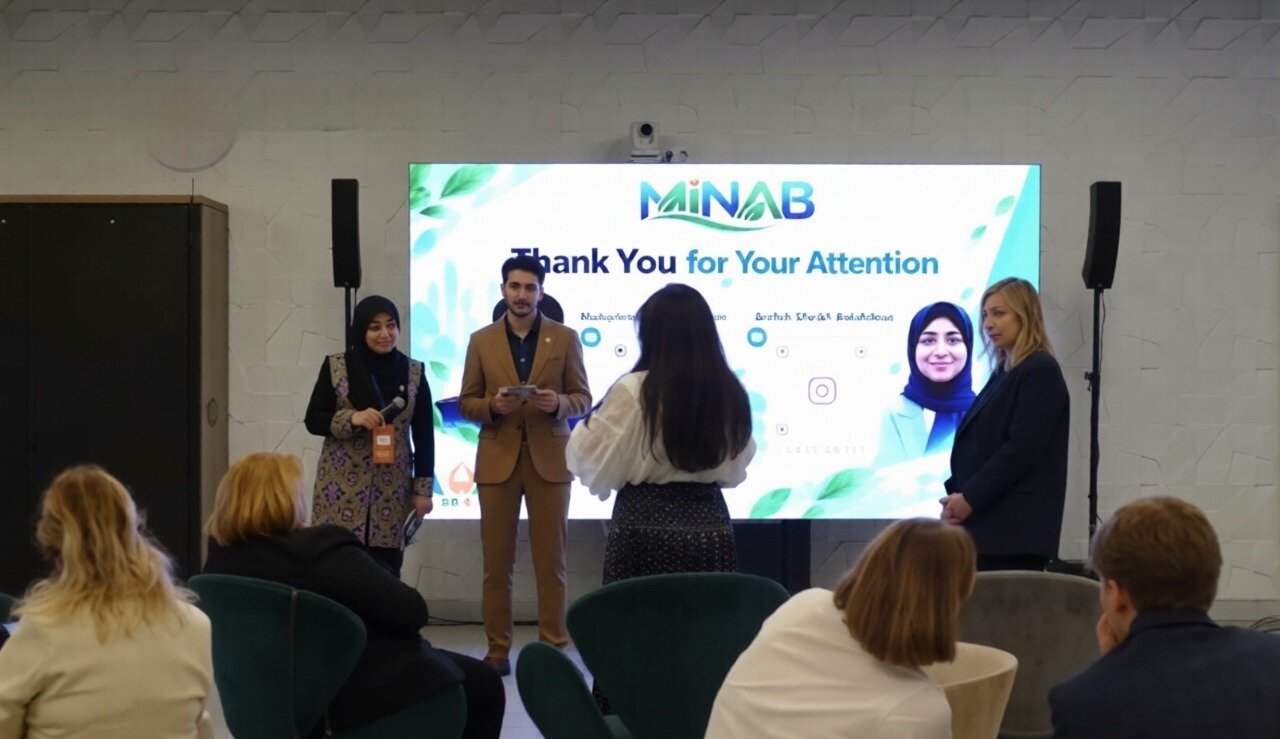
TEHRAN – A team of three students from Sharif University of Technology has won first place in the third International Student and Young Scientist Project Competition, “SMART CITY 2030,” held in Moscow on October 5–6.
The competition brought together more than 3,000 students from leading universities across BRICS countries to develop innovative solutions for sustainable urban development.
The event is part of the international platform Sustainable Urban Development Management in BRICS Countries, which provides opportunities for students, postgraduate students, and young researchers under the age of 35 to present projects and exchange ideas.
The Iranian team’s winning project, titled Minab App, was developed in memory of 168 students who were killed in a US attack on a school in Minab, Hormozgan Province, on the first day of the recent war imposed on the country.
The project proposed initiatives focused on smart-city technologies, creating safer urban environments, and improving energy and transportation systems. It also emphasized the importance of educating children from an early age and raising awareness about environmental protection as key elements of sustainable urban development, IRIB reported.
This year, young scholars from BRICS member states proposed 600 projects in seven main categories.
According to Lyudmila Sergeyevna, director of the center for Business and Management Studies at Russia’s Higher School of Economics, the project of the Iranian students is one of the best ideas, saying that the proposal is highly commendable, as it emphasizes the institutionalization of environmental protection skills among children.
Plan to develop environmental education curriculum
The Department of Environment (DOE) and the Education Ministry have discussed the possibility of developing a national education curriculum to promote environmental responsibility and awareness among children.
Referring to the inefficiency of short-term and incoherent teaching, Mohammad Medadi, an official with the DOE, said that achieving sustainable development and boosting the country’s resilience are not possible without institutionalizing an environmentally friendly attitude and lifestyle in society. So, educational approaches need to be reviewed, he added.
Environmental protection education should be taught from preschool to high school. In addition to scientific training, it should focus on ethical aspects based on cultural, religious, and social teachings.
The initiative also aims to train and empower parents and teachers, the official further noted.
Promoting environmental protection among children
In October 2025, the DOE and the Institute for Intellectual Development of Children and Young Adults (IIDCYA) signed a memorandum of understanding to promote environmental protection among children and young adults.
The MOU was inked by Hadi Kiadaliri, the deputy head of the DOE for education and public participation affairs, and Hamed Alamati, the IIDCYA director, at the place of IIDCYA headquarters in Tehran.
The signing ceremony was concurrent with the second day of National Children’s Week, which was observed nationwide from October 7 to 13, with the theme ‘children, joy of life’.
Since education plays a key role in boosting environmental protection, the DOE is implementing a national project that aims to train eco-friendly students, dubbed ‘environmental helpers’, in 20 percent of elementary schools across the country.
According to Mohammad Medadi, an official with the DOE, the project was launched in cooperation with healthcare providers on September 23, 2025, the start of the past academic year.
It aims to identify students who are interested in environmental issues and encourage them to participate in a working group focusing on environmental-related subjects, IRNA quoted Medadi as saying.
These students will later train other students to raise their environmental awareness. The project is assumed to cover all schools in five years, the official added.
Moreover, informal education in the form of extracurricular activities is planned to be carried out. Consequently, the development of a national environment subject is placed on the agenda. It will contribute to creating a roadmap for formal environmental education according to which relevant content would be included in the curriculum, he further noted.
To instil eco-friendly behaviors, environmental education has to be introduced at an early age, when children are in elementary school or even preschool. However, there will be some challenges.
Education is an ongoing process; temporary or short-term courses would not induce long-standing behavioral changes. It requires time to see favorable results, Medadi said.
MT/MG
Leave a Comment